

1 hr ago
Swiss Glaciers Lose Nearly One-Fifth of Ice
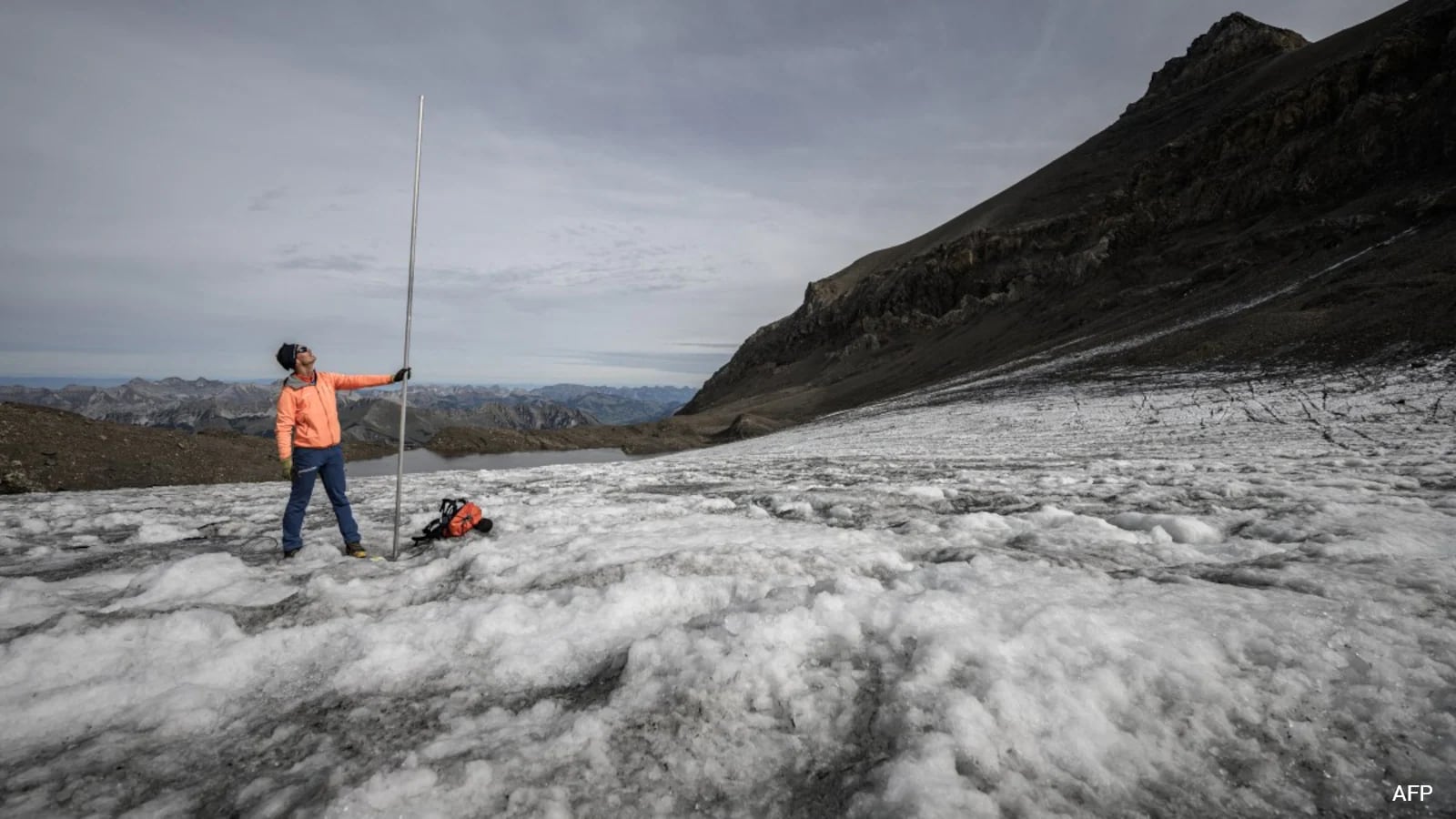
Swiss glaciers are shrinking very quickly because the climate is getting warmer.
They lost almost one-fifth of their ice in only five years.
In 2026, there was not enough winter snow to protect them from sunlight.
The summer was also unusually hot and dry.
Some glaciers lost up to 10 metres of ice in part of the year.
Glaciers store water and release it during warmer, drier periods.
Their loss could affect drinking water, farming, electricity, floods, and landslides.
Scientists say reducing carbon dioxide emissions could help slow the damage, although some Swiss glaciers may already be very difficult to save.

Swiss glaciers have lost almost one-fifth of their ice in five years, according to GLAMOS.
Some glacial tongues lost up to 10 metres of ice during the first eight months of 2026.
Low winter snowfall and record heat raised the freezing level above 4,000 metres for extended periods.
Glacier loss threatens water supplies, hydropower, agriculture, and increases landslide and flood risks.
The World Meteorological Organization says every major glaciated region recorded ice loss for a fourth consecutive year in 2025.
- Who
- Swiss glaciers, GLAMOS researchers led by glaciologist Matthias Huss, and scientists monitoring global ice loss.
- What
- Swiss glaciers lost almost one-fifth of their ice in five years, with some losing up to 10 metres in 2026.
- Where
- Switzerland and the European Alps, with broader effects discussed for the Himalayas and other glaciated regions.
- When
- The most severe losses described occurred in 2026; global and regional comparisons include 2024 and 2025 data.
- Why
- Low winter snowfall, exceptional summer heat, rising freezing levels, and longer-term climate warming driven by heat-trapping pollution are accelerating melting.
Key facts
- Swiss ice loss
- Almost one-fifth of Switzerland's glacier ice disappeared in five years.
- 2026 losses
- Some glacial tongues lost as much as 10 metres, or 33 feet, in the first eight months of 2026.
- Weather conditions
- Switzerland's April-to-September period was described as the hottest and driest on record, while the freezing level stayed above 4,000 metres for extended periods.
- Global glacier loss
- The United Nations reported that glaciers worldwide lost around 450 billion tonnes of water in 2024.
- Recent global trend
- The World Meteorological Organization reported 1,400 billion tonnes of cumulative glacier-water loss between 2023 and 2025.
- Swiss hydropower
- More than half of Switzerland's electricity comes from hydropower.
- Water loss in Switzerland
- Glacier melting caused the loss of 2.2 trillion litres of water from July to September, according to the report.
Quotes
Matthias Huss
Swiss glaciologist and leader of the GLAMOS glacier monitoring program
“We just need to stabilize the climate by reducing CO2 emissions and this will help the glaciers”
 NDTV
NDTV
Sources
Related news
Global Mountain Glaciers Lose 6.2 Percent of Mass Since 2000
Mont Blanc Permafrost Loss Raises Fears of Glacier Disasters
Himalayan Melt and Monitoring Gaps Threaten Northern India

Himalayan glacial lakes face urgent risk as melting accelerates

Himalayan Glacier Melt Threatens Water Security and Livelihoods
Himalayan Glaciers Near Tipping Point, Threatening Millions’ Livelihoods
BMW unveils AI-led recovery plan amid tariffs and weak demand

Infinite Uptime, Tech Mahindra Partner to Scale Physical AI

European Luxury Carmakers Enlarge SUVs for American Buyers
Ground-Level Ozone Exposes Nearly Half World Population