2 hrs ago
Professor Warns OpenAI Math Findings Could Harm Young Researchers
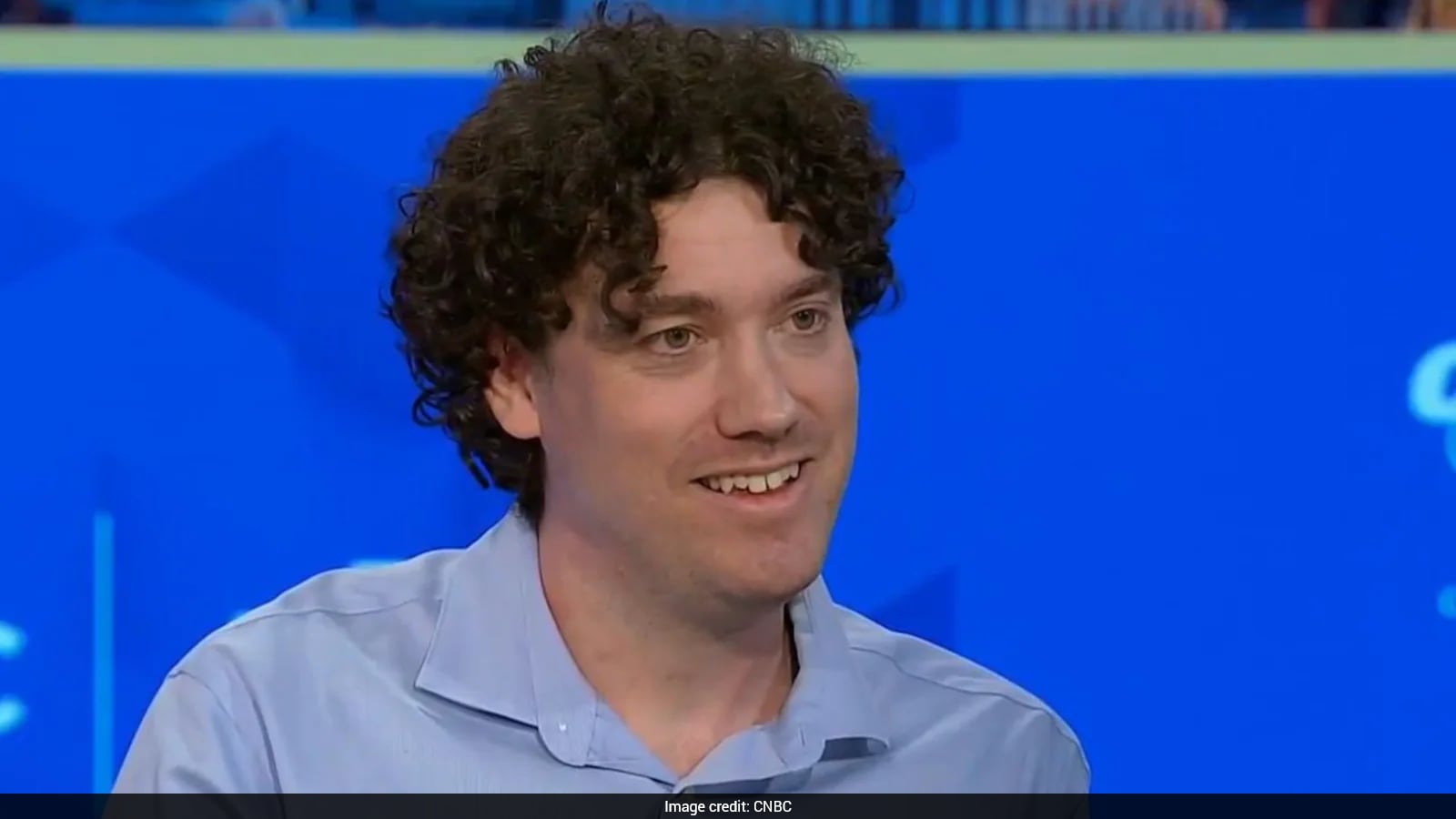
OpenAI shared results about 377 mathematics problems.
The results covered several different areas of math.
Professor Tristan Buckmaster said the release could hurt the work of young mathematicians.
He said some research programmes may have been made less useful by the new findings.
He also worries that research ideas could reach AI companies through proposal reviews or training data.
Buckmaster says he avoids putting ideas he considers original into AI tools.
He said he was happy to solve an Euler problem and had not set out to solve the Navier-Stokes problem.
The article says the developments have raised questions about AI’s role in mathematics.

NYU mathematics professor Tristan Buckmaster said OpenAI’s release of findings on 377 problems wiped out some early-career researchers’ research programmes.
OpenAI’s findings, released Tuesday, covered algebra, number theory, theoretical computer science, mathematical logic and topology.
Buckmaster raised concerns that research proposals and their ideas could be exposed to AI systems through review processes or training data.
He said he uses Anthropic’s AI tools and has access to OpenAI Codex, but avoids entering ideas he considers original into such systems.
Buckmaster said solving the Euler problem made him happy and that solving the Navier-Stokes problem had never been his goal.
- Who
- Tristan Buckmaster, a mathematics professor at New York University, and OpenAI.
- What
- OpenAI released findings on 377 mathematical problems, prompting Buckmaster to warn about potential harm to early-career researchers and exposure of research ideas.
- Where
- The article discusses the mathematics community and Buckmaster’s comments to CNBC; no specific location for the release is stated.
- When
- The findings were released Tuesday; the article does not specify a date.
- Why
- The findings raised concerns about the effects of AI advances on mathematical research and whether researchers’ original ideas could be exposed to AI systems.
Concerns about AI’s impact
AI’s mathematical findings
Effects on researchers
Concerns about AI’s impact
Buckmaster said OpenAI’s release had wiped out research programmes and harmed early-career mathematicians.
AI’s mathematical findings
OpenAI released findings on 377 mathematical problems; the article does not include an OpenAI response to Buckmaster’s concerns.
Exposure of research ideas
Concerns about AI’s impact
Buckmaster warned that proposal-review processes and AI training data could expose researchers’ ideas and approaches.
AI’s mathematical findings
The article reports Buckmaster’s concern but provides no response from OpenAI or details establishing that proposal ideas were used.
Key facts
- Number of problems
- 377
- Fields mentioned
- Algebra, number theory, theoretical computer science, mathematical logic and topology
- Professor
- Tristan Buckmaster, a mathematics professor at New York University
- AI tools mentioned
- Anthropic’s AI tools and OpenAI Codex
- Prize mentioned
- The Millennium Prize Problems carry a $1 million prize each for an accepted solution.
- Buckmaster’s stated goal
- He said solving Navier-Stokes had never been his goal and that he was happy to have solved the Euler problem.
Quotes

Tristan Buckmaster
Mathematics professor at New York University
“The bigger picture is this recent dump of papers on Tuesday, which destroyed the careers of early-career mathematicians. We've had whole research programmes wiped out on Tuesday by their dump.”
 NDTV
NDTV
“Honestly, it was never my goal to solve the Navier-Stokes problem. To solve the Euler problem, I am super happy.”
NDTV
Sources
Related news

OpenAI Releases 722 Math Manuscripts, Prompting Calls for Scrutiny
OpenAI Navier-Stokes Claim Raises Questions About AI Research

AI Research Credit Fears, Moneyview IPO Surge and Startup Trends

OpenAI Says Unreleased AI Model Solved 100 Math Problems

OpenAI Shares AI Math Results After Mathematician Backlash

OpenAI Model Solves 372 Math Problems, Altman Hails Discovery

Anthropic AI Test Filed False Homicide Tip With Philadelphia Police
AI Companies Recruit Big Tech Leaders Across Asia
Anthropic’s AI Gene-Editing Claim Faces Questions Over Novelty
Rubrik Expands Project Hourglass With AI Code Security Tool