2 days ago
OpenAI Model Solves 372 Math Problems, Altman Hails Discovery
OpenAI says one of its unreleased AI models solved 372 difficult math problems.
The problems covered several areas of mathematics.
The company says it gave the model about 4,000 problems to work on.
Each reported result took about three hours of reasoning compute on average.
Many of the proofs were checked by a computer program called Lean.
Some results have not yet been reviewed by other experts.
OpenAI shared details on GitHub and is asking an advisory group for guidance.
Sam Altman said AI could help people make more discoveries.
The announcement does not mean every result is already accepted by mathematicians.

OpenAI said an unreleased model produced 372 mathematical results across fields including algebra, number theory, topology and logic.
The company said it presented the model with about 4,000 problems, and each result took an average of roughly three hours of reasoning compute using ChatGPT Pro.
Many proofs were checked with Lean, but OpenAI said some results have not yet undergone peer review.
OpenAI published details on GitHub and said it is consulting an independent mathematics and AI advisory group on how to share the work.
Sam Altman called the announcement the beginning of a new era of discovery; the report also notes earlier criticism over an OpenAI Navier-Stokes result.
- Who
- OpenAI and its unreleased AI model; Sam Altman commented on the announcement.
- What
- OpenAI reported that the model produced 372 mathematical results.
- Where
- OpenAI published details in a GitHub repository.
- When
- The announcement came days after Meta reported AI-assisted solutions to six math problems; no exact date is given.
- Why
- OpenAI said it wants the work to expand human knowledge and enable advances in mathematics.
OpenAI and supporters
Caveats and concerns
Scientific value and openness
OpenAI and supporters
OpenAI says the results could expand human knowledge and has published methodological details, with plans to support workshops and other programs.
Caveats and concerns
The advisory group described public disclosure as the beginning of integrating the work into mathematics, and some results have not yet undergone peer review.
Claims about AI-generated mathematics
OpenAI and supporters
Sam Altman described the results as a sign of a new era of discovery.
Caveats and concerns
The article notes earlier criticism of OpenAI's Navier-Stokes result: NYU professor Tristan Buckmaster said the company might have used his work to train the AI.
Key facts
- Reported results
- 372 mathematical results
- Problems presented
- Approximately 4,000
- Average compute time
- About three hours per result using ChatGPT Pro with the unreleased model
- Fields mentioned
- Algebra, number theory, theoretical computer science, mathematical logic and topology
- Proof verification
- Many proofs were checked using Lean
- Peer review
- Some results have not yet undergone peer review
- Publication
- OpenAI shared additional details in a GitHub repository
Quotes

Sam Altman
OpenAI CEO
“To foster scientific transparency and openness, we are also publishing additional details in the repository on how we obtained the results.”
 thehansindia.com
“We are entering a new era of discovery”
thehansindia.com
Sources
Related news

OpenAI Releases 722 Math Manuscripts, Prompting Calls for Scrutiny

OpenAI Shares AI Math Results After Mathematician Backlash

OpenAI Says Unreleased AI Model Solved 100 Math Problems
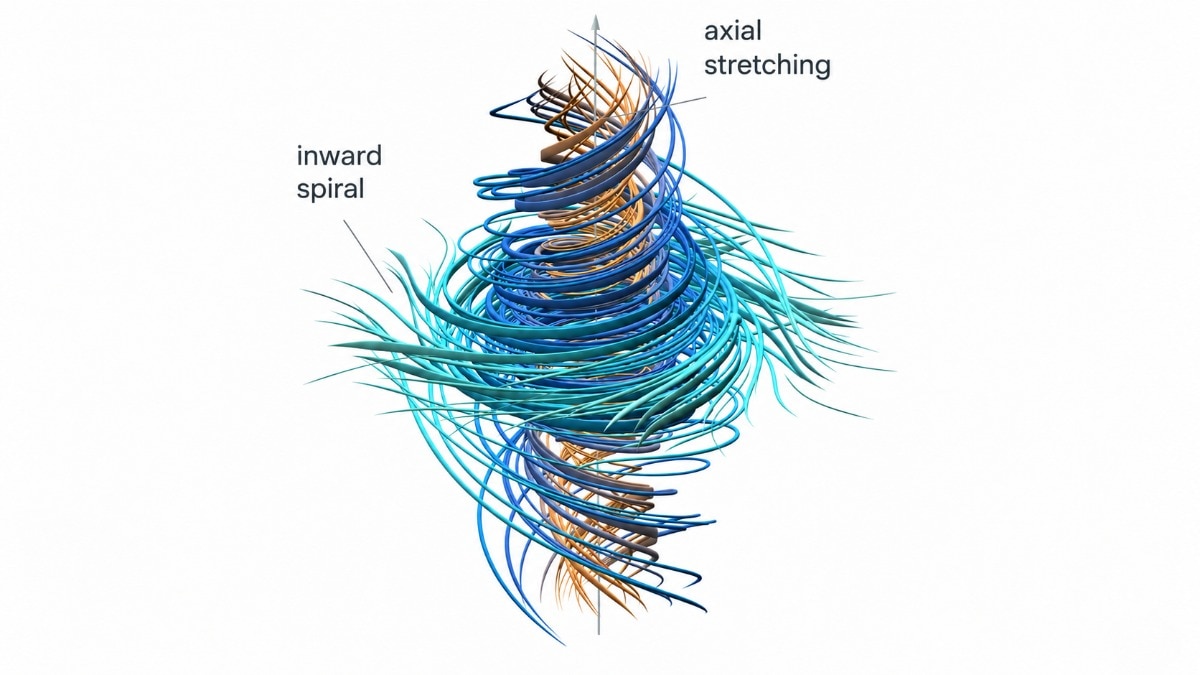
OpenAI Claims Navier-Stokes Breakthrough After 88-Hour AI Effort

OpenAI Says AI Agents Solved Decades-Old Maths Problem
OpenAI Navier-Stokes Claim Raises Questions About AI Research
Sridhar Vembu Warns Software Engineers AI May Reduce Human Roles

OpenAI delays Astra launch over possible critical cyber capabilities