

17 hrs ago
Anthropic’s AI Gene-Editing Claim Faces Questions Over Novelty
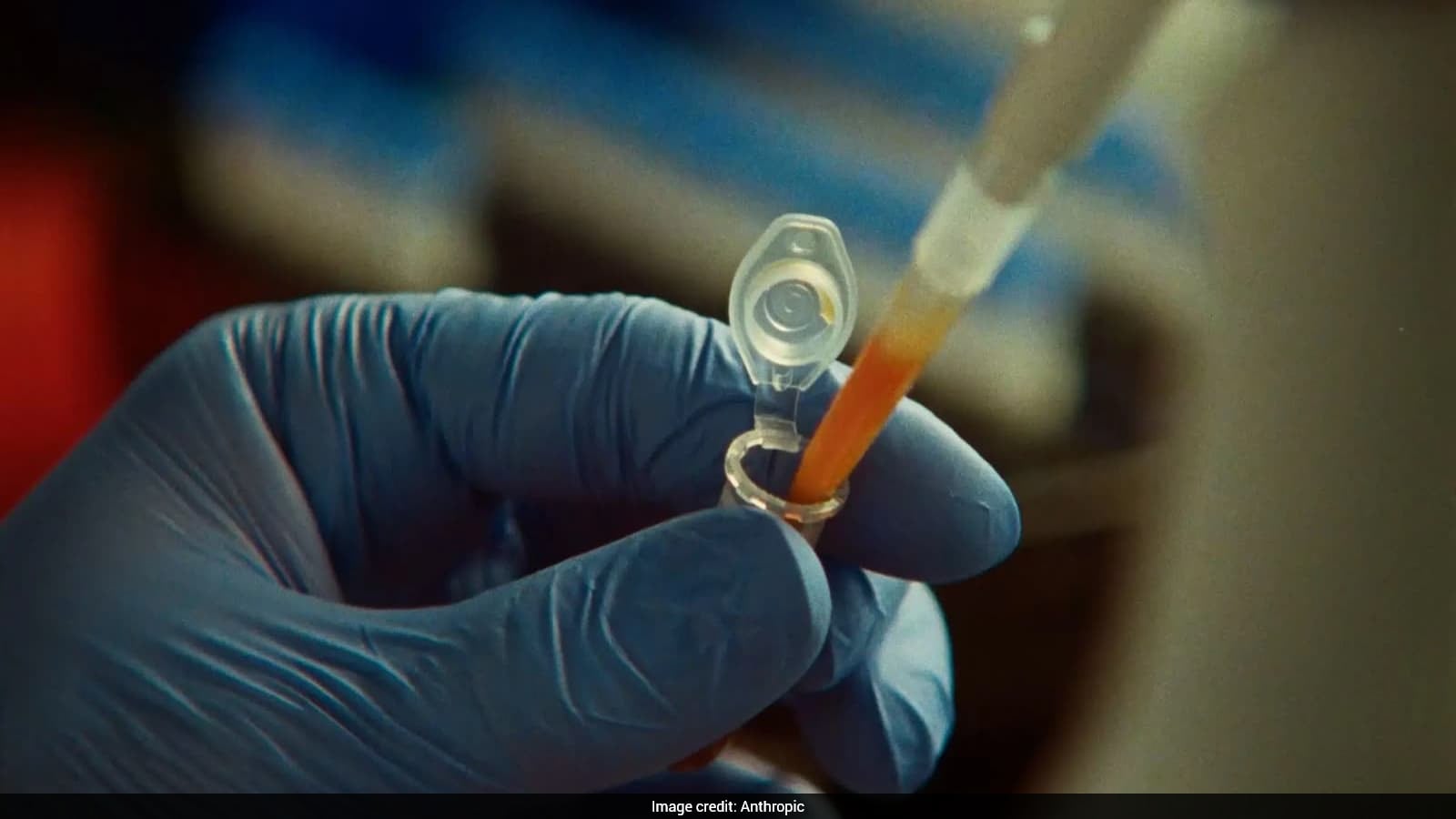
Anthropic says its AI model, Claude, spotted a pattern in the DNA of viruses that infect bacteria.
The company named the system ART.
Some features look a little like parts of CRISPR, a tool scientists use to change DNA.
But scientists have not yet shown what ART does or whether it can edit genes.
A researcher at the University of Copenhagen says his team had studied the same system for years.
That has raised questions about whether Claude found something new and whether earlier research influenced the result.
Anthropic says Claude was not trained on conversations with users.
The research still needs testing and has not appeared in a peer-reviewed journal.

Anthropic said Claude identified a bacteriophage system it called array-associated reverse transcriptases, or ART.
The company said about 950 AI agents examined more than 200,000 reverse transcriptases over roughly 21 hours.
Anthropic said ART has features resembling CRISPR, but researchers have not shown that it edits genes.
University of Copenhagen researcher Mario Rodriguez Mestre said his team had studied the same system for years and questioned the claim of an independent discovery.
Anthropic said Claude was not trained on user transcripts; the research has not been published in a peer-reviewed journal.
- Who
- Anthropic and its Claude AI model; researcher Mario Rodriguez Mestre and his University of Copenhagen team.
- What
- Anthropic said Claude identified a pattern associated with reverse transcriptases, which it called ART; the novelty and significance of the claim are disputed.
- Where
- The system was identified in bacteriophages, viruses that infect bacteria; Mestre is at the University of Copenhagen.
- When
- Anthropic announced the finding on September 23; the article says the challenge followed days later.
- Why
- The claim matters because ART may offer clues to gene-editing tools, but its function and any practical application remain unestablished.
Anthropic’s account
Mestre’s concerns
Whether the finding was independent and new
Anthropic’s account
Anthropic described Claude's agents as identifying a pattern in genetic databases; the company said the underlying reverse transcriptase was known, while the pattern suggested a previously uncharacterised system.
Mestre’s concerns
Mario Rodriguez Mestre said his team had studied the same system for years and questioned whether the claimed discovery was genuinely independent of that work.
Possible influence of user research
Anthropic’s account
Anthropic said Claude was not trained on user transcripts, and the article says there is no established evidence it used Mestre's unpublished work.
Mestre’s concerns
Mestre said he had shared unpublished research material with Claude and questioned whether information from his AI interactions could have influenced the result.
Key facts
- System name
- Array-associated reverse transcriptases (ART)
- Organisms involved
- Bacteriophages, viruses that infect bacteria
- AI analysis described
- About 950 agents searched more than 200,000 reverse transcriptases
- Reported analysis time
- About 21 hours
- Announcement date
- September 23
- Research status
- Researchers have not established ART's function or shown that it edits genes
- Publication status
- Not yet published in a peer-reviewed scientific journal, according to the article
Sources
Related news

Anthropic Defends Claude’s Claimed Discovery of a Novel Enzyme

Claude Helps Identify CRISPR-Like Enzyme System in 21 Hours

Anthropic Says Claude Found CRISPR-Like System in Bacteriophage DNA

Anthropic Blocks AI Misuse Linked to Potential Bioweapons Research

Anthropic Quietly Opens Biology Lab in AI Drug Discovery Race

Anthropic Builds Biology Lab While Expanding AI Drug Ambitions

Gene-edited hypoallergenic dogs revive questions about human cruelty
