1 hr ago
How to Strengthen Your Neck for Screen-Filled Days

Looking down at a phone for a long time makes your neck work harder.
The article says a forward-tilted head can put much more load on the neck than holding it upright.
Long periods without moving may contribute to stiffness and tension.
A doctor recommends gentle exercises for the front and back of the neck, as well as the shoulders and upper back.
These exercises are meant to build strength and endurance, not force your body into one perfect pose.
Keep screens closer to eye level when you can.
Take a short break to stand, walk or stretch every 30 to 45 minutes.
Stop if an exercise causes sharp pain, numbness that travels, or dizziness.

A neutral head position places about 4.5 to 5 kilograms of load on the neck; a 60-degree forward tilt can raise that load to about 27 kilograms.
Dr Nitish Dhiman says prolonged positions, repetitive activities, limited movement and insufficient conditioning can contribute to neck strain.
The article recommends five exercises: deep neck-flexor tucks, four-way isometric holds, gentle neck extensions, neck and shoulder rolls, and scapular squeezes.
Keep screens in front of you near eye level and take 2-to-5-minute movement breaks every 30 to 45 minutes.
Exercises should be controlled and consistent, and should not cause sharp pain, radiating numbness or dizziness.
- Who
- Dr Nitish Dhiman, Consultant and Assistant Professor of Physical Medicine and Rehabilitation at Amrita Hospital, Faridabad, offers the guidance.
- What
- Advice on neck-strengthening exercises and everyday habits to reduce strain associated with prolonged screen use.
- Where
- The advice concerns screen use at work and with smartphones; Dr Dhiman is identified with Amrita Hospital in Faridabad.
- When
- The article gives no publication date; it recommends movement breaks every 30 to 45 minutes.
- Why
- Prolonged positioning, repetitive activity, limited movement and insufficient physical conditioning can increase demands on the neck.
Key facts
- Head load, neutral position
- Approximately 4.5 to 5 kilograms
- Head load, 60-degree forward tilt
- Up to approximately 27 kilograms
- Recommended exercises
- Deep neck-flexor tucks; four-way isometric holds; gentle neck extensions; neck and shoulder rolls; scapular squeezes and upper-back holds
- Movement breaks
- Brief breaks of 2 to 5 minutes every 30 to 45 minutes
- Screen positioning
- Place the monitor in front of you, with its top at or slightly below eye level; bring a smartphone closer to eye level
- Warning signs during exercise
- Sharp pain, radiating numbness or dizziness
Quotes
Dr Nitish Dhiman
Consultant and Assistant Professor of Physical Medicine and Rehabilitation at Amrita Hospital, Faridabad
“The cervical spine plays a vital role in the way we move and function. It connects the head to the rest of the spine and must simultaneously provide mobility, stability, and endurance while supporting the weight of the head.”
 firstpost.com
“Even an ergonomically well-designed workstation cannot compensate for prolonged static posture.”
firstpost.com
Sources
Related news

Screen Habits Can Strain the Neck, Doctor Explains

Experts Warn Against Ignoring Back and Neck Pain
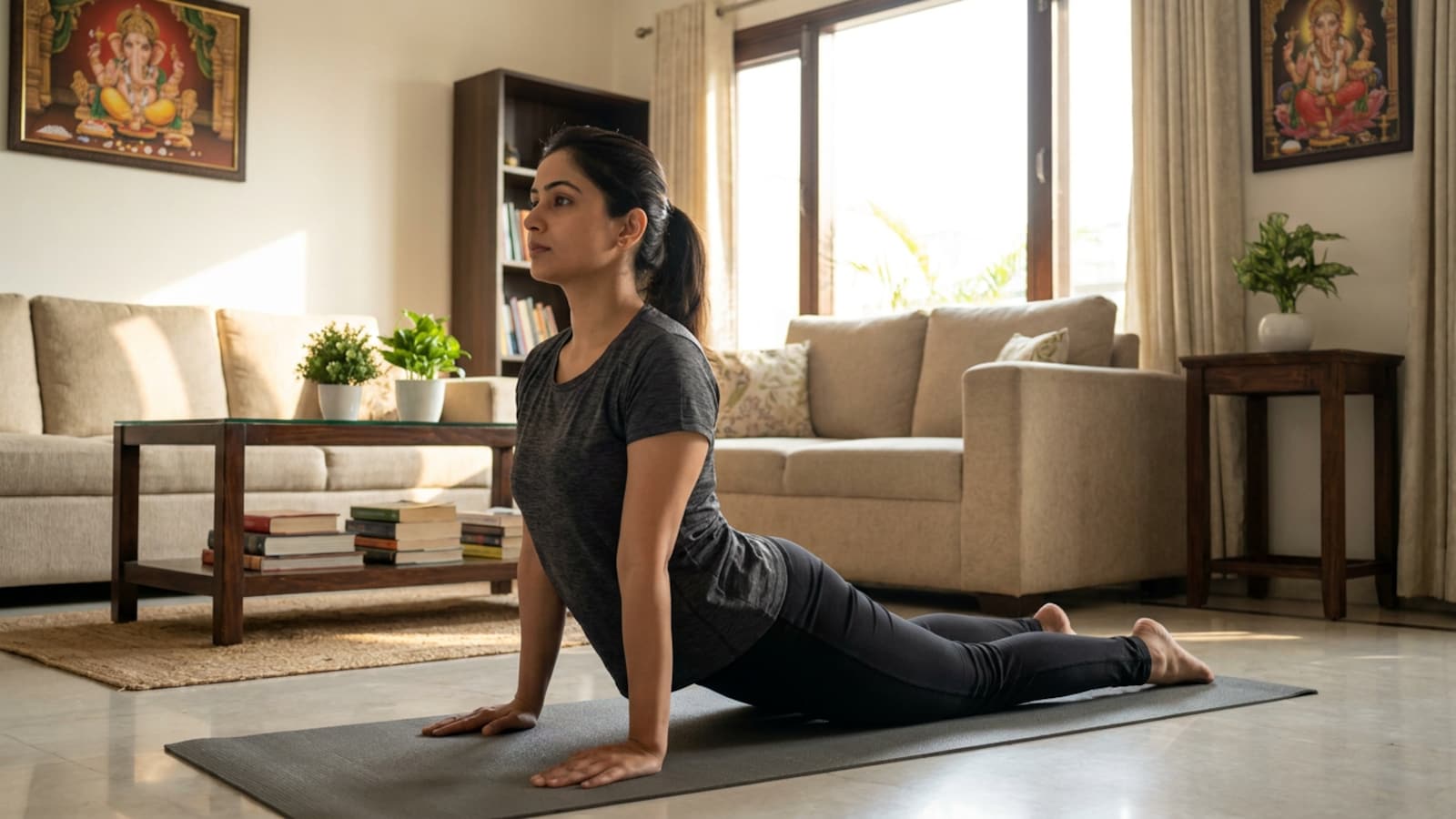
Eight Yoga Poses May Help Improve Spine Flexibility
Young Indians Turn To Physiotherapy Amid Screen-Driven Stiffness
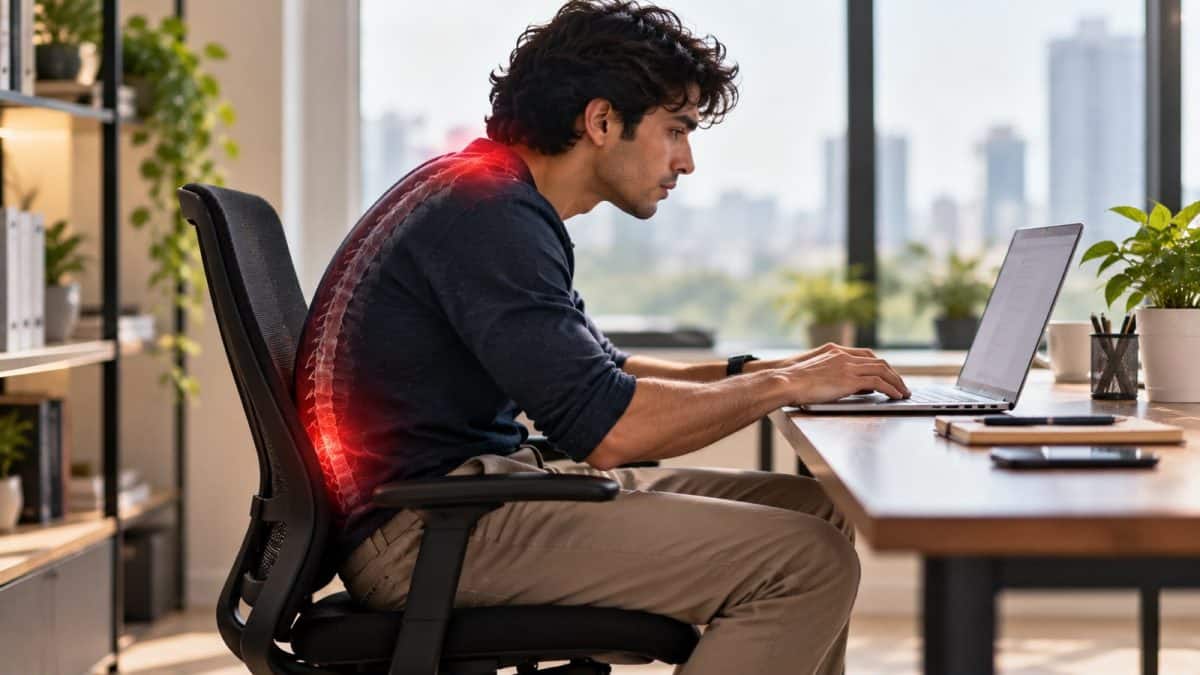
Doctor Shares Seven Ways to Counter Prolonged Sitting Damage
Neurosurgeon Shares 10 Habits For A Razor-Sharp Brain

Why Ears Feel Blocked After Flights and When to Seek Care

How to Take Omega-3 Supplements Safely and Effectively

Why Calf Muscles Are Called the Body’s Second Heart