1 hr ago
Why Ears Feel Blocked After Flights and When to Seek Care
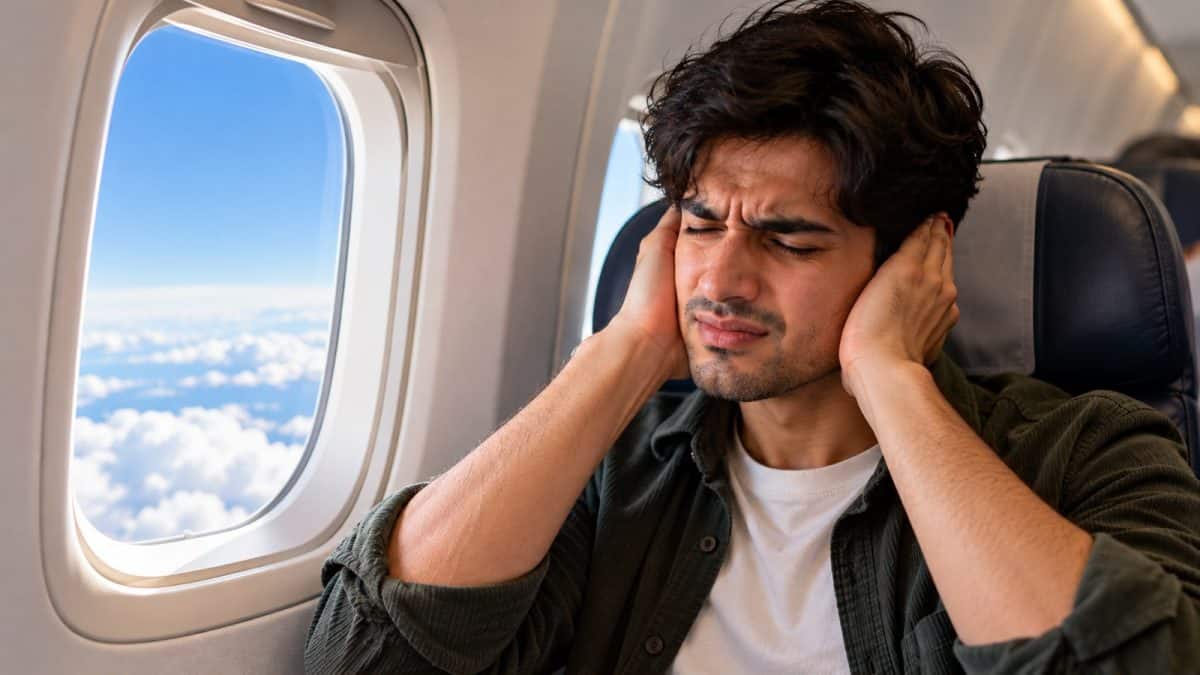
During a flight, air pressure changes, especially when the plane comes down to land.
A small passage called the Eustachian tube helps keep pressure balanced inside your ear.
If it does not open quickly enough, your eardrum can be pulled inward.
That can make your ear feel full or painful and make sounds seem quiet.
A cold or allergies can make the passage harder to open.
Swallowing, yawning, drinking water or chewing gum may help your ears adjust.
Do not blow hard to force your ears to pop, because that could hurt delicate parts of the ear.
Get medical help for sudden hearing loss, severe pain, spinning dizziness or bleeding.
If the blocked feeling or reduced hearing does not go away, have your ear checked.

Changing cabin pressure, especially during descent, can cause aeroplane ear.
A Eustachian tube that cannot equalise pressure may pull the eardrum inward, causing pain, fullness and muffled hearing.
Colds, sinus infections and nasal allergies can inflame the tube and make symptoms more likely.
Yawning, swallowing, drinking water or chewing gum during take-off and landing may help; babies can feed during descent.
Seek prompt medical assessment for sudden hearing loss, severe pain, spinning dizziness or bleeding, and get checked if symptoms persist.
- Who
- Air travellers experiencing blocked ears; ENT doctor Dr Aparna Mahajan explains the condition.
- What
- The article explains aeroplane ear, its causes, prevention and warning signs.
- Where
- On aircraft and after air travel.
- When
- During flights, particularly take-off and landing, and after landing if symptoms persist.
- Why
- Changing cabin pressure can outpace the Eustachian tube's ability to equalise pressure across the eardrum.
Key facts
- Condition
- Ear barotrauma, commonly called aeroplane ear
- Main trigger
- Changes in cabin pressure, particularly during descent
- Affected structure
- The Eustachian tube, which links the middle ear with the back of the nose
- Possible symptoms
- Ear fullness, pain and muffled hearing
- Risk factors mentioned
- A cold, sinus infection or nasal allergies
- Ways to help equalise pressure
- Yawning, swallowing, drinking water or chewing gum during pressure changes
- Urgent warning signs
- Sudden hearing loss, severe pain, spinning dizziness or bleeding
Quotes
Dr Aparna Mahajan
Senior Consultant in ENT at Amrita Hospital, Faridabad.
“Sudden loss of hearing, severe pain, spinning dizziness, or bleeding need to be evaluated right away.”
 firstpost.com
Sources
Related news

British Airways BA295 Returns to Heathrow After Pressurisation Problem
British Airways Flight Returns Safely After Emergency Descent Over Ireland
Why Your Heart May Race After A Long Flight

Delta flight drops to 9,000 feet after pressurisation failure
Indian Passenger Dies After Reported Asthma Attack on Flight

Over 200 Passengers Stranded After Delhi-Abu Dhabi Etihad Flight Cancellation

How to Strengthen Your Neck for Screen-Filled Days

How to Take Omega-3 Supplements Safely and Effectively

Screen Habits Can Strain the Neck, Doctor Explains

Why Calf Muscles Are Called the Body’s Second Heart