1 hr ago
UPI Merchant Fees Aim to Strengthen Digital Payments and Banks

UPI is a system people use to pay businesses digitally.
Starting October 15, some payments above ₹2,000 will include a small fee for merchants.
The fee will be 0.4% and cannot be more than ₹300 for very large payments.
Payments between two people will stay free.
Small merchants receiving up to ₹1 lakh each month through certain UPI QR payments will also be protected from the regular fee.
Some payments, such as those for rail tickets, fuel, utilities, taxes, and insurance, will instead have a flat ₹5 merchant fee.
Banks and payment companies receive these fees for processing transactions.
Supporters say the change will help keep the UPI system financially healthy, while banks have been advised not to pass the cost to customers.

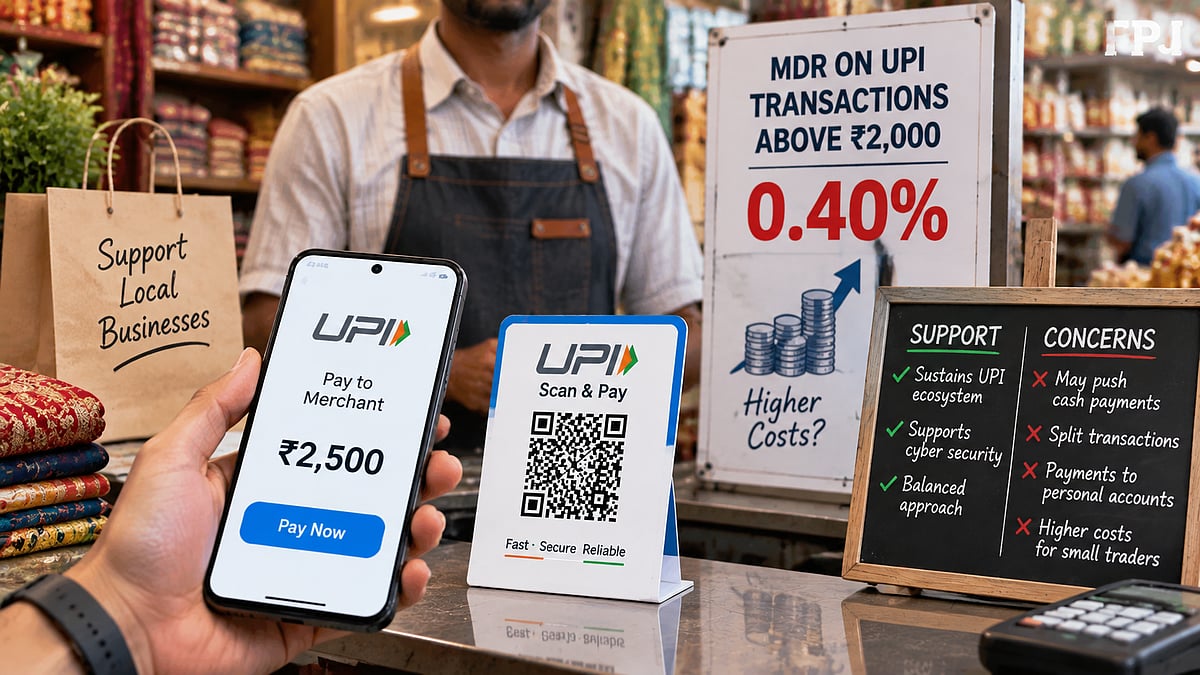
A 0.4% Merchant Discount Rate will apply from October 15 to specified person-to-merchant UPI payments above ₹2,000.
The charge will be capped at ₹300 for transactions worth ₹75,000 or more.
Person-to-person payments and person-to-merchant payments up to ₹2,000 will remain free.
Small merchants receiving up to ₹1 lakh monthly through UPI QR under the P2PM category will remain outside the conventional MDR framework.
Supporters say the fees could make UPI financially sustainable, provide revenue for investment, and help revive banks’ card and ATM businesses.
- Who
- The National Payments Corporation of India announced the changes; banks, payment service providers, merchants, and UPI users are affected.
- What
- A Merchant Discount Rate of 0.4% will apply to specified person-to-merchant UPI transactions above ₹2,000, with exemptions and caps.
- Where
- The changes apply within the UPI digital payments ecosystem.
- When
- The new norms will begin on October 15; the articles also cite UPI transaction figures for 2025-26.
- Why
- The stated aim is to create sustainable revenue for processing transactions and support investment in the UPI ecosystem.
Supporters of the fee
Concerns about the fee
Financial sustainability
Supporters of the fee
Supporters say zero MDR makes the UPI ecosystem financially unsustainable and that fees can provide revenue for banks and payment providers.
Concerns about the fee
The fee introduces a cost for some merchants that previously used UPI under a zero-MDR policy.
Effect on customers
Supporters of the fee
The Finance Ministry has advised banks to ensure eligible merchants do not pass the cost on to customers.
Concerns about the fee
Merchants receiving more than ₹1 lakh monthly through UPI may face the fee, creating concern about whether transaction costs could ultimately affect prices.
Digital-payment growth
Supporters of the fee
Supporters say the balanced approach can preserve seamless digital payments while enabling investment and greater reach.
Concerns about the fee
The change could make some UPI transactions less attractive to merchants compared with the previously free model.
Key facts
- Standard MDR
- 0.4% on specified person-to-merchant UPI transactions above ₹2,000
- Maximum charge
- ₹300 per transaction for payments of ₹75,000 or more
- Effective date
- October 15
- Exempt transactions
- Person-to-person payments and person-to-merchant payments up to ₹2,000
- Small-merchant threshold
- Merchants receiving up to ₹1 lakh monthly through UPI QR under the P2PM category remain outside the conventional MDR framework
- Special-category fee
- A flat ₹5 merchant fee applies to listed payments including rail tickets, fuel, utilities, insurance, taxes, and agricultural inputs
- 2025-26 UPI volume
- More than 24,000 crore transactions worth ₹314 lakh crore
Quotes
Standing Committee on Finance
Parliamentary committee that issued recommendations on the financial sustainability of UPI
“the absence of MDR makes the UPI ecosystem financially unsustainable”
 indianexpress.com
Sources

Related news

UPI Sets 0.4% MDR on High-Value Merchant Payments

UPI MDR Begins October 15, Merchants Face Charges, Customers Don’t

New UPI MDR Rules Keep Consumers Free, Charge Eligible Merchants
UPI Payments Above ₹2,000 Face New Merchant Fee

India Adds UPI Merchant Fees Above ₹2,000

UPI Charges Debate Grows as MDR Framework Opens Higher Payments

Discount brokers challenge UPI fees over thin margins and costs
Government says Congress MPs backed UPI MDR; Rahul Gandhi objects
Surjewala Seeks Annual Fees From Foreign UPI Platforms
UPI Debate Grows After Chandni Chowk Shops Reportedly Stop Payments