

2 hrs ago
How India Protected Fertiliser Supplies During Global Disruptions
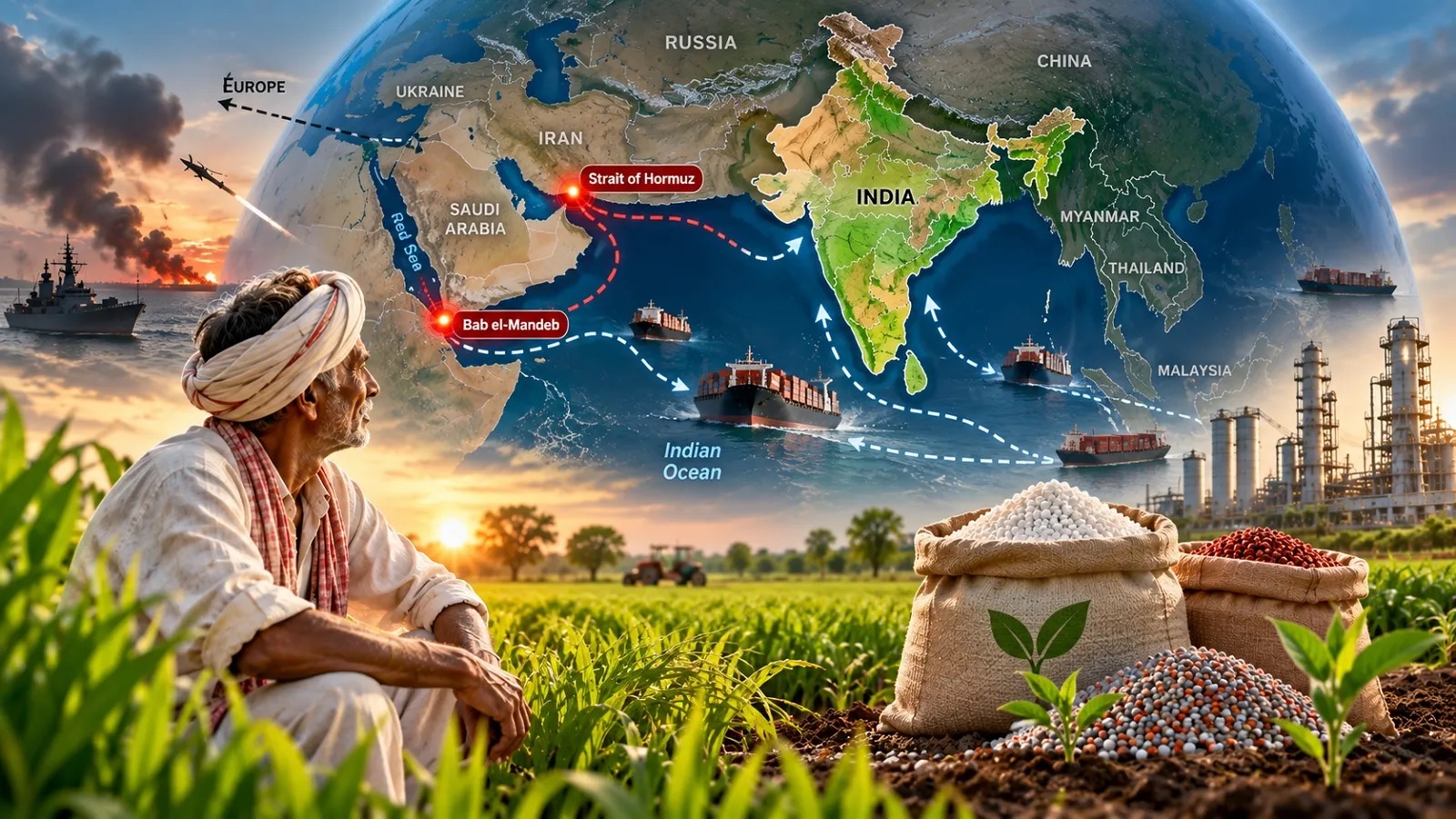
Fertilisers help crops grow, but many countries had trouble making or shipping them.
Ships faced delays and higher costs in important sea routes, and trade from Russia was also complicated.
India buys much of its fertiliser from other countries.
The article says India used long-term deals to secure supplies instead of relying only on changing market prices.
The government also paid more subsidies so farmers could buy fertiliser at affordable prices.
Supplies made in India and stored in reserves helped too.
These steps helped farmers get fertiliser during important planting seasons.
The article says this helped protect crops and keep food prices steadier.

Disruptions to Red Sea and Strait of Hormuz shipping, alongside complications involving Russian exports, threatened fertiliser supplies.
India relies on imports for roughly a third of its urea, a substantial share of its DAP, and virtually all of its potash.
The article says domestic production, government buffer stocks, and favourable monsoon conditions helped meet Kharif-season needs.
For Rabi crops, India’s reliance on imported DAP, MOP, and NPK made timely supply especially important.
The article credits long-term import contracts, expanded nutrient subsidies, and increased domestic production with helping stabilise supplies and prices.
- Who
- India’s government, fertiliser importers, and farmers.
- What
- India used import contracts, subsidies, reserves, and domestic production to maintain fertiliser supplies.
- Where
- India, amid disruptions affecting the Red Sea, the Strait of Hormuz, and Russian fertiliser trade.
- When
- During recent global supply disruptions and the Kharif and Rabi seasons.
- Why
- To keep fertiliser available and affordable for farmers despite shipping and supply disruptions.
Key facts
- Urea imports
- India imports roughly a third of its urea.
- DAP imports
- India imports a substantial share of its Diammonium Phosphate (DAP).
- Potash imports
- India imports virtually all of its Muriate of Potash (MOP).
- Kharif support
- Domestic production, government buffer stocks, and favourable monsoon conditions helped meet Kharif needs, according to the article.
- Rabi requirements
- Winter crops including wheat, mustard, and chickpea need phosphorus and potassium at the start of sowing.
- Policy measures
- The article cites long-term import contracts and expansion of the Nutrient Based Subsidy mechanism.
- Domestic production
- The article says India reopened or expanded fertiliser units and increased adoption of Nano Urea.
Sources
Related news

Panagariya Says India Can Weather Food and Fertiliser Disruptions
Sitharaman Warns Hormuz Disruption Threatens Global Food Security
India’s urea import costs fall 57% as supplies improve
Puri Says India Secured Energy Imports Amid Geopolitical Crises
P K Mishra Says Trade Measures Can Be Weaponised
Global Diesel Crunch Puts India at Center of Supply
Iran War Turns US Midterm Elections Into Another Front
G7 to Release 100 Million Barrels as Diesel Prices Surge

Crude Oil Moves Through Hormuz as Fuel Shortages Persist

Trump Expands Tax-Free Red Diesel Access as Fuel Prices Rise
