4 hrs ago
Global Diesel Crunch Puts India at Center of Supply
Diesel is an important fuel for trucks, farms, and construction.
Several wars and shipping problems have made it harder and more expensive to move diesel around the world.
Russia is exporting much less diesel because of domestic shortages and restrictions.
The United States may also stop exporting diesel for 90 days, which could reduce supplies further.
India is helping fill the gap by refining crude oil into diesel and sending it to other countries.
India gets most of its crude oil from abroad but buys it from more countries than before.
Its oil minister says India will keep supplying foreign customers and will not let its own fuel stations run dry.
Europe is becoming especially dependent on diesel shipments from India.
However, India’s own petroleum-product exports have fallen compared with last year.

India says it will honor petroleum-product export commitments despite possible 100% U.S. tariffs.
Wars involving Iran and Ukraine, along with disruptions around the Strait of Hormuz, have tightened diesel supplies.
The United States is considering a 90-day diesel-export ban, while prices have reached records in Europe and the U.S.
India has overtaken Russia as the second-largest diesel supplier after the United States, accounting for about 10% of global shipments.
India expanded crude sourcing to 41 countries and has roughly 258.1 million tonnes per year of installed refining capacity.
- Who
- India, the United States, Russia, European buyers, and other participants in the global diesel market.
- What
- Global diesel supplies are tightening, while India is expanding its role as a refined-fuel supplier.
- Where
- The disruption affects global markets, with major impacts in the United States, Europe, the Strait of Hormuz, and the Bab el-Mandeb route.
- When
- The article describes developments in 2026, including data from July and August and restrictions extending to January 2027.
- Why
- Wars, refinery disruptions, export restrictions, shipping risks, and historically low diesel inventories are squeezing supplies.
Export Continuity
Export Restrictions
India's petroleum-product exports
Export Continuity
India says it will continue exporting petroleum products, honor overseas commitments, invest in refining, and maintain domestic fuel availability.
Export Restrictions
The United States is seriously considering a 90-day diesel-export ban to protect domestic supply and address rising prices before the midterm elections.
Russia's fuel policy
Export Continuity
International buyers, particularly in Europe, are increasingly turning to India as Russian diesel exports remain limited.
Export Restrictions
Russian officials have extended diesel-export restrictions until January 2027 to support the domestic market after refinery attacks caused shortages and price increases.
Key facts
- India's crude sources
- Expanded from 27 countries to 41 countries.
- India's refining capacity
- About 258.1 million tonnes per year across 22 operational refineries; the oil minister cited peak capacity of around 267 million tonnes per year.
- India's crude dependence
- India imports about 90% of the crude oil it processes.
- India's FY26 petroleum-product exports
- 61.5 million tonnes, according to data cited in the article.
- India's global diesel role
- India accounts for about 10% of global diesel shipments and has overtaken Russia as the leading supplier after the United States.
- Potential U.S. measure
- The United States is considering a 90-day ban on diesel exports.
- Russian diesel exports
- Russia's seaborne diesel and gasoil exports were reported at 150,000 barrels per day in August, down 81% from the five-year seasonal average.
Quotes

Hardeep Singh Puri
India’s Union Minister for Petroleum and Natural Gas
“I’ve said let’s not send out the diesel. We make a lot of diesel… I’ve called for it. I’ve called for it within my people…That can oftentimes lead to a little bit of an increase on gasoline for cars, so we’re looking at it very seriously. We may do it”
 financialexpress.com
“We expanded crude sourcing from 27 countries to 41, strengthened LPG security by increasing domestic production from around 34,000 tonnes a day to 55,000 a day, ensured peak refining capacity of around 267 million tonnes per annum”
financialexpress.com
Sources
Related news

India's Diesel Exports Rise as Russia Supply Falters
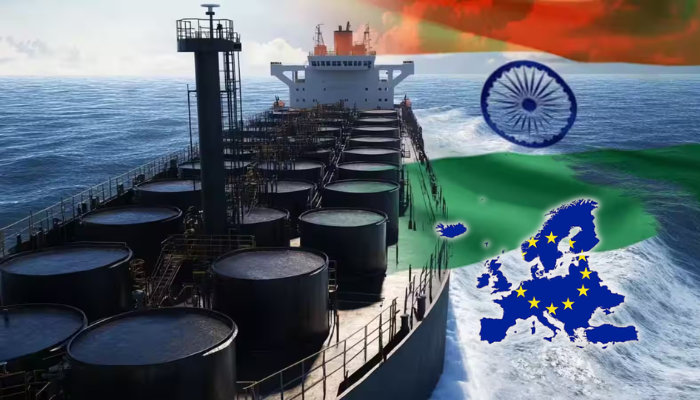
India Fills Europe’s Diesel Gap as Russian Supplies Falter
India Supplies Europe’s Diesel Despite Record Crude Import Dependence
Trump’s Proposed Diesel Export Ban Raises Global Fuel Concerns
Trump diesel threat and India tariffs imperil Europe’s fuel supply
Trump Backs Diesel Export Ban Amid Global Fuel Supply Squeeze
Trump Weighs Military Action or Deal as Iran Awaits Response
Rupee Falls to 96.31 as Oil, Yields, FII Selling Weigh

Iran Plans Broader Retaliation as Diplomacy Faces Slim Prospects
Indian refiners hire tankers to navigate Strait of Hormuz