

3 hrs ago
Supreme Court Seeks Class VI Exemption From CBSE Language Policy
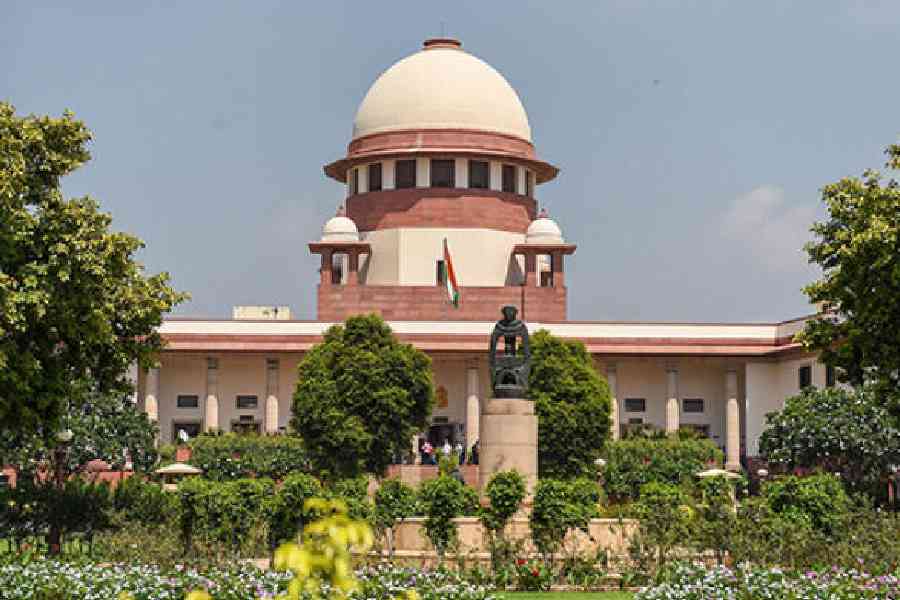
The CBSE introduced a rule requiring some students to study three languages.
The rule originally covered Classes VI, VII, VIII and IX.
It was later changed so that it would apply only to Class VI.
Some students and parents asked the Supreme Court to stop or change the rule.
They said studying the extra languages could be difficult and stressful.
The court asked the Centre to consider giving Class VI students an exemption.
The court also questioned why English was described as a foreign or non-indigenous language.
The Centre will discuss these questions and respond at the next hearing on September 17.

The Supreme Court asked the Centre to consider exempting Class VI students from the CBSE’s mandatory three-language policy.
The Centre will consult officials and clarify its position on an exemption and English’s classification by September 17.
The CBSE initially required two Indian languages and one foreign language for Classes VI through IX from 2026-27.
The policy was later revised to apply only to Class VI students.
Students and parents challenged the policy, calling it impractical and stressful and questioning English’s treatment as a foreign language.
- Who
- The Supreme Court, the Centre, the Central Board of Secondary Education, and petitioning students and parents.
- What
- The court asked the Centre to consider exempting Class VI students from the CBSE three-language policy and to clarify English’s classification.
- Where
- The matter was heard by the Supreme Court in India.
- When
- The latest hearing was on Wednesday; the next hearing is scheduled for September 17, while the policy is set to begin in 2026-27.
- Why
- Petitioners say the policy is impractical and stressful, while the court is examining its language classifications and broader constitutional questions.
Court and Petitioners
Centre and CBSE Policy
Class VI exemption
Court and Petitioners
The Supreme Court asked the Centre to consider an exemption, while students and parents challenged the policy as impractical and stressful.
Centre and CBSE Policy
The Centre has not yet stated a final position on an exemption and sought time for consultations.
English classification
Court and Petitioners
The court questioned treating English as a foreign or non-indigenous language, noting its deep historical roots in India.
Centre and CBSE Policy
The Centre said it has certain issues with considering English a native language and wants to make further submissions.
Scope of the policy
Court and Petitioners
Petitioners argue the language requirements create difficulties for students, including those preparing for board examinations.
Centre and CBSE Policy
The CBSE circular established the requirement, initially for Classes VI through IX, before being revised to cover only Class VI.
Key facts
- Policy requirement
- Two Indian languages and one foreign language.
- Initial coverage
- Classes VI, VII, VIII and IX from 2026-27.
- Revised coverage
- The rules were later revised to apply only to Class VI.
- Court request
- The Centre was asked to consider an exemption for Class VI students.
- English dispute
- The court questioned classifying English as a non-native, non-indigenous or foreign language.
- Next hearing
- September 17.
- Legal status
- The Supreme Court has issued notices but has not stayed the CBSE circular.
Quotes
Justice Joymalya Bagchi
Supreme Court judge hearing the CBSE language-policy challenge
“We have to examine to what extent English can be considered a ‘non-indigenous language’. I personally have serious reservations about the expression ‘native’. It has a colonial connotation. It should be ‘indigenous’. You see the historical perspective of English and the extent of the roots it has spread in Indian society.”
 telegraphindia.com
“Rather, English, which has taken deep historical roots in the country, should be considered as an 'indigenous' language”
telegraphindia.com
Sources
Related news

Supreme Court Questions English Status in CBSE Language Rule

Supreme Court Asks CBSE to Revisit Three-Language Policy Rollout
Supreme Court Questions CBSE Three-Language Policy Rollout

Supreme Court Questions Pace and Design of CBSE Language Policy

Supreme Court Urges CBSE Review Three-Language Policy, Ease Pressure
Centre Develops CBSE Three-Language Policy Implementation Plan

Uttar Pradesh to Challenge High Court’s Akriti Detention Ruling
Supreme Court to Review Satya Niketan Collapse Issues
Supreme Court Considers Pan-India Safety Checks After PG Collapse
Centre Seeks Transfer of Anil Ambani Black Money Plea
