1 week ago
Tibet Dam-Building Raises Flood and Earthquake Concerns Downstream

Heavy rain and swollen rivers have caused serious flooding in parts of Nepal and India.
Some of the rivers begin in Tibet and flow into other countries.
China has built dams on some Tibetan rivers and plans an enormous new dam called Medog.
Supporters say dams can provide much-needed electricity and improve energy security.
Critics worry that the dam would be built in an area where strong earthquakes can happen.
An earthquake or dam failure could send dangerous water, mud, and landslides downstream.
Changes to sediment could also harm farms and ecosystems.
Researchers are calling for safer planning, better warnings, and more openness about the project.

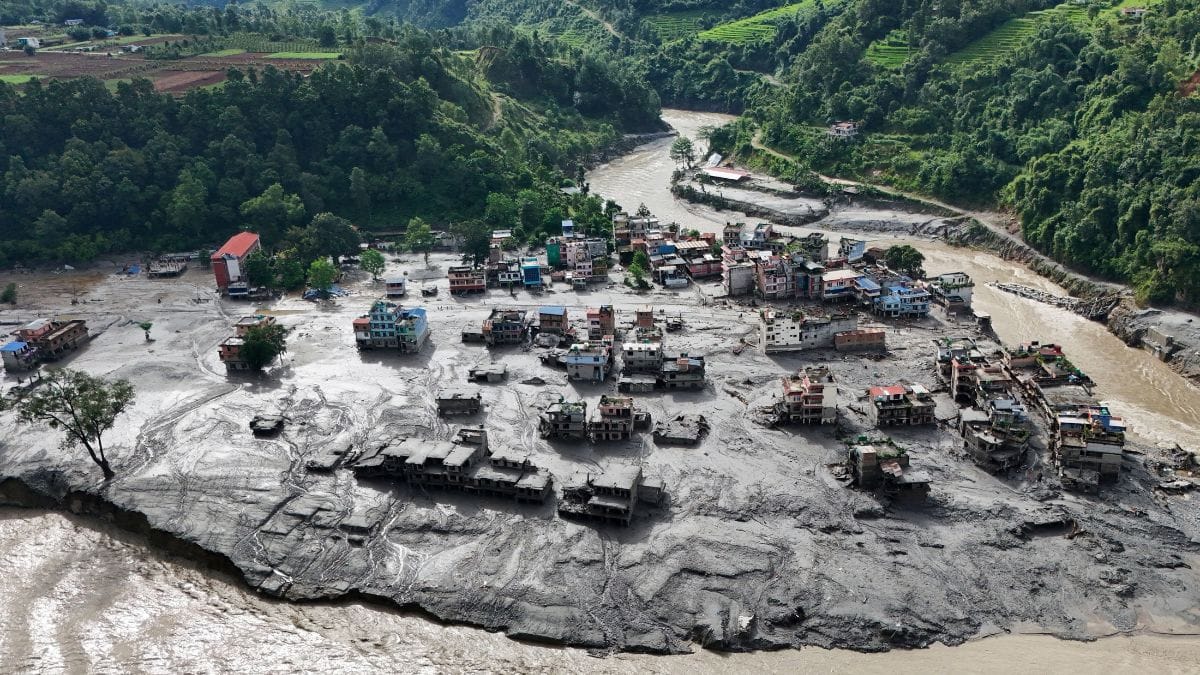
Flash floods from Tibet's Bhote Koshi River caused deaths and widespread destruction in Nepal.
Flooding in India’s Kosi and Brahmaputra basins threatens communities, farms, and livelihoods.
China has built several Tibetan dams and plans the proposed 60,000-megawatt Medog Dam.
Reports warn that earthquakes, landslides, mudflows, and altered sediment could magnify downstream risks.
Experts have urged smaller water projects, stronger early-warning systems, and transparent data sharing.
- Who
- Residents of Nepal, India, and Bangladesh could be affected; Chinese authorities are pursuing the dam-building programme, while researchers and experts have raised concerns.
- What
- Flooding has caused deaths and damage, while reports link wider regional risks to China's existing and proposed dams in Tibet.
- Where
- The reported impacts span Tibet, Nepal, India's Bihar and Assam, and downstream areas of Bangladesh.
- When
- The Nepal flooding was reported on Wednesday; the article also cites a January 2025 earthquake and a 2026 report.
- Why
- China is expanding hydropower generation for energy security, while critics warn of seismic, environmental, flood-management, and geopolitical risks.
Risk and Environmental Concerns
Hydropower and Energy Security
Purpose of the project
Risk and Environmental Concerns
Researchers and critics argue that the Medog Dam is also connected to geopolitical objectives and frontier consolidation, not only electricity generation.
Hydropower and Energy Security
China's broader hydropower programme is presented as a way to harness rivers and strengthen energy security.
Safety and seismic risk
Risk and Environmental Concerns
Experts warn that the proposed dam lies near the collision boundary of the Indian and Eurasian tectonic plates, where earthquakes, landslides, and mudflows could threaten communities.
Hydropower and Energy Security
The reports describe the dam as a major engineering project, but they do not provide a detailed public response from Chinese authorities addressing these concerns.
Downstream effects
Risk and Environmental Concerns
India and Bangladesh could face risks from sudden water releases, dam failures, altered sediment flows, and damage to agriculture and ecosystems.
Hydropower and Energy Security
Supporters of hydropower development would point to the proposed project's very large electricity-generating capacity, although the article does not quote specific supporters.
Key facts
- Proposed Medog capacity
- 60,000 megawatts
- Estimated Medog cost
- About 1 trillion yen, or approximately $148 billion
- Existing Tibetan dams named
- Zangmu, Jiexu, and Jiacha
- Three Gorges Dam capacity
- More than 22,500 megawatts
- Brahmaputra flooding impact
- At least 50 deaths and about 700,000 people displaced in Assam, according to the article
- Main safety concerns
- Earthquakes, landslides, mudflows, unstable sediment, permafrost, and downstream flooding
- Suggested alternatives
- Smaller adaptive projects, robust early-warning systems, and transparent data sharing
Quotes
Institute for Security and Development Policy (ISDP) report
A Stockholm-based research and policy organisation cited in the article
“Recall the January 2025 earthquake on the Tibetan Plateau that caused massive damage to human life, ecology, and security. Combined with the political sensitivities surrounding Tibet and China's upper-riparian status, the project raises a series of questions that cannot remain outside the purview of global climate governance, especially the United Nations Framework Convention on Climate Change (UNFCCC)”
 thehansindia.com
“Even if the Motuo dam is built well enough to withstand an earthquake, the landslides and mudflows resulting from quakes are difficult to contain and can kill people living nearby. Experts say the massive excavation involved in dam construction could make such disasters more likely”
thehansindia.com
Sources
Related news

Nepal Floods Renew Concerns Over China’s Tibet Dam Projects

China’s Proposed Yarlung Tsangpo Mega-Dam Raises Downstream Concerns
Himalayan Dam Boom Raises Flood and Seismic Risks

Nepal Flash Floods Highlight Himalayan Climate and Dam Risks

Why the Brahmaputra’s Bigger Risk Is Cascading Flood Failure

India’s Record Wheat Harvest Opens $1.5 Billion Export Window

West Bengal CM Crushes Nearly 2 Lakh Seized Syrup Bottles

India, Bangladesh Seek Deeper Parliamentary and People-to-People Ties

Bangladesh Radicalisation Raises Concerns About Security Spillover Into India

Bengaluru Police Transfer 31 Bangladeshi Nationals for Deportation