1 week ago
China’s Proposed Yarlung Tsangpo Mega-Dam Raises Downstream Concerns

China is planning a very large dam on the Yarlung Tsangpo River in Tibet.
The river later flows through India as the Siang and Brahmaputra, then reaches Bangladesh.
Millions of people depend on this river for water, farms, fishing and homes.
The dam could produce a great deal of electricity and help China’s energy plans.
But storing and releasing water could change when downstream areas receive water.
The dam could also affect the sand and soil carried by the river.
The Himalayan location is prone to earthquakes, landslides and heavy rain.
Scientists say the dam would not automatically cause a disaster, but it needs careful study and constant monitoring.
They also want the countries sharing the river to exchange information and cooperate.

China plans the proposed Medog hydropower project near the Yarlung Tsangpo’s Great Bend, with an expected capacity of about 60,000 megawatts.
The river flows from Tibet through India and Bangladesh, supporting agriculture, fisheries, settlements and other livelihoods.
Experts say the dam’s effects would depend heavily on its operating rules, including how water storage changes seasonal flows.
Scientists highlight potential effects on sediment transport, ecosystems, floods, erosion, seismicity and landslide risks.
They call for stronger monitoring, scientific assessment and information-sharing among China, India and Bangladesh.
- Who
- China is proposing the project; downstream communities and authorities in India and Bangladesh may be affected.
- What
- A proposed Medog hydropower project of about 60,000 megawatts near the Great Bend of the Yarlung Tsangpo.
- Where
- Near the Great Bend in Tibet, in the upper reaches of the river system that flows through India and Bangladesh.
- When
- The article does not provide a construction or completion date.
- Why
- China’s stated purposes are expanding renewable energy generation and strengthening energy security; the project also has major downstream water, environmental and geopolitical implications.
Infrastructure and Energy Case
Downstream Environmental and Safety Concerns
Energy and security
Infrastructure and Energy Case
For Beijing, the project is part of a strategy to expand renewable energy generation and strengthen energy security.
Downstream Environmental and Safety Concerns
Downstream countries are concerned that the project could influence water availability and river conditions beyond electricity production.
Water management
Infrastructure and Energy Case
A large reservoir could allow water to be stored and released at different times, making operational rules central to its effects.
Downstream Environmental and Safety Concerns
Changing the river’s seasonal rhythm could affect agriculture, floods and livelihoods in India and Bangladesh, especially amid monsoon and climate variability.
Engineering risk
Infrastructure and Energy Case
The Great Bend’s steep descent and deep gorge provide exceptional hydropower potential.
Downstream Environmental and Safety Concerns
The same area is geologically active and vulnerable to earthquakes, landslides and sediment changes, requiring detailed assessment and continuous monitoring.
Key facts
- Project
- Proposed Medog hydropower project
- Expected capacity
- About 60,000 megawatts
- River route
- Yarlung Tsangpo in Tibet; Siang in Arunachal Pradesh; Brahmaputra farther downstream; then Bangladesh
- Key downstream regions
- Arunachal Pradesh, Assam and Bangladesh
- Main scientific concerns
- Seasonal water flow, sediment transport, ecosystems, floods, erosion, earthquakes and landslides
- Additional regional development
- India has proposed major projects including the Siang Upper Multipurpose Project
- Experts’ recommendation
- Science-based assessment, monitoring, flood forecasting and cross-border information-sharing
Quotes
Prof Debashish Sengupta
Former Emeritus Professor at IIT Kharagpur specializing in hydrology, transboundary rivers and water security
“A river is not only a volume of flowing water. It is a complete system involving seasonal discharge, sediment movement, ecological processes and human dependence. Any major modification upstream has to be understood in terms of its possible downstream consequences.”
 thestatesman.com
“The river system connects China, India and Bangladesh. Scientific cooperation and reliable information exchange are essential for managing risks.”
thestatesman.com
Sources
Related news

Tibet Dam-Building Raises Flood and Earthquake Concerns Downstream

Nepal Floods Renew Concerns Over China’s Tibet Dam Projects
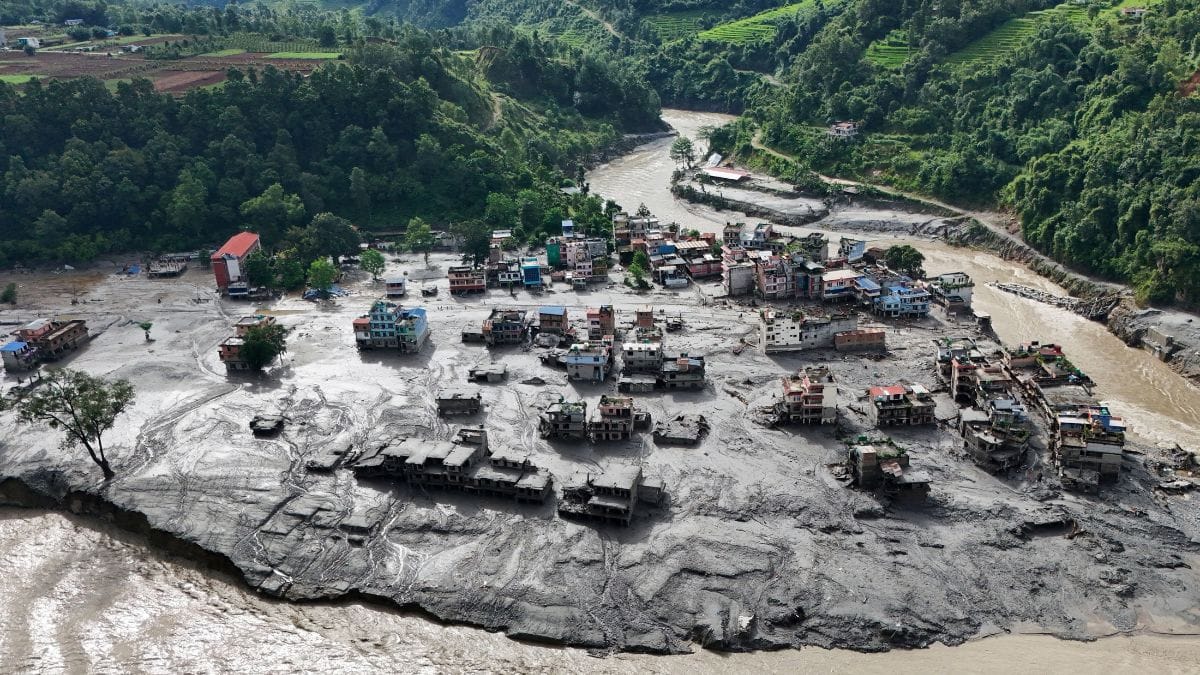
Himalayan Dam Boom Raises Flood and Seismic Risks

Nepal Flash Floods Highlight Himalayan Climate and Dam Risks

Why the Brahmaputra’s Bigger Risk Is Cascading Flood Failure

India’s Record Wheat Harvest Opens $1.5 Billion Export Window

West Bengal CM Crushes Nearly 2 Lakh Seized Syrup Bottles

India, Bangladesh Seek Deeper Parliamentary and People-to-People Ties

Bangladesh Radicalisation Raises Concerns About Security Spillover Into India

Bengaluru Police Transfer 31 Bangladeshi Nationals for Deportation