

1 hr ago
Asur Community Remembers Mahishasura Differently During Durga Puja
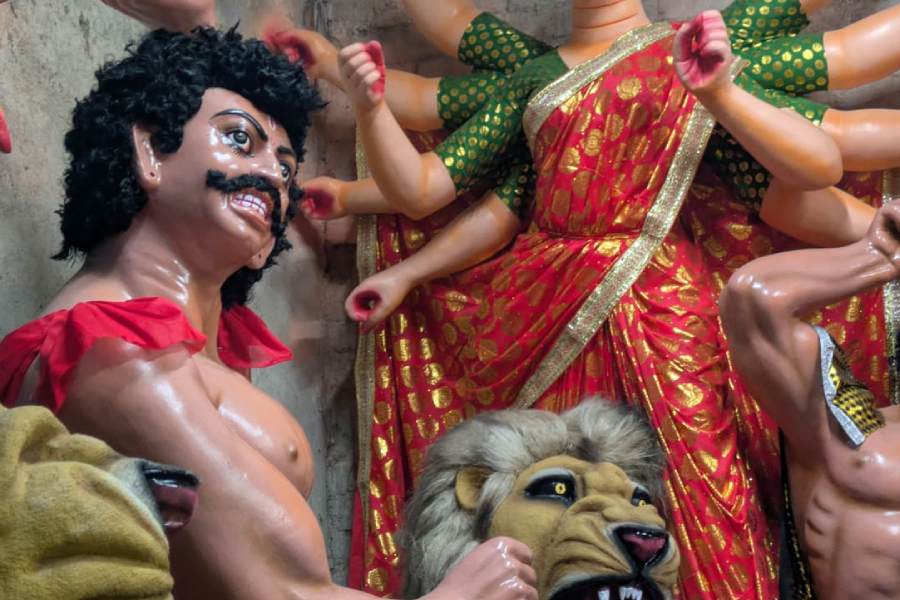
Many people celebrate Durga Puja and tell a story about the goddess defeating Mahishasura.
Some members of the Asur community remember the story differently.
They see Mahishasura as an ancestor, not a demon.
During the season of Durga Puja, some Asur families mourn him and hold their own rituals.
One young Asur poet, Shraddhanand, writes and sings poems in Asuri.
The Asurs have also traditionally worked with iron, though many later shifted to farming.
Their language is endangered, and their customs are changing.
Some younger Asurs now take part in Durga Puja while keeping their community identity.

Some Asur families in Jharkhand and north Bengal mourn Mahishasura during September and October instead of celebrating Durga Puja in the usual way.
Many Asurs regard Mahishasura as an ancestor, leader or martyr, rather than as a demon.
Practices vary: some families gather for nighttime remembrance, while younger Asurs increasingly join Durga Puja festivities.
The community has a history of iron smelting and later shifted toward agriculture amid forest restrictions and other economic changes.
Asuri, the community’s language, is classified by UNESCO as definitely endangered; poet Shraddhanand Asur writes and sings in it.
- Who
- Some members of the Asur community, including poet Shraddhanand Asur.
- What
- They remember Mahishasura as an ancestor and, in some families, observe mourning during the Durga Puja season.
- Where
- Asur settlements in Jharkhand and reported communities in north Bengal.
- When
- September and October, around the Durga Puja period.
- Why
- Some Asurs identify Mahishasura as an ancestral figure whose death they remember with grief.
Dominant Durga Puja narrative
Asur ancestral memory
Who Mahishasura represents
Dominant Durga Puja narrative
In the dominant Hindu narrative described in the article, Mahishasura is a demon defeated by Goddess Durga.
Asur ancestral memory
Some Asurs regard Mahishasura as an ancestor, leader or martyr, and remember his death with grief.
How the autumn season is observed
Dominant Durga Puja narrative
Durga Puja is widely celebrated with worship and festivities.
Asur ancestral memory
Some Asur families observe mourning and remembrance during the same season, though practices differ and younger members increasingly join the festivities.
Key facts
- Community
- The Asurs are an indigenous community with traditional habitats in parts of Jharkhand and reported presence in north Bengal.
- Mahishasura
- Some Asurs regard him as an ancestor, leader or martyr rather than a demon.
- Season of remembrance
- Some families observe mourning during September and October, around Dussehra and Durga Puja.
- Ritual example
- Shraddhanand described evening gatherings by a river, with incense, songs and dance, followed by immersing baskets of incense and flowers.
- Traditional livelihood
- Asur history is associated with iron smelting; community members later shifted toward agriculture.
- Language
- Asuri belongs to the Austroasiatic Munda family and is classified by UNESCO as definitely endangered.
- Changing practices
- Some Asurs no longer strictly observe mourning rituals, and younger members increasingly participate in Durga Puja festivities.
Quotes
Shraddhanand Asur
An Asur community member and poet who writes and sings in Asuri.
“I am from Lupungpat village in Jharkhand. Throughout the day, unmarried women practise various types of rituals here in autumn. In the evening, we gather along the river. Incense is burnt and we sing songs and dance. In the morning, each one immerses his basket of incense and flowers in the river.”
 telegraphindia.com
“Many members of the community identify Mahishasura not as a demon but as an ancestral figure, challenging the dominant Hindu narrative celebrated during Durga Puja. This alternative interpretation illustrates how myth, power, and collective memory are socially constructed and contested.”
telegraphindia.com
Sources
Related news

Northeastern India Celebrates Ganesha Through Rocks, Folklore, and Nature
Why Canning’s Bhattacharya Family Worships Black-Faced Durga
Howrah Family Preserves Its 300-Year-Old Abhaya Durga Puja
Hindutva Objections to ‘Sharad Utsab’ Echo Western Culture Wars
Mahalaya 2026: Traditions, Greetings and Durga Puja Anticipation
Durga Puja Debate Intensifies Under West Bengal’s New BJP Government
Eden Gardens Plans Record-Bid Durga Puja Mahalaya Celebration

Kolkata Hospital Orders Three-Day Probe Into Woman’s Suspected Rat Injuries
Kolkata Metro Begins Orange Line Trials After Months of Delay
Festive Clay Crafts Sustain Women’s Livelihoods Amid Economic Challenges
