3 weeks ago
India to grow world's first gene-edited rice for seed multiplication
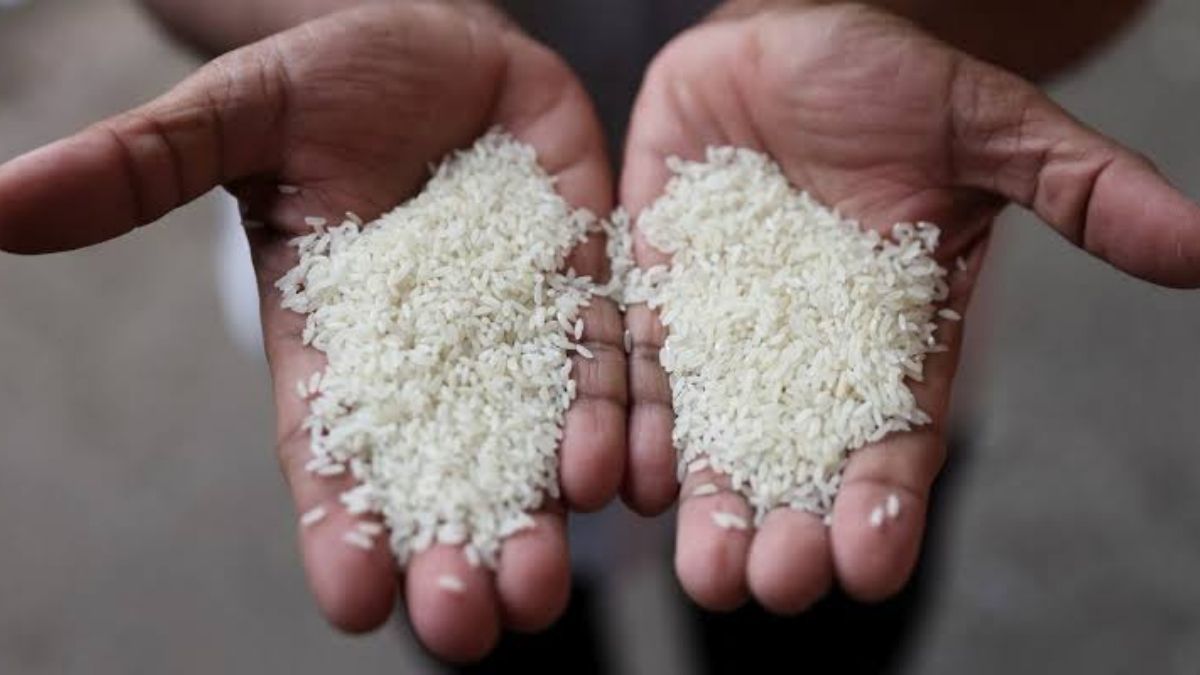
India is getting ready to grow a very special kind of rice.
Scientists changed the rice's own instructions using a tool called gene editing.
Gene editing is like using tiny, precise scissors to improve a plant's traits.
The new rice, called Pusa DST Rice 1, can grow well even in salty or alkaline soil.
Another new rice, DRR Rice 100, makes more grains and is ready to harvest sooner.
Farmers will start growing the first rice this winter so there will be enough seeds later.
Unlike some other modified crops, this rice has no foreign DNA, so it looks like normal rice.
The new rice could help farmers grow more food and save lots of water.
It could also help protect the planet by reducing greenhouse gases.

India will plant Pusa DST Rice 1, the world's first gene-edited rice variety, in the upcoming Rabi season for large-scale seed multiplication.
Pusa DST Rice 1, developed by the Indian Agricultural Research Institute, offers a 10-30% yield advantage under salinity and alkalinity stress.
In May 2025, India developed two genome-edited rice varieties: Pusa DST Rice 1 and DRR Rice 100 (Kamala).
DRR Rice 100 produces 19% higher yield and matures 20-25 days earlier than its parent variety, Samba Mahsuri.
The two varieties could reduce greenhouse gas emissions by 20% and save about 7,500 million cubic metres of irrigation water.
- Who
- The Indian Agricultural Research Institute developed Pusa DST Rice 1, and the ICAR-Indian Institute of Rice Research developed DRR Rice 100 (Kamala).
- What
- India is set to grow the world's first gene-edited rice variety, Pusa DST Rice 1, for large-scale seed multiplication.
- Where
- In Zone VII, comprising Andhra Pradesh, Telangana, Karnataka, Tamil Nadu, Kerala and Puducherry.
- When
- Planting begins in the Rabi season starting December 2026, following development of the varieties in May 2025; large-scale sowing is planned for the 2027 Kharif season.
- Why
- To build seed stocks for farmer adoption, improve yields under salinity stress, and reduce the environmental footprint of rice farming.
Key facts
- First gene-edited rice variety
- Pusa DST Rice 1
- Developed by
- Indian Agricultural Research Institute (IARI)
- Parent variety
- MTU-1010
- Yield advantage
- 10-30% under salinity and alkalinity stress
- Second variety
- DRR Rice 100 (Kamala), with 19% higher yield and 20-25 days earlier maturity
- Initial cultivation area
- About 1 lakh hectare in the 2027 Kharif season
- Projected expansion
- Over 6 million hectare in Zone VII
- Environmental benefits
- 20% reduction in greenhouse gas emissions; about 7,500 million cubic metres of irrigation water saved
Sources
Related news

India’s rice yield slowdown spurs push for hybrids, varieties
Indian scientists overcome gene-editing hurdle in peas, enabling better crops

Indian rice exporters seek Goyal's help over China GMO suspension

Usha Soolapani Leads India’s Revival of Forgotten Rice
Bengal Urged to Make Rice Farming Climate Smart
BRS Calls Telangana Congress Rule a ‘1,000-Day Failure’

Jagga Reddy touts Telangana welfare schemes after 1,000 days

Telangana Raids Find Illegal Habit-Forming Drug Sales at 158 Shops

KTR Slams Revanth Reddy Over Remarks and Governance Claims

KTR Rejects KCR Resignation Demand, Targets Congress Rule