1 week ago
Indian scientists overcome gene-editing hurdle in peas, enabling better crops
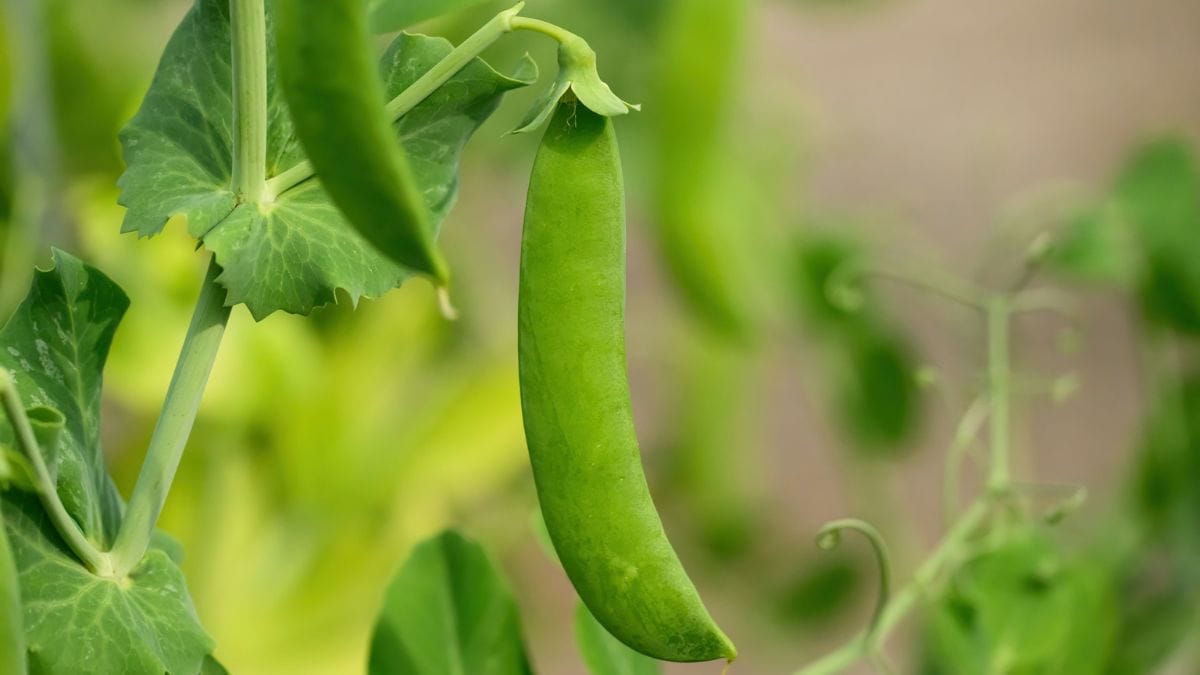
Scientists in India found a better way to edit the genes of pea plants.
Peas are difficult to work with because cells changed in a laboratory often do not grow into whole plants.
The researchers tested three kinds of pea tissues to find the most useful one.
A tissue called the dicotyledonary node worked best for producing new shoots.
They used a bacterium to carry gene-editing materials into the pea cells.
They then used CRISPR-Cas9 to change a pea gene called PsPDS.
This experiment was designed to improve the editing process, not to create a new pea variety for sale.
The method could help scientists develop improved pea crops in the future.

Scientists developed an improved system for transforming pea cells and regenerating them into complete plants.
Dicotyledonary node tissue performed best, achieving 100% shoot-bud induction and an average of 39.7 shoots per explant.
Researchers successfully delivered CRISPR-Cas9 into pea cells and edited the PsPDS gene.
Transformation efficiency varied across 10 pea cultivars, reaching up to 90% in dicotyledonary node tissue and 93.33% in embryonic-axis tissue.
The study focused on creating a more efficient editing process, rather than developing a commercial pea variety.
- Who
- Scientists from the National Agri-Food and Biomanufacturing Institute, with the study discussed by a senior Department of Science and Technology scientist.
- What
- They developed an optimized system for transforming pea cells, regenerating plants, and applying CRISPR-Cas9 gene editing.
- Where
- The research was conducted in India; the report identifies New Delhi.
- When
- The study was published in Plant Cell Reports on 24 August.
- Why
- Peas are difficult to regenerate from laboratory-grown cells, and existing editing methods work only in some varieties.
Key facts
- Preferred tissue
- Dicotyledonary node, or DCN, was identified as the best explant for multiplex CRISPR-Cas9 editing.
- Shoot-bud induction
- DCN tissue achieved 100% shoot-bud induction.
- Average shoot production
- DCN tissue produced an average of 39.7 shoots per explant.
- Cultivars tested
- Researchers evaluated transformation across 10 pea cultivars.
- Transformation efficiency
- Efficiency ranged from 23.33% to 90% in DCN explants and from 6.66% to 93.33% in embryonic-axis explants.
- Edited gene
- CRISPR-Cas9 was tested on PsPDS, a gene involved in carotenoid biosynthesis.
- Study purpose
- The researchers aimed to improve the genome-editing process, not develop a commercial pea variety.
Quotes
A senior Department of Science and Technology scientist
Senior scientist quoted by ThePrint on the limited progress in pea genome editing
“The regeneration and Agrobacterium-mediated transformation systems were optimised, and the dicotyledonary node (DCN) was identified as the preferred explant for multiplex CRISPR/Cas9-based genome editing in pea.”
 theprint.in
“This lag has been because of the difficulty in getting transformed cells to regenerate into healthy plants.”
theprint.in
Sources
Related news
India to grow world's first gene-edited rice for seed multiplication

Indian Startup Uses Generative AI to Design Gene Editors
India Launches Indigenous Non-GMO Popcorn Hybrids to Cut Imports

India’s rice yield slowdown spurs push for hybrids, varieties