1 hr ago
India Seeks Industry Backing for Indigenous Small Modular Reactors
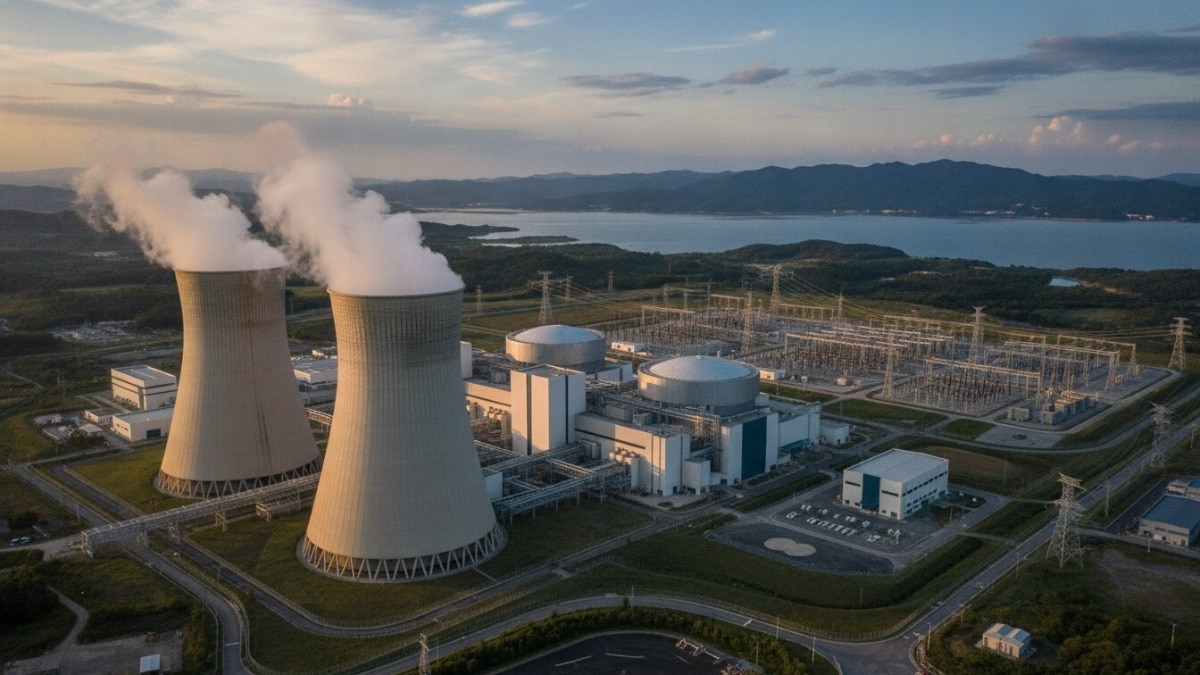
India wants companies to help build a new kind of nuclear reactor called a small modular reactor.
These reactors are smaller than many traditional nuclear plants.
The Nuclear Power Corporation of India Limited has asked industry to participate and help finance the work.
The project is expensive and may take many years to finish.
An industry representative said the technology is still being developed and may operate only around 2033 or 2034.
The government has set aside Rs 20,000 crore for the program.
India aims to have at least five indigenous reactors operating by 2033.
Scientists are also working on a reactor that could help produce hydrogen.

NPCIL presented industry with a roadmap for participating in indigenous small modular reactor development.
NPCIL is seeking private developers to help finance the costly, time-consuming project.
The technology is expected to become operational around 2033–34, according to an industry spokesperson.
The Union Budget 2025–26 allocated Rs 20,000 crore to develop and deploy indigenous SMRs.
The program targets at least five reactors by 2033, including BSMR-200 and SMR-55.
- Who
- The Nuclear Power Corporation of India Limited, Bhabha Atomic Research Centre, the Department of Atomic Energy, Indian industry and private developers.
- What
- A plan to involve industry in financing and developing India’s indigenous small modular reactors.
- Where
- India, including an approved site at Tarapur, Maharashtra.
- When
- The program was announced in the Union Budget 2025–26, with at least five reactors targeted by 2033; an industry spokesperson said operations may begin around 2033–34.
- Why
- To expand India’s nuclear capacity, support decarbonisation and develop sustainable energy technologies, including hydrogen production.
Industry Caution
Government and Nuclear-Sector Push
Financing and participation
Industry Caution
Industry representatives indicate that private developers may face significant financial and time commitments because SMR development remains a work in progress.
Government and Nuclear-Sector Push
The Nuclear Power Corporation of India Limited is seeking private developers to participate in financing and development.
Development timeline
Industry Caution
An industry spokesperson said the technology has been under development for four to five years and may not be operational until 2033–34.
Government and Nuclear-Sector Push
The government’s program targets deployment of at least five indigenous SMRs by 2033.
Technology choices
Industry Caution
Industry is also examining foreign nuclear technologies as part of its decarbonisation plans.
Government and Nuclear-Sector Push
The Department of Atomic Energy is promoting domestic SMR technologies, vendors and private-sector research and development.
Key facts
- Program allocation
- Rs 20,000 crore under the Union Budget 2025–26
- Deployment target
- At least five indigenous SMRs by 2033
- Planned reactor designs
- The 220 MWe Bharat Small Modular Reactor (BSMR-200) and the 55 MWe Small Modular Reactor (SMR-55)
- Approved site
- Tarapur, Maharashtra
- Expected operational timeline
- An industry spokesperson said the technology may be operational around 2033–34
- Additional reactor research
- Bhabha Atomic Research Centre is developing a High Temperature Gas Cooled Reactor of up to 5 MWth for potential hydrogen production
- Global development
- The World Nuclear Association lists 133 SMR designs under development by 88 developers in 21 countries
Quotes
An industry spokesperson
Industry representative who participated in NPCIL’s consultative meeting
“NPCIL is trying to get the private developer on board for financing this project. The development of SMR takes a lot of time and financial commitment.”
 businesstoday.in
“NPCIL and BARC have been developing this technology for the last four to five years, and it is still a work in progress.”
businesstoday.in
Sources
Related news
NPCIL Plans Design Unit as Private Nuclear Entry Expands
India's Private Nuclear Entrants Favor Indigenous Heavy Water Reactors
India targets 100 GW nuclear power by 2047, says Modi

Russia's SMR edge under India's new nuclear rules
SHANTI Act draft rules open India's nuclear power to private firms

India's Nuclear Utilities Choose Local Reactors to Speed Projects
Kakodkar-led panel to examine Pune-Nashik rail route's GMRT impact
UPSC Quiz Covers NSG, Arctic Council, AI, and More