

6 days ago
NPCIL Plans Design Unit as Private Nuclear Entry Expands
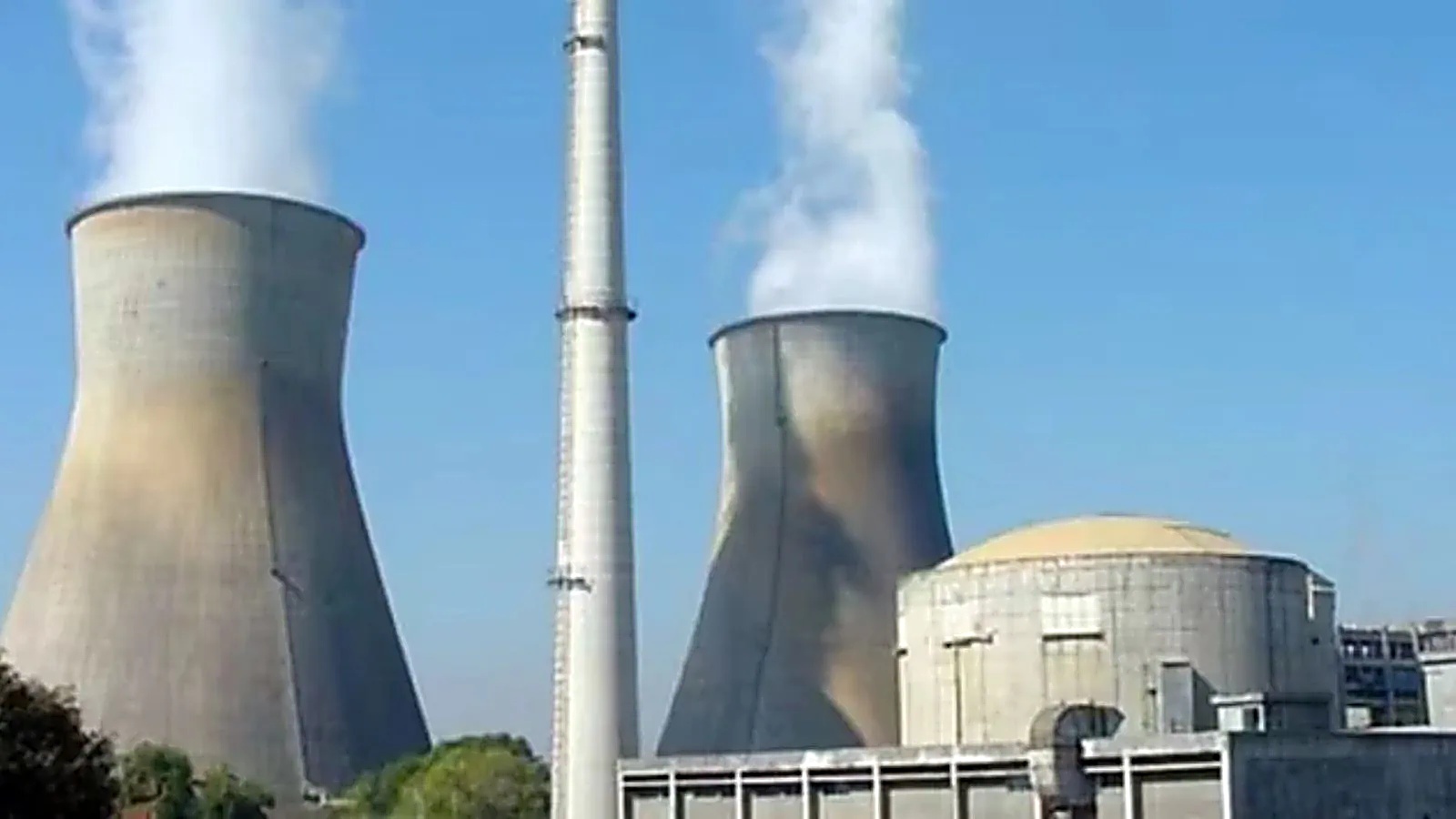
India is allowing private companies to take part in building nuclear power plants.
NPCIL wants to create a special team to help these companies and state governments.
The team would provide reactor designs, technical advice and safety-related quality checks.
It would mainly support India’s pressurised heavy-water reactor technology.
This technology already has Indian suppliers and experienced workers behind it.
That could make it cheaper than buying reactors from other countries.
Some companies are interested in using the existing 700-megawatt design first.
Foreign reactors and smaller modular reactors could be used more later as the industry develops.

Nuclear Power Corporation of India Ltd. is processing a proposal for a new design vertical to support private companies and state governments entering nuclear power.
The unit would offer access to pressurised heavy-water reactor technology, design reviews, technical assistance and quality assurance.
India’s 8.7-gigawatt-electric nuclear capacity is currently operated entirely by NPCIL, while the sector has recently opened to private participation.
The Central Electricity Authority has recommended a dedicated technical-support agency as India pursues a 100-gigawatt nuclear capacity target by 2047.
Private-sector executives view the existing 700-megawatt-electric PHWR design as a practical starting point, while foreign reactors and SMRs may be considered later.
- Who
- NPCIL, private companies, state governments, the Central Electricity Authority and prospective nuclear-sector entrants.
- What
- NPCIL is processing a proposal to establish a design vertical that would provide PHWR technology and technical support to new nuclear utilities.
- Where
- India, including prospective nuclear projects by private companies and state governments.
- When
- The proposal is under process months after private participation was permitted and after draft SHANTI Act rules were released.
- Why
- To help new entrants access indigenous reactor technology and technical expertise as India seeks to expand nuclear capacity.
PHWR proponents
Foreign and newer technology proponents
Initial technology choice
PHWR proponents
Industry experts and private-sector executives favor indigenous PHWRs because of their lower estimated cost, established design standards and mature domestic supply chain.
Foreign and newer technology proponents
Foreign reactor technologies and small modular reactors could have a role later as India’s nuclear sector matures, although the articles do not identify a specific group opposing PHWR deployment.
Technical-support structure
PHWR proponents
The proposed NPCIL vertical could provide a centralized gateway for private companies and state governments seeking PHWR expertise.
Foreign and newer technology proponents
The Central Electricity Authority suggested that a dedicated and independent agency under the Department of Atomic Energy could support utilities, rather than relying solely on NPCIL, which already has its own expansion pipeline.
Key facts
- Planned body
- A new NPCIL design vertical for technology support, design reviews and quality assurance.
- Supported technology
- Indigenous pressurised heavy-water reactors, including the existing 700 MWe design.
- Current nuclear capacity
- India has 8.7 GWe of nuclear power capacity, all operated by NPCIL.
- Long-term target
- The Central Electricity Authority’s roadmap seeks 100 GWe of nuclear capacity by 2047.
- Estimated Indian reactor cost
- About Rs 18 crore per MWe, according to estimates cited in the report.
- Estimated Russian reactor cost
- About Rs 34 crore per MWe, according to estimates cited in the report.
- Prospective private capacity
- Adani Group plans 10 GWe and Jindal Steel plans 18 GWe of nuclear capacity, according to the report.
Quotes
Nuclear industry sector expert
An unnamed expert from India’s nuclear industry
“The cost of foreign technologies can be viable in India only with bulk purchases. But that is difficult at this stage as no one is likely to order 15 or 25 reactors in one go. So, unless the cost of foreign reactors comes down, private players are most likely to initially opt for PHWRs, which are currently more cost-effective”
 indianexpress.com
“However, NPCIL having in its own pipeline expansion plans may find it difficult to hand hold all the new entrants interested in setting up PHWR plants. Therefore there is a compelling requirement for a dedicated and independent entity to provide technical support to other utilities.”
indianexpress.com
Sources
Related news
India's Private Nuclear Entrants Favor Indigenous Heavy Water Reactors

India's Nuclear Utilities Choose Local Reactors to Speed Projects

SHANTI Act draft rules open India's nuclear power to private firms

India Opens Its Nuclear Power Sector to Private Participation
India targets 100 GW nuclear power by 2047, says Modi
India Inc Flags Tariff, Technology Concerns in Nuclear Rules

Bagadia Recommends Three Stocks Under ₹100 Amid Market Caution

Jindal Steel, IIT Hyderabad Establish Advanced Steel Centre

Jindal Steel, IIT Hyderabad Establish Advanced Steel Centre

Uzbekistan Seeks Indian Steel to Cut Logistics Costs
