

1 week ago
India's Private Nuclear Entrants Favor Indigenous Heavy Water Reactors
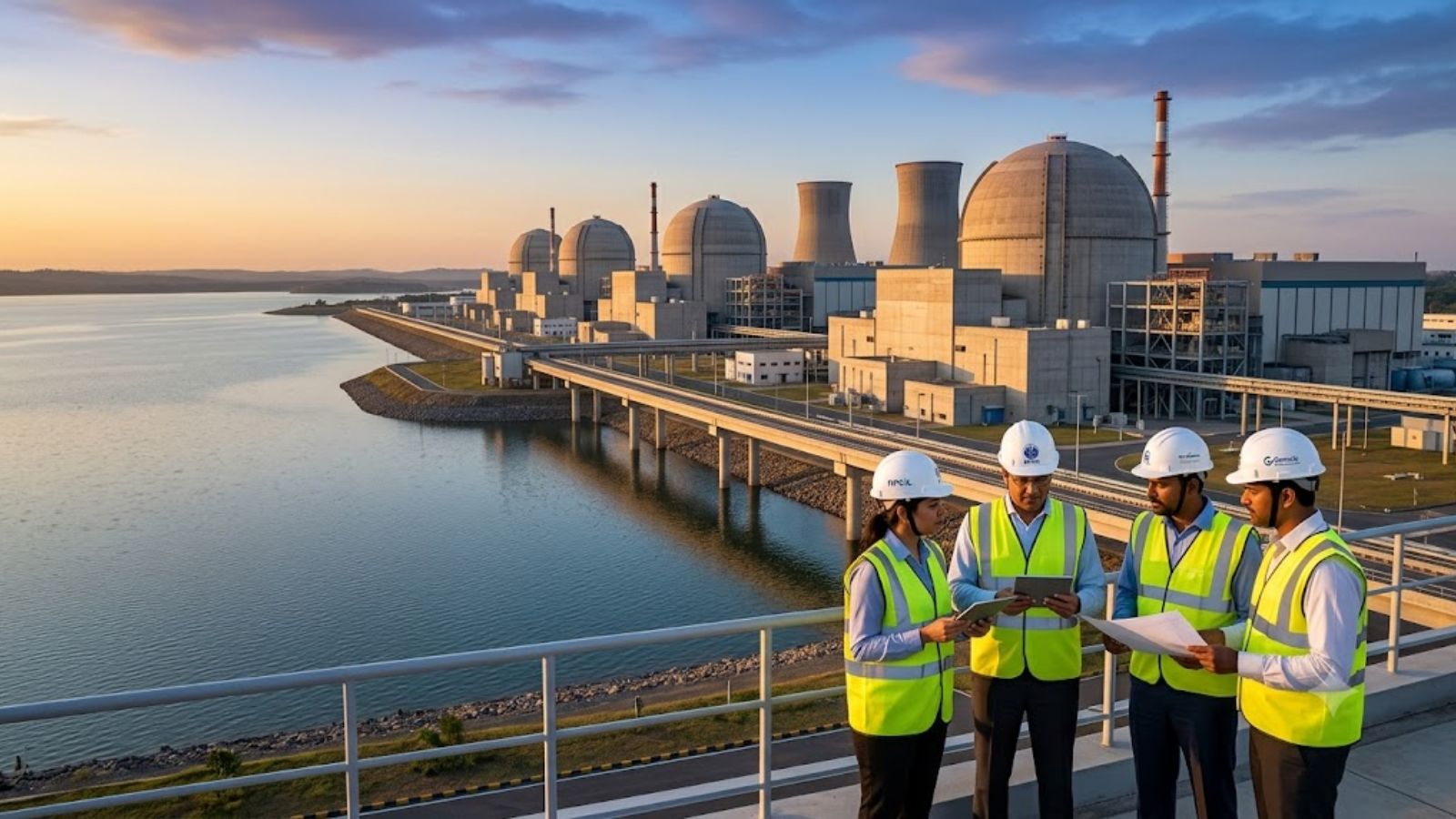
India wants to produce much more electricity from nuclear power by 2047.
Private companies may now have a larger role in building nuclear plants.
They are initially interested in a reactor design called the PHWR.
India already has companies, workers and safety standards connected to this design.
This could make PHWR plants easier and cheaper to build.
Companies may consider other designs, such as PWRs, BWRs and small modular reactors, later.
Jindal Steel is discussing future possibilities with Rosatom and EDF.
Experts say SMRs are still at an early stage of commercial development.
New draft rules under the SHANTI Act are intended to establish how private nuclear participation will work.

India's private nuclear companies are favoring indigenous 700 MWe PHWRs for initial projects.
NTPC, Adani Atomic Energy and Jindal Steel cited established supply chains and domestic expertise.
NTPC targets 30 GWe, Adani Atomic Energy 10 GWe and Jindal Steel 18 GWe of nuclear capacity.
Foreign technologies, including PWRs, BWRs and SMRs, may be considered as the sector develops.
India aims to expand domestic civil nuclear capacity to 100 GWe by 2047.
- Who
- NTPC, Adani Atomic Energy and Jindal Steel, along with other potential private participants in India's nuclear sector.
- What
- Companies are considering 700 MWe indigenous pressurised heavy water reactors for initial nuclear projects, with other technologies potentially following later.
- Where
- India; the panel discussion was held in New Delhi.
- When
- The discussion took place at the BloombergNEF Summit in New Delhi, nearly a week after India released draft SHANTI Act rules.
- Why
- PHWRs have established design standards, a mature domestic supply chain and an existing ecosystem of vendors and expertise.
PHWR-led initial expansion
Broader technology mix later
Technology choice
PHWR-led initial expansion
NTPC, Adani Atomic Energy and Jindal Steel favor established 700 MWe PHWRs for the initial phase because India has approved designs, domestic suppliers and relevant expertise.
Broader technology mix later
Participants said PHWRs alone will not be sufficient to reach 100 GWe, so PWRs, BWRs and SMRs may be needed as the sector matures.
Timing of SMRs
PHWR-led initial expansion
NTPC expects SMRs to be introduced only at a later stage, and participants noted their limited commercial deployment globally.
Broader technology mix later
SMRs remain part of the planned technology combination, although their commercial readiness and timing are not yet clear.
Foreign reactor technologies
PHWR-led initial expansion
Foreign designs would need substantial localization in India to control costs and remain commercially viable.
Broader technology mix later
Jindal Steel is already in advanced talks with Rosatom and EDF about possible technology deployment in later phases.
Key facts
- India's capacity target
- 100 gigawatt-electric of domestic civil nuclear capacity by 2047.
- Preferred initial technology
- Indigenous 700 megawatt-electric pressurised heavy water reactors.
- NTPC target
- 30 GWe of nuclear capacity.
- Adani Atomic Energy target
- 10 GWe of nuclear capacity.
- Jindal Steel target
- 18 GWe of nuclear capacity.
- NTPC technology mix
- At least 80% of its targeted 30 GWe is expected to comprise PHWRs and PWRs.
- Potential later technologies
- PWRs, BWRs and small modular reactors, subject to development, approvals, supply chains and cost considerations.
Quotes
K Shanmugha Sundaram
Director, Projects, NTPC
“Currently, the only available technology in India is PHWR. Naturally, that is the cheapest form of nuclear power available right now. Then we have PWRs, which are already there in Kudankulam. Then we have SMRs, for which it is too early to say”
 indianexpress.com
“We have an advantage in India that we have 700MWe design, which is standard, approved, operational, and has regulatory blessings. And most importantly relative supply-chain in India. So it’s almost indigenized, 90- 95% indigenized”
indianexpress.com
Sources
Related news
NPCIL Plans Design Unit as Private Nuclear Entry Expands

India's Nuclear Utilities Choose Local Reactors to Speed Projects
India targets 100 GW nuclear power by 2047, says Modi

SHANTI Act draft rules open India's nuclear power to private firms

Russia's SMR edge under India's new nuclear rules

Rare-Intensity Tornado Injures Dozens in Southwestern France Village

Heatwave expected to cut 15% of France's nuclear capacity Friday

Three Firefighters Killed as Wildfires Rage Across Southern Europe
