

1 day ago
Were Peasants Ever the Problem in Economic Development?
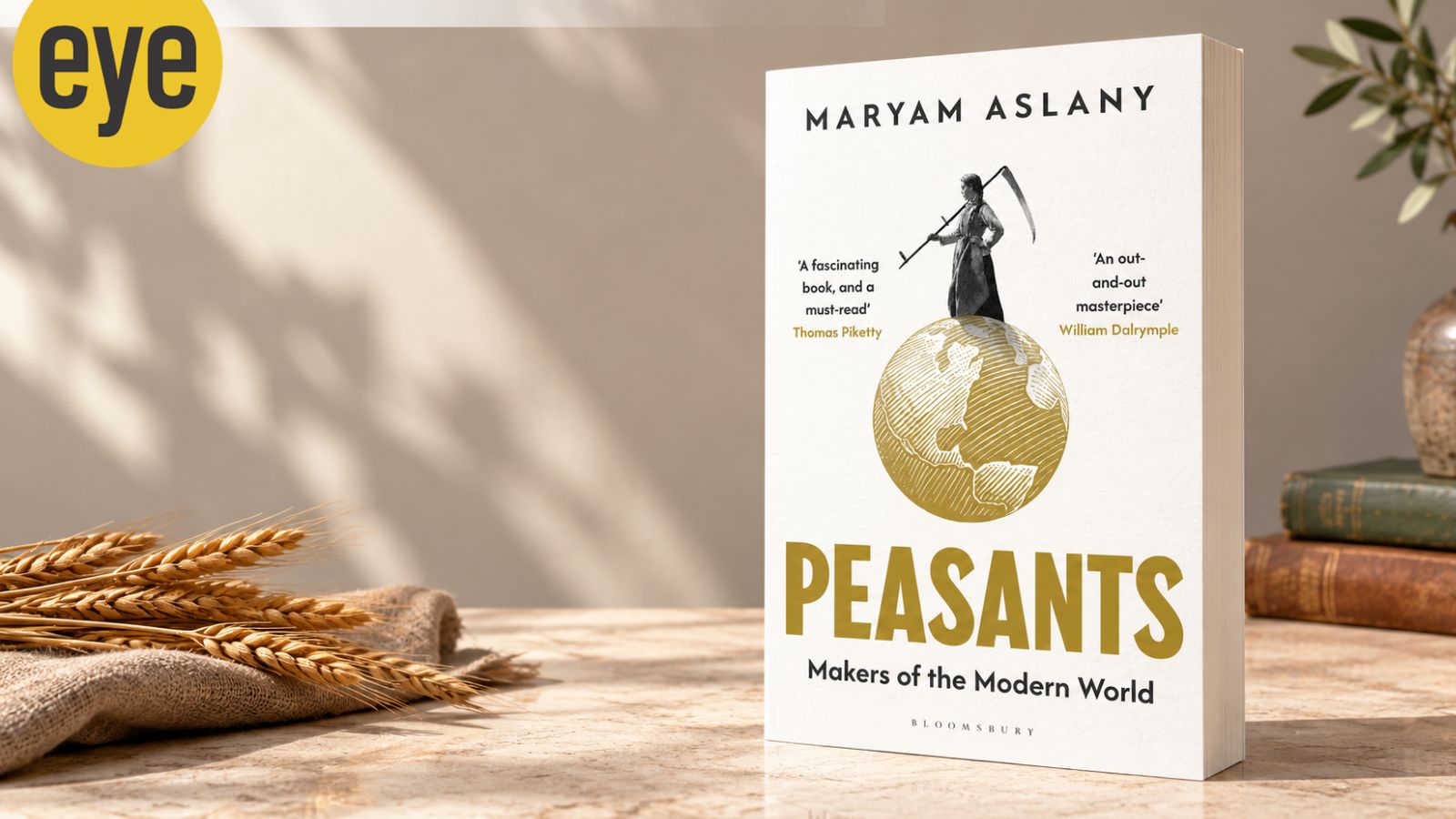
Many people think countries become richer when workers leave farms for factories.
Maryam Aslany says this idea can make people overlook how important farmers have been.
Farmers grew the food that supported cities, rulers, and armies.
Today, many people around the world still live in farming households.
Small farms also produce a large share of the world’s food.
In India, many workers remain in agriculture, while manufacturing has grown only a little.
Aslany argues that farmers can be practical and inventive, not simply backward.
The article says her book does not provide an easy plan for keeping peasant farming strong in the future.

A common development model treats agriculture as low-productivity work and expects workers to move into manufacturing and other modern sectors.
Maryam Aslany argues that both free-market thinkers and Marxists have often viewed peasants as obstacles to progress.
The article says peasant farming remains widespread globally, with as many as two billion people living in peasant households and farms under two hectares producing over a third of the world’s food.
India’s agricultural workforce share fell from 64.6% in 1993–94 to 43% in 2025, while manufacturing’s share rose from 10.4% to 12.1%.
Aslany presents peasants as central to historical societies and capable of adapting, but her book offers no clear blueprint for the future of peasant agriculture.
- Who
- Economic sociologist Maryam Aslany and peasant farmers.
- What
- A discussion of Aslany’s argument that peasants have been wrongly treated as obstacles to economic development.
- Where
- Globally, with examples from the United States, Europe, China, India, Cambodia, Peru, and Ghana.
- When
- The article discusses roughly 300 years of economic development and cites employment figures for 2025.
- Why
- To reconsider the role of peasant agriculture in economic development and recognize its historical and continuing importance.
Development Through Structural Transformation
Peasants as Enduring Contributors
Agricultural labour and productivity
Development Through Structural Transformation
The Lewis-style development model sees agricultural labour as having negligible or even negative marginal productivity and favours moving workers into higher-wage sectors.
Peasants as Enduring Contributors
Aslany challenges the idea that peasants are simply surplus labour, emphasizing their continuing importance and contribution to food production.
Large-scale versus peasant farming
Development Through Structural Transformation
Consolidated farms and mechanisation are presented as ways to gain economies of scale and raise productivity.
Peasants as Enduring Contributors
Aslany argues that smallholder farming persists across much of the world and that the disappearance of peasant agriculture is specific largely to the United States and western Europe.
The book’s practical proposals
Development Through Structural Transformation
The article notes that retaining the best land and human resources in peasant agriculture is difficult.
Peasants as Enduring Contributors
The article praises Aslany’s recovery of peasants’ historical role and adaptive capacities, while noting that the book does not provide a blueprint for the future.
Key facts
- Estimated people in peasant households
- As many as two billion worldwide, according to Aslany.
- Food from farms under two hectares
- More than a third of the world’s food.
- India agricultural employment
- 43% of employed labour in 2025, down from 64.6% in 1993–94.
- India manufacturing employment
- 12.1% in 2025, up from 10.4% in 1993–94.
- United States farms
- 1.9 million farms, directly engaging 1.2% of the workforce.
- European Union farmers
- 8.8 million; agriculture accounts for 3.9% of employment.
- China agricultural employment
- The workforce share fell from 59.6% in 1991 to 21.7% in 2025.
Quotes
William Arthur Lewis
Economist and 1979 Nobel Prize laureate in Economics
“They cannot represent themselves, they must be represented”
 indianexpress.com
“negligible, zero, or even negative”
indianexpress.com
Sources
Related news

Maryam Aslany Says Debt Is Farmers’ Biggest Threat

India's Demographic Shift: From Population Burden to Human Capital
Women Farmers Should Lead Agricultural Policymaking, RSS Leader Says
Marathwada Urged to Pursue Economic Self-Reliance Through Industry
India Seeks Ownership as Artificial Intelligence Reshapes Global Power

BKS Women’s Conclave Seeks Greater Role in Farm Policy
Jaishankar Says US Is Becoming a Lonelier Power
Jaishankar Says Middle Powers Seek Greater Influence Amid US-China Rivalry

Jharkhand Asian Games Gold Medalists Receive Celebratory Homecoming in Ranchi
Taliban Delegation Joins Russia’s Center-2026 War Games

India Should Pursue Chips Strategically, Professor Says
