

1 week ago
Merck, Moderna Cancer Vaccine Meets Phase 3 Melanoma Milestone

Merck and Moderna tested a personalized cancer vaccine for people whose melanoma tumors had been removed by surgery.
The vaccine is designed using mutations found in each person’s tumor.
It is meant to help the immune system recognize and attack remaining cancer cells.
In the study, patients received the vaccine together with KEYTRUDA or KEYTRUDA alone.
The combination performed better at preventing the cancer from returning and spreading far away.
The trial included 1,137 people with high-risk melanoma.
Researchers said no new safety problems were found.
More detailed results, including whether patients live longer overall, are still being collected.

The Phase 3 INTerpath-001 trial found intismeran plus KEYTRUDA reduced recurrence and distant-metastasis risks in resected melanoma.
The global study enrolled 1,137 patients with high-risk, resected cutaneous melanoma.
Intismeran is personalized using tumor mutations to create an mRNA therapy encoding up to 34 neoantigens.
Patients received intismeran every three weeks for up to nine doses and KEYTRUDA every six weeks for about one year.
The companies will submit detailed results for medical review and regulatory discussions while overall-survival follow-up continues.
- Who
- Merck and Moderna tested intismeran with pembrolizumab, also known as KEYTRUDA, in patients with high-risk melanoma.
- What
- A Phase 3 trial found that the personalized mRNA therapy combined with KEYTRUDA improved recurrence-free and distant-metastasis-free outcomes compared with KEYTRUDA alone.
- Where
- The global INTerpath-001 clinical trial enrolled patients internationally; a specific trial location was not provided.
- When
- The companies announced topline Phase 3 findings; the article also cites five-year follow-up data presented at the 2026 ASCO Annual Meeting.
- Why
- The companies are testing whether a tumor-specific mRNA therapy given after surgery can reduce recurrence and improve the possibility of cure.
Promising Phase 3 Evidence
Evidence Still Incomplete
Clinical benefit
Promising Phase 3 Evidence
Merck, Moderna and the investigators said the combination produced statistically significant and clinically meaningful improvements in recurrence-free and distant-metastasis-free survival.
Evidence Still Incomplete
The article does not provide the detailed Phase 3 numerical results or the magnitude of benefit from the interim analysis.
Personalized cancer treatment
Promising Phase 3 Evidence
The companies said the findings support using an mRNA treatment designed around each patient’s tumor mutations.
Evidence Still Incomplete
The approach remains under clinical and regulatory evaluation, and its overall-survival benefit has not yet been reported.
Safety and availability
Promising Phase 3 Evidence
The companies reported that the safety profile was consistent with earlier studies and that no new safety signals were observed.
Evidence Still Incomplete
The treatment has not yet completed regulatory review, and potential filing submissions are still being discussed.
Key facts
- Treatment
- Intismeran autogene, also called V940 or mRNA-4157, was combined with KEYTRUDA.
- Trial
- Global Phase 3 INTerpath-001 study.
- Participants
- 1,137 patients with high-risk, completely resected cutaneous melanoma.
- Comparison
- Intismeran plus KEYTRUDA versus KEYTRUDA alone, randomized in a 2:1 ratio.
- Personalization
- The therapy uses tumor mutations to encode up to 34 neoantigens in synthetic mRNA.
- Earlier results
- Five-year follow-up data cited a 49% reduction in recurrence or death risk and a 59% reduction in distant-metastasis or death risk.
- Next steps
- Detailed data, overall-survival results, regulatory review and potential filing submissions remain pending.
Quotes
Professor Georgina Long
Principal investigator and medical director of Melanoma Institute Australia
““This is the first Phase 3 study to show that intismeran, a treatment designed based on the unique mutational ‘fingerprint’ of a patient's own tumor, given in combination with pembrolizumab can reduce the risk of recurrence or death in patients with completely resected stage IIB-IV melanoma compared to KEYTRUDA alone,””
 businesstoday.in
““By intervening earlier in the course of disease, when many cancers are considered most treatable, the goal of adjuvant therapy given after surgery is to increase the possibility of cure for more patients,””
businesstoday.in
Sources
Related news
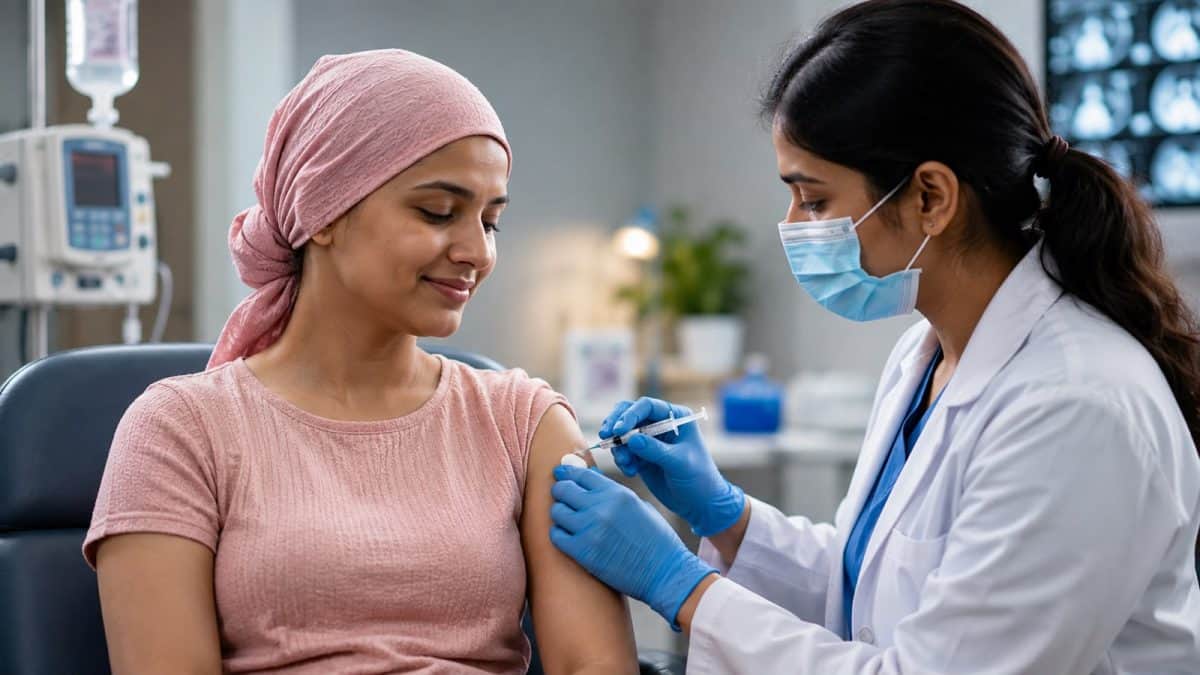
Personalized mRNA Vaccine Shows Promise Against Melanoma Recurrence
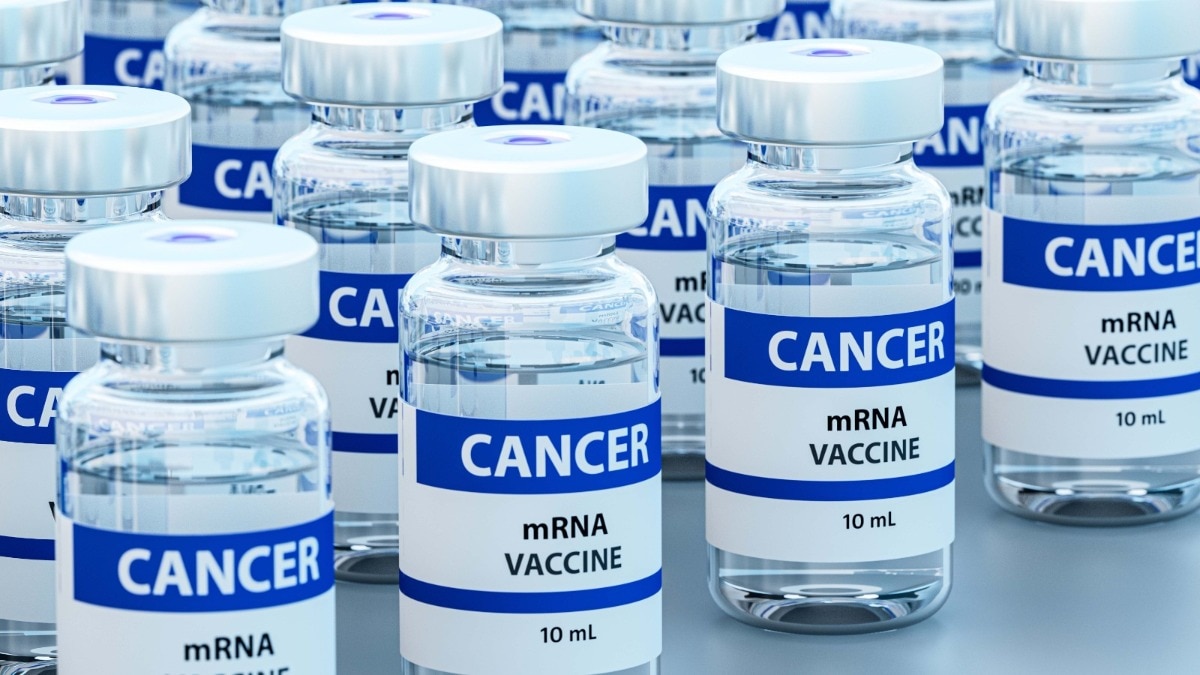
Moderna Cancer Vaccine Shows Early Melanoma Recurrence Benefits
Personalised cancer vaccine halves melanoma death risk in trial
Merck and Moderna Vaccine Posts Positive Phase 3 Melanoma Results

Moderna Shares Surge After Positive Personalized Melanoma Trial Results
Moderna-Merck Cancer Vaccine Shows Breakthrough in Melanoma Trial

Sperm Freezing: Who Should Consider It and Why Age Matters

Head and Neck Cancer: Warning Signs

India Issues First Geriatric Oncology Guidelines for Elderly Cancer Patients

Kolkata Doctor Exonerated After 9-Year Legal Battle
