1 week ago
Personalized mRNA Vaccine Shows Promise Against Melanoma Recurrence
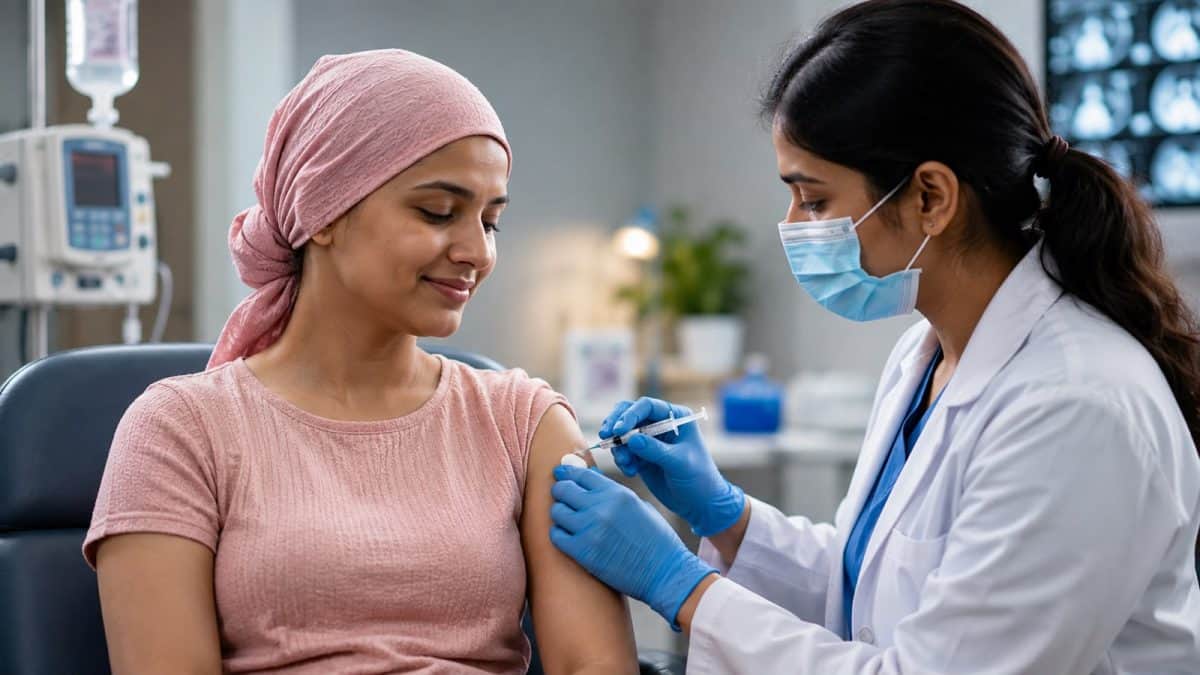
Merck and Moderna are testing a vaccine made specially for each patient’s cancer.
Doctors study a removed tumor to find changes that are unique to the cancer.
The vaccine uses mRNA instructions to show the immune system what those changes look like.
This may help immune cells find cancer cells that remain after surgery.
Keytruda helps keep the immune system active against those targets.
In a large melanoma trial, the combination delayed cancer recurrence and reduced the chance of cancer spreading compared with Keytruda alone.
The trial included 1,137 people with high-risk melanoma.
The treatment is not meant to stop cancer from developing in healthy people.
Researchers have not yet shown whether it helps patients live longer overall or how long its benefits last.
Similar vaccines are being tested for several other cancers.

A Phase 3 trial of 1,137 patients found intismeran autogene plus Keytruda reduced melanoma recurrence and distant spread compared with Keytruda alone.
The participants had high-risk stage IIB-IV melanoma that had been surgically removed but could still return or spread.
The customized mRNA vaccine is designed using mutations found in each patient’s tumor and blood samples to help immune cells recognize cancer cells.
The trial met its recurrence-free-survival and distant-metastasis-free-survival goals, but detailed results and overall-survival data have not yet been released.
Merck and Moderna are testing similar approaches in lung, bladder, kidney, pancreatic and stomach cancers, while Roche and BioNTech are studying colon and pancreatic cancer applications.
- Who
- Merck and Moderna tested intismeran autogene with Keytruda in 1,137 patients with high-risk melanoma.
- What
- An interim Phase 3 trial found that the personalized mRNA vaccine plus Keytruda improved recurrence-free and distant-metastasis-free outcomes compared with Keytruda alone.
- Where
- The articles mention organizations including Melanoma Institute Australia, Mass General Brigham Cancer Institute and Penn Medicine’s Abramson Cancer Center, but do not identify one trial location.
- When
- The results were announced on August 20, 2026; full data are expected at a medical meeting later in the year.
- Why
- The vaccine is intended to train the immune system to recognize mutations unique to a patient’s tumor and attack cancer cells that may remain after surgery.
Reasons for optimism
Reasons for caution
Clinical significance
Reasons for optimism
The Phase 3 trial met both major reported efficacy goals, and doctors described the result as a landmark or monumental advance for personalized cancer vaccines.
Reasons for caution
The findings are interim and have not yet been published in a peer-reviewed journal; detailed data on the size and duration of the benefit remain unavailable.
Meaning for patients
Reasons for optimism
The vaccine could give the immune system more precise targets and may change how doctors weigh the benefits and risks of post-surgery treatment.
Reasons for caution
The treatment does not guarantee that melanoma will not return, and researchers have not established whether it improves overall survival.
Broader cancer use
Reasons for optimism
The result has increased hopes that personalized mRNA vaccines could work in lung, bladder, kidney, pancreatic, stomach and colon cancers.
Reasons for caution
Evidence so far is centered on melanoma, while results from the other cancer trials are still pending; manufacturing, affordability and access may also limit use.
Key facts
- Trial size
- 1,137 patients with stage IIB-IV melanoma participated.
- Treatment comparison
- Patients received up to nine doses of intismeran autogene with Keytruda or Keytruda alone.
- Primary outcome
- The combination met its primary goal of improving recurrence-free survival.
- Secondary outcome
- The combination met its key secondary goal of improving distant-metastasis-free survival.
- Earlier evidence
- Five-year Phase 2b results showed about a 49% reduction in the risk of melanoma recurrence or death and a 59% reduction in the risk of distant spread compared with Keytruda alone.
- Manufacturing time
- The personalized vaccine takes about six weeks to manufacture after a tumor biopsy.
- Remaining questions
- The companies have not released full data on durability, detailed safety or overall survival, and the treatment still requires regulatory approval.
Quotes
Professor Georgina Long
Principal investigator and medical director of the Melanoma Institute Australia
“"The trial result is "a monumental leap forward," validating mRNA technology as a cancer treatment," said Dr. Julie Gralow, chief medical officer of the American Society of Clinical Oncology.”
 thehindubusinessline.com
“The positive hit here leads us into truly this next phase in immunotherapy. This is an auspicious start – this is where things begin.”
 firstpost.com
Dr. Ryan Sullivan
Director of the Center for Melanoma at Mass General Brigham Cancer Institute
“"It is a big deal for the field in general," said Dr. Ryan Sullivan, director of the Center for Melanoma at Mass General Brigham Cancer Institute.”
thehindubusinessline.com
“The vaccine “claims to reduce the risk of recurrence or prolongs the return.””
firstpost.com
Moderna CEO Stéphane Bancel
Chief executive officer of Moderna
“"We should be hearing results from multiple studies over the next few years and there's every reason to hope now, with this news, that many of them will be positive," said Moderna President Stephen Hoge.”
thehindubusinessline.com
“These Phase 3 findings represent a pivotal moment for the field of cancer research”
 theprint.in
Sources
Your tumour, your vaccine: How Moderna and Merck mRNA therapy could change cancer treatment
Merck-Moderna mRNA vaccine cuts risk of melanoma returning or spreading in Phase 3 trial. How it works

Moderna, Merck breakthrough could usher in a wave of cancer vaccines
Cancer therapy breakthrough: Vaccine cuts skin cancer recurrence risk in landmark trial
Related news
Moderna Cancer Vaccine Shows Early Melanoma Recurrence Benefits

Merck, Moderna Cancer Vaccine Meets Phase 3 Melanoma Milestone
Merck and Moderna Vaccine Posts Positive Phase 3 Melanoma Results
Moderna-Merck Cancer Vaccine Shows Breakthrough in Melanoma Trial
Personalised cancer vaccine halves melanoma death risk in trial

Moderna Shares Surge After Positive Personalized Melanoma Trial Results