1 week ago
Moderna Cancer Vaccine Shows Early Melanoma Recurrence Benefits
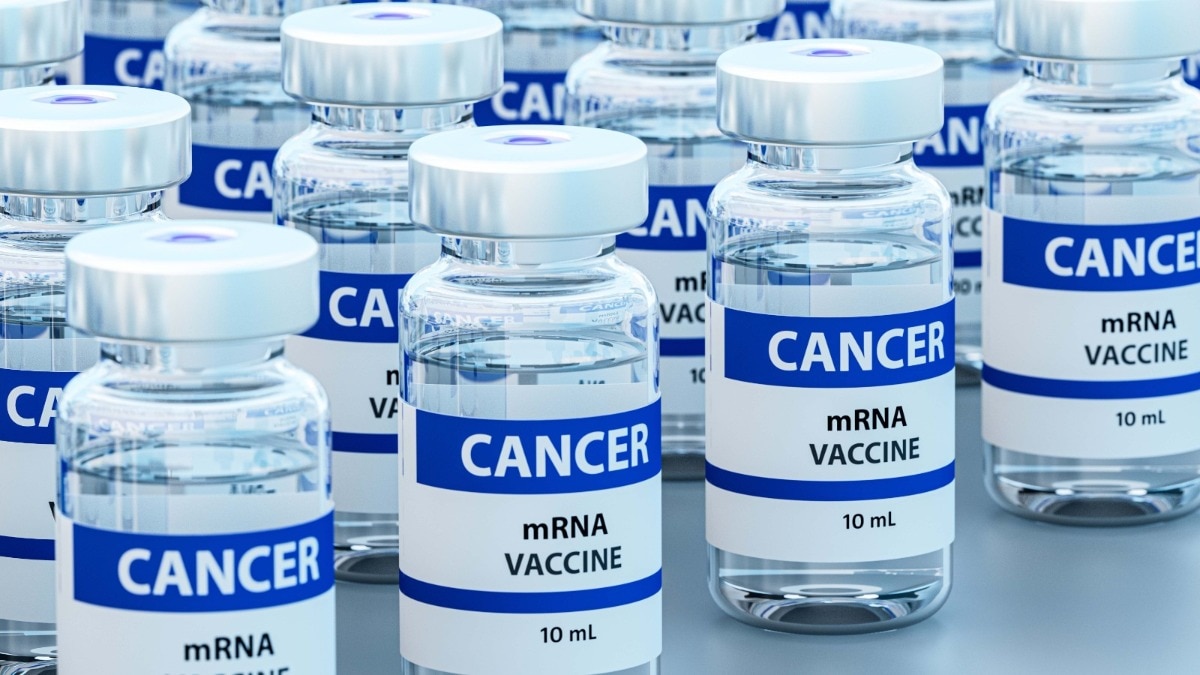
Scientists are testing a vaccine for people with a dangerous type of skin cancer called melanoma.
The vaccine is given after doctors remove the tumor with surgery.
It is made specially for each patient by studying the cancer’s genetic changes.
The vaccine helps the immune system recognize those changes as signs of cancer.
The immune system may then attack cells carrying the same changes.
Patients also receive a medicine called Keytruda.
Early results suggest the treatment helped keep some patients cancer-free for longer and lowered the risk of the cancer spreading.
However, researchers do not yet know how long the benefit will last.
Experts say the results are exciting but need to be checked in complete, independently reviewed trial findings.

Moderna and Merck developed Intismeran for patients with high-risk melanoma after surgery.
Interim trial data suggest the vaccine reduced the risk of melanoma returning or spreading.
The vaccine was given with Merck’s Keytruda, an existing immunotherapy treatment.
Doctors tailor each vaccine to mutations found in an individual patient’s tumor, targeting up to 34 mutations.
Experts called the findings promising but urged caution because full results have not been released or peer-reviewed.
- Who
- Merck & Co, Moderna, and patients with high-risk melanoma.
- What
- An experimental personalized mRNA vaccine, Intismeran, was tested with Keytruda to reduce melanoma recurrence and spread after surgery.
- Where
- The article does not specify where the trial took place.
- When
- The article reports interim early-trial results; no specific trial date is provided.
- Why
- The treatment aims to teach the immune system to identify and destroy cancer cells carrying mutations specific to each patient’s tumor.
Promising breakthrough
Cautious interpretation
Early clinical benefit
Promising breakthrough
Merck and Moderna said the vaccine combined with Keytruda significantly increased the time patients remained cancer-free and reduced the risk of spread.
Cautious interpretation
Experts and reporting on the available evidence emphasized that the findings are interim and limited, so the size and durability of the benefit remain uncertain.
Personalized cancer treatment
Promising breakthrough
The vaccine’s design uses each patient’s tumor mutations to train the immune system to recognize and attack cancer cells carrying those mutations.
Cautious interpretation
The treatment is still experimental, and the article does not provide the full trial results or independent peer review needed to confirm its effectiveness.
Key facts
- Vaccine
- Intismeran, an experimental personalized mRNA cancer vaccine.
- Developers
- Moderna and Merck & Co.
- Cancer type
- High-risk melanoma, a type of skin cancer.
- Combination treatment
- Intismeran was administered with Merck’s Keytruda immunotherapy.
- Targeting method
- The vaccine is designed to target up to 34 mutations identified in an individual tumor.
- Reported result
- Interim data indicated reduced risks of melanoma recurrence and spread, and longer cancer-free periods.
- Evidence status
- Full results have not been released or peer-reviewed, and the duration of benefit remains unclear.
Sources
Related news
Personalized mRNA Vaccine Shows Promise Against Melanoma Recurrence

Merck, Moderna Cancer Vaccine Meets Phase 3 Melanoma Milestone
Personalised cancer vaccine halves melanoma death risk in trial
Moderna-Merck Cancer Vaccine Shows Breakthrough in Melanoma Trial

Moderna Cancer Vaccine Shows Promise in Advanced Melanoma Trial

Moderna Shares Surge After Positive Personalized Melanoma Trial Results