3 weeks ago
El Nino skews monsoon rains; low-pressure systems narrow deficit

Every summer, India gets a rainy season called the monsoon.
This year, a weather pattern called El Nino is making the monsoon weaker.
When the rain season started in June, India got much less rain than usual.
In July, big storm systems called low-pressure systems formed over the Bay of Bengal.
These storms brought enough rain to central India, where many crops grow.
Because of that rain, farmers could plant rice, pulses and other kharif crops.
The country's overall rain shortage shrank from 36% in June to 12%.
But some states, like Bihar and Punjab, still got far too little rain.
Experts think the rain may stay below normal for the rest of the season.
A different ocean pattern called the Indian Ocean Dipole might turn positive and help bring more rain.

El Nino has negatively impacted the southwest monsoon, with cumulative rainfall about 12% below normal from June 1 to August 10.
Frequent low-pressure systems over the Bay of Bengal in July brought adequate rain to central India's monsoon core zone, narrowing the cumulative deficit from 36% in June to 12%.
July recorded 24 low-pressure-system-affected days against a normal of 14 and rainfall 1% above benchmark, following a June that was 35.4% below normal.
Adequate rainfall supported kharif sowing of paddy, pulses, oilseeds, cotton and sugarcane, with total sown area at 96.79 million hectares, down just 1.81% from a year ago.
IMD forecast a fresh low-pressure system around August 13, while experts expect drier-than-normal September conditions and possible El Nino strengthening, potentially offset by a positive Indian Ocean Dipole.
- Who
- India Meteorological Department (IMD) meteorologists and climate experts such as Sivananda Pai and Akshay Deoras
- What
- El Nino has skewed the distribution of southwest monsoon rainfall while frequent low-pressure systems over the Bay of Bengal brought adequate rain to central India, narrowing the cumulative deficit
- Where
- India, with central India in the normal range and northwest India (-12%), east and north-east India (-26%) and south peninsular India (-18%) below normal
- When
- June-September 2026 monsoon season; rainfall assessed from June 1 to August 10
- Why
- El Nino suppressed monsoon rainfall across India, but recurring low-pressure systems partly offset the shortfall in central India
Key facts
- Cumulative monsoon deficit (June 1 - Aug 10)
- 12% below normal
- Deficit in June
- 36% cumulative; precipitation 35.4% below normal
- July rainfall
- 1% above benchmark (normal range)
- Low-pressure-system days in July
- 24 vs. normal of 14
- Kharif sown area
- 96.79 million hectares, down 1.81% year-on-year
- IMD season forecast
- 90% of long-period average; 84% probability of deficient to below-normal rainfall
- Most deficient states
- Bihar (-36%), Punjab (-35%), Andhra Pradesh (-34%), Jharkhand (-25%), Uttar Pradesh (-21%)
- Fresh low-pressure system forecast
- Around August 13 over north Bay of Bengal and West Bengal-Bangladesh coasts
Quotes
Sivananda Pai
Deputy Director General of Meteorology, Regional Meteorological Centre, Chennai
“"Monsoon rains have been impacted by El Nino, as regional variations in distribution of rains indicate. However, the inter‑seasonal variability in July, with several LPSs moving slowly and lasting for longer durations, helped bring adequate rainfall across central India."”
 financialexpress.com
“"The cumulative rainfall across India since June remained below the normal level throughout the season, highlighting the presence of rainfall‑suppressing factors such as El Nino. Spatial variability in rainfall has also been significant this season."”
financialexpress.com
Sources
Related news

Monsoon Revives, Narrowing India's Rainfall Deficit and Boosting Kharif Sowing

IMD Warns September Rainfall Will Remain Below Normal

IMD Warns of Dry September as India’s Monsoon Weakens
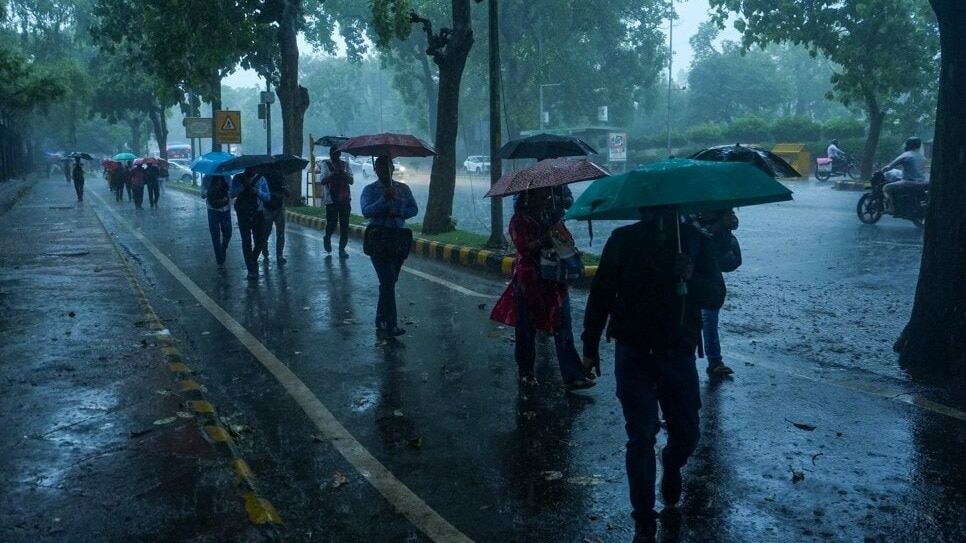
Bay of Bengal Systems May Revive India’s Monsoon Activity

India’s Monsoon Deficit Grows as Eastern Rains Intensify
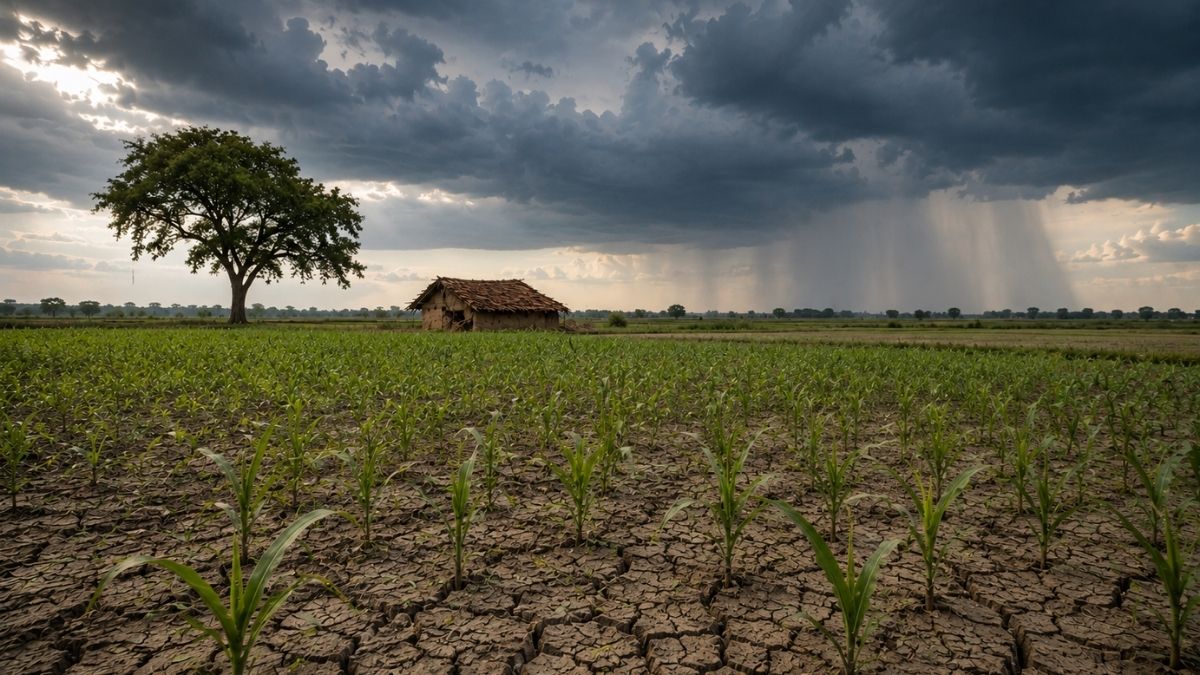
India’s Monsoon Faces 15% Deficit as El Niño Strengthens

Bangladesh Recall Shanto, Mahmud for Asian Games T20 Squad

Sharma and Malik share halfway lead at Telangana Golconda Masters

India Replaces Sri Lanka as 2027 Women’s Champions Trophy Host

Centre Assures JDU Bihar’s Interests In Farakka Treaty Decision
India’s Record Wheat Harvest Opens $1.5 Billion Export Window