1 week ago
India Urged to Master Information Warfare Beyond the Battlefield
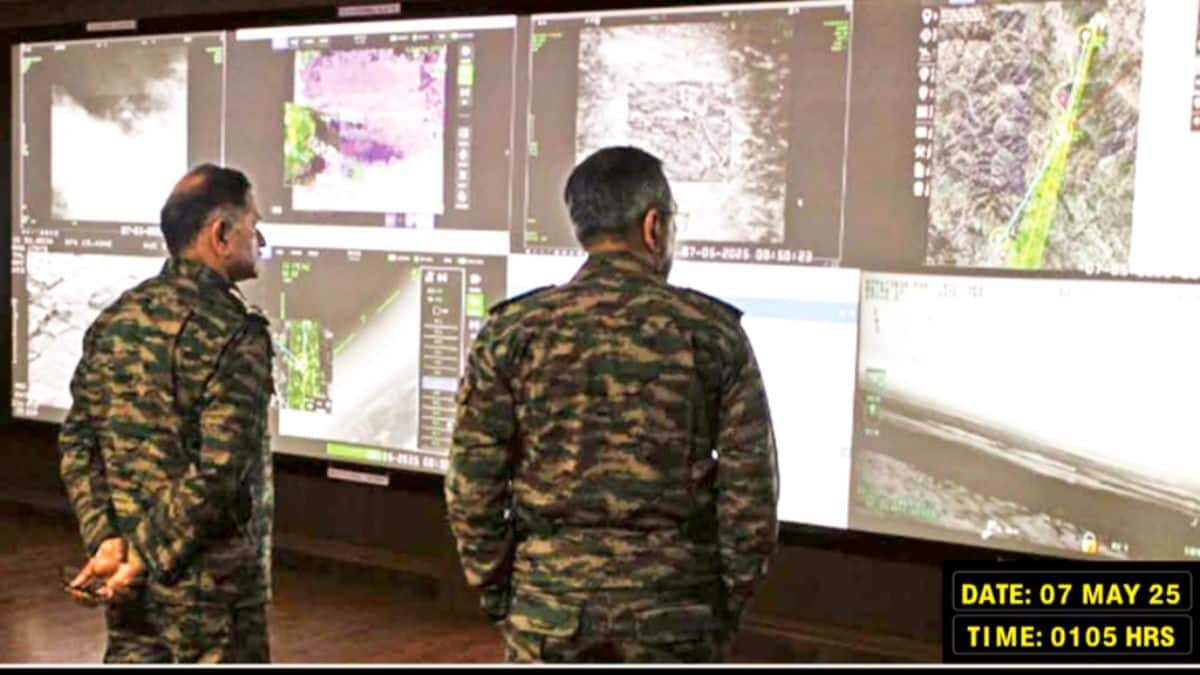
Wars are fought with weapons, but they are also fought over what people believe happened.
Phones and social media let information travel very quickly.
Sometimes people see or share claims before anyone has checked whether they are true.
Countries can use this confusion to weaken confidence or change how others view a conflict.
The article says India should make communication part of its national-security planning.
Officials should explain events clearly, honestly and consistently.
They should understand different audiences, including people in India and other countries.
The goal is not only to be heard, but to influence how people understand events and decide what to do.

Modern conflicts are contested not only through military action but also through narratives about what happened and who prevailed.
The article argues that strategic communication should be treated as a national-security capability, not merely a media function.
Social media enables information to spread faster than it can be verified, allowing doubt and competing interpretations to influence decision-making.
Hybrid warfare combines military pressure with cyber activity, diplomacy, economic coercion, psychological operations and efforts to influence populations.
India is urged to develop a sustained information-warfare capability using credibility, coordination, consistency and audience-focused communication.
- Who
- India, its military and diplomatic institutions, domestic and international audiences, and adversaries are central to the discussion.
- What
- The article calls for India to build stronger strategic-communication and information-warfare capabilities alongside its military power.
- Where
- The issue concerns India, Jammu and Kashmir, its neighbourhood and the wider international information environment.
- When
- The discussion follows debate after Operation Sindoor and refers to the ongoing US-Israel-Iran conflict.
- Why
- Information can shape perceptions of military success, legitimacy, public confidence, decision-making and international pressure.
Key facts
- Central argument
- The information domain shapes how battlefield events are interpreted and affects their wider strategic impact.
- Strategic communication
- The article describes it as a national-security capability involving narrative control, information operations, public diplomacy, media engagement, cyber influence and crisis communication.
- Technology’s effect
- Social media allows individuals with mobile phones to record, interpret and distribute events to large audiences.
- Hybrid warfare
- Hybrid activity can combine military pressure with cyber operations, economic coercion, diplomacy, proxy action and psychological operations.
- Indian experience
- The article says India has faced combined kinetic and cognitive approaches in Jammu and Kashmir for decades.
- Proposed framework
- The 10 Cs are Context, Clarity, Customers, Credibility, Consistency, Coordination, Chronology, Change-readiness, Connection, and Counter & Conceal.
- India’s existing strengths
- The article identifies India’s media ecosystem, global diaspora, digital economy, diplomatic institutions and military institutions as potential assets.
Sources
Related news
India's IAF pushes for information superiority on networked battlefield
US-Iran Conflict Reveals Shift Toward Constrained Multidomain Competition
India Builds Digital Military Networks for Network-Centric Warfare
India's AI Arms Race Tests Readiness for Future Warfare

Taiwan’s War Lessons for India Beyond Border Conflict

India’s Record Wheat Harvest Opens $1.5 Billion Export Window

West Bengal CM Crushes Nearly 2 Lakh Seized Syrup Bottles

India, Bangladesh Seek Deeper Parliamentary and People-to-People Ties
Bangladesh Radicalisation Raises Concerns About Security Spillover Into India

Bengaluru Police Transfer 31 Bangladeshi Nationals for Deportation