1 day ago
EPFO Wage Ceiling Set to Rs 25,000 After Years

The EPFO helps workers save money for retirement and receive social-security benefits.
Its wage ceiling is the salary limit used to decide who is automatically covered.
This limit was only Rs 300 per month in 1952.
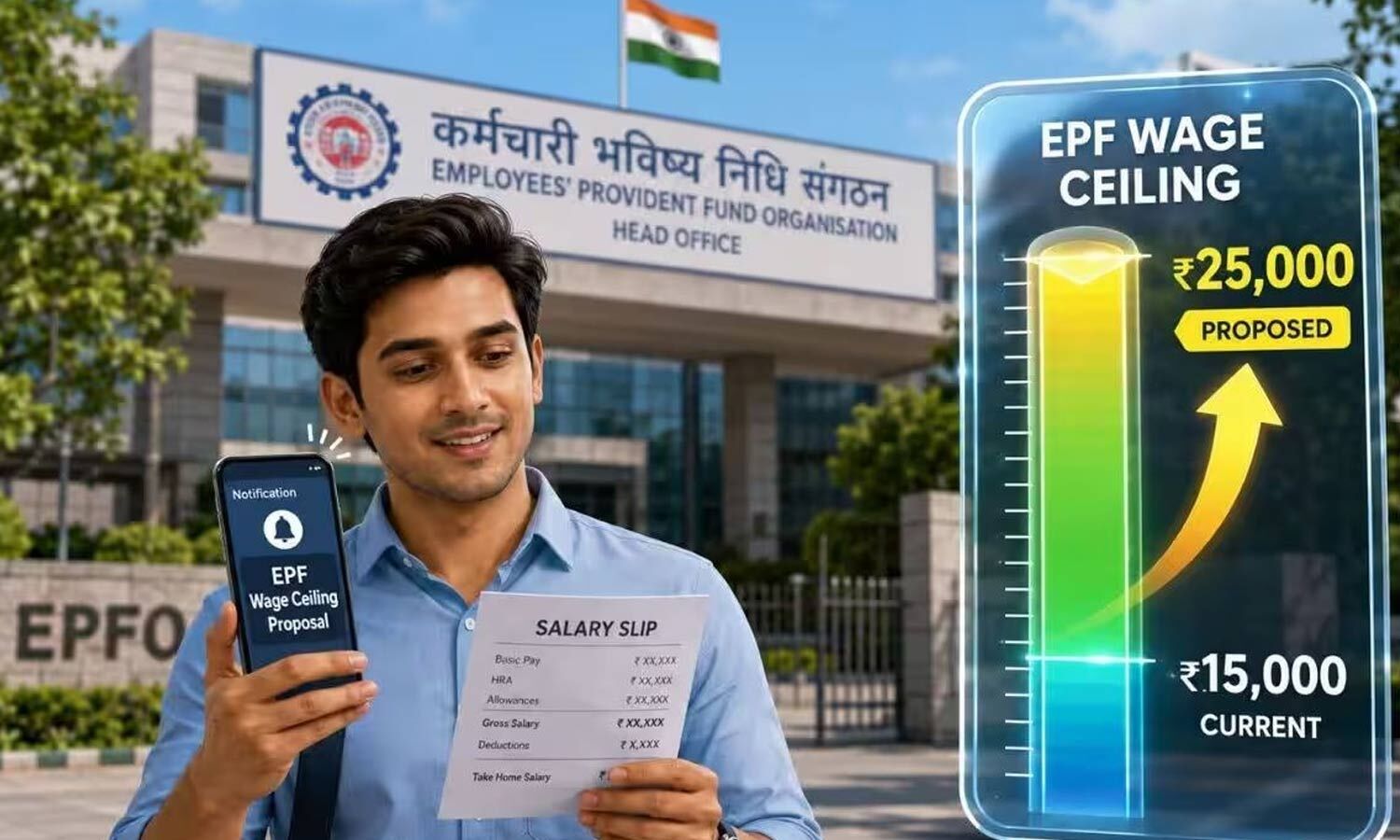
It eventually rose to Rs 15,000 in 2014 and is now being raised to Rs 25,000.
Workers earning up to Rs 25,000 will have contributions made by both themselves and their employers.
The employee contribution will increase to as much as Rs 3,000 per month.
This could help more workers get formal benefits and build larger pension savings.
Employers may have to spend more, especially in manufacturing and small businesses.

The EPFO wage ceiling has risen from Rs 300 in 1952 to Rs 25,000 under the reported revision.
The last increase occurred on September 1, 2014, raising the ceiling to Rs 15,000.
The higher ceiling will cover workers earning up to Rs 25,000, with employers and employees contributing 12% of basic salary each.
The minimum monthly employee contribution will rise from Rs 1,800 to Rs 3,000.
Officials and industry representatives expect stronger social-security coverage, while employers may face higher operating costs.
- Who
- The Employees’ Provident Fund Organisation, workers, employers, the government, and labour officials are involved.
- What
- The EPFO wage ceiling is being raised from Rs 15,000 to Rs 25,000 per month.
- Where
- The change applies to EPFO-covered establishments in India.
- When
- The previous increase took effect on September 1, 2014; the ceiling has been revised nine times since the scheme began.
- Why
- The revision is intended to reflect higher wages, expand formal employment, and improve social-security coverage.
Social-Security Expansion
Employer Cost Concerns
Effect on workers
Social-Security Expansion
Supporters say the higher ceiling will bring more salaried workers into formal employment and improve portable social-security coverage.
Employer Cost Concerns
Critics do not dispute the potential benefits but emphasize that the change may increase operating costs, particularly for manufacturing companies and small and medium-sized enterprises.
Pension financing
Social-Security Expansion
A larger contribution to the Employees’ Pension Scheme can give eligible employees a higher pension corpus and potentially higher pensions.
Employer Cost Concerns
The government subsidy of 1.16% of basic wages will remain capped at the existing Rs 15,000 ceiling, so the additional contribution burden may fall more heavily on employers and employees.
Key facts
- Previous ceiling
- Rs 15,000 per month, effective September 1, 2014
- New ceiling
- Rs 25,000 per month
- Employee contribution
- Up to Rs 3,000 per month, compared with Rs 1,800 currently
- Contribution rate
- Employers and employees contribute 12% each of basic salary per month
- EPS allocation
- Of the employer contribution, 8.33% goes to the Employees’ Pension Scheme and 3.67% to the EPF
- EPFO membership
- 7.98 crore contributing members across about 7.68 lakh contributing establishments
- Mandatory coverage
- Establishments with 20 or more workers must be members of the EPFO
Quotes
KE Raghunathan
National Chairman of the Association of Indian Entrepreneurs and former employer representative on EPFO’s Central Board of Trustees
“There could be some increase in operating costs, particularly for manufacturing and MSMEs, in the short term. But in the long run, stronger social security for workers is an important investment in India’s workforce”
 businesstoday.in
“The decision validates the integration of formal employment that carry portable social security”
businesstoday.in
An unnamed source
A source discussing the government subsidy and pension implications
“No decision has been taken on increasing this subsidy but for employees, more contribution into the EPS will yield a higher pension corpus.”
businesstoday.in
Sources
Related news
Cabinet Raises EPFO Wage Ceiling, Expanding Social Security Coverage
Government Raises PF Wage Ceiling to Rs 25,000

EPFO Wage Ceiling Raised From Rs 15,000 To Rs 25,000

Cabinet May Consider Raising EPF Wage Ceiling to ₹25,000

EPFO Wage Ceiling Hike Could Raise EPS Pension

EPF Wage Ceiling Hike May Cut Take-Home Pay

UPSC Key: Conflicts, Devolution, Social Security and Himalayan Hazards

EPFO Launches WhatsApp Channel for Provident Fund Updates