1 hr ago
India Needs Climate Displacement Law as Delta Communities Vanish

Some people living near the Sundarbans are losing their homes because the sea is slowly taking away the land.
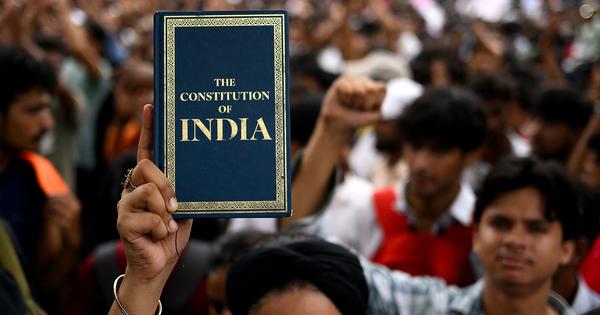
India’s Constitution says people should be able to live with dignity, including having food, shelter and a way to earn a living.
The Supreme Court has also said that people have a right to be protected from harmful effects of climate change.
However, India’s current laws mainly deal with sudden disasters or land taken directly by the government.
They do not clearly explain what should happen when the sea gradually destroys someone’s home.
The article says Parliament should create a new law for climate-displaced people.
That law could provide money, new serviced land, jobs or livelihood help, and support for keeping communities together.
Bangladesh and the African Union already have examples of rules protecting people displaced within their countries.
The article says the water will not wait, so India must act quickly.

The article argues that India’s constitutional right to life includes dignity, livelihood, shelter, clean air and water, and protection from climate-change effects.
A March 2024 Supreme Court ruling recognised a distinct right against the adverse effects of climate change under Articles 14 and 21.
Existing disaster and land-acquisition laws do not adequately cover people displaced by gradual erosion, salinisation or sea-level rise.
The proposed Climate Displacement and Resettlement Framework would define eligibility, provide compensation and secure livelihood-focused resettlement.
The Sundarbans, including Ghoramara’s roughly 4,000 residents, is presented as an urgent test of India’s legal protections.
- Who
- People displaced by climate-related erosion and other residents of vulnerable delta communities, particularly in the Sundarbans and Ghoramara.
- What
- The article calls for a statutory Climate Displacement and Resettlement Framework to implement constitutional protections for climate-displaced citizens.
- Where
- India’s Sundarbans and other delta regions, with comparisons to Bangladesh and the African Union’s Kampala Convention.
- When
- The argument draws on Supreme Court decisions from 1981, 1985, 1991, 1996 and March 2024, as well as Bangladesh’s 2021 strategy and the Kampala Convention, in force since 2012.
- Why
- Existing Indian laws do not adequately address gradual displacement caused by erosion, salinisation and sea-level rise.
Proposed climate-displacement protections
Existing legal framework
Scope of protection
Proposed climate-displacement protections
Supporters of a new framework argue that slow erosion, salinisation and sea-level rise should be treated as causes of internal displacement alongside sudden storms.
Existing legal framework
Existing statutes, as described in the article, are structured around sudden disasters or land directly acquired by the State and do not clearly cover gradual coastal loss.
Compensation
Proposed climate-displacement protections
A new system would compensate people for the cost of a dignified restart rather than relying on the market value of land that has been submerged.
Existing legal framework
The 2013 land-acquisition law does not apply when the sea, rather than the State, removes the land, leaving no clear statutory compensation route.
Administration
Proposed climate-displacement protections
The proposed framework would create one accountable authority responsible for registration, risk-mapping, resettlement and delivery.
Existing legal framework
Without such an authority, displaced people may have to navigate separate disaster and revenue systems without a clearly responsible institution.
Key facts
- Constitutional basis
- The article links Articles 14 and 21 with environmental directives and Supreme Court interpretations of dignity, livelihood, shelter, clean air and clean water.
- Climate-change ruling
- In M.K. Ranjitsinh v. Union of India, decided in March 2024, the Supreme Court recognised a distinct right against the adverse effects of climate change.
- Legal gap
- The Disaster Management Act addresses sudden events, while the 2013 land-acquisition and resettlement law is triggered by government acquisition for a public purpose.
- Proposed framework
- The proposed framework would define climate displacement, establish evidence thresholds, provide compensation and guarantee resettlement rights.
- Resettlement priorities
- The article proposes serviced land, livelihood restoration and efforts to keep displaced communities together.
- Administrative proposal
- A single authority would oversee registration, risk-mapping and delivery between disaster-management and revenue administrations.
- International examples
- Bangladesh adopted its National Strategy on Internal Displacement Management in 2021, and the Kampala Convention has been binding since 2012.
- Affected community cited
- Approximately 4,000 people in Ghoramara are described as having experienced the loss of land to the advancing water.
Sources
Related news
Why Lawyers and Judges Still Treat Constitution as Inadequate

Supreme Court Weighs Fundamental Right To Work And Minimum Wages

Constitution, Not Bhagwat, Determines Muslims’ Belonging in India

Angmo Urges Government to Treat Education Protests as Wake-Up Call

Guruswamy Warns Parliamentary Silence Endangers India’s Democracy and Constitution

BJP Lawyers Urged to Secure Justice for Dalit Families

JD(U) Revives Nitish Legacy Amid Farakka, UCC and Succession Debate

India-Bangladesh Ties Face Strain as Dhaka Weighs Future

STF Uncovers Fake Passport Racket Using Layered Identities

Ten Suspected Bangladeshis Detained at Guwahati Lodge