2 hrs ago
Guruswamy Warns Parliamentary Silence Endangers India’s Democracy and Constitution
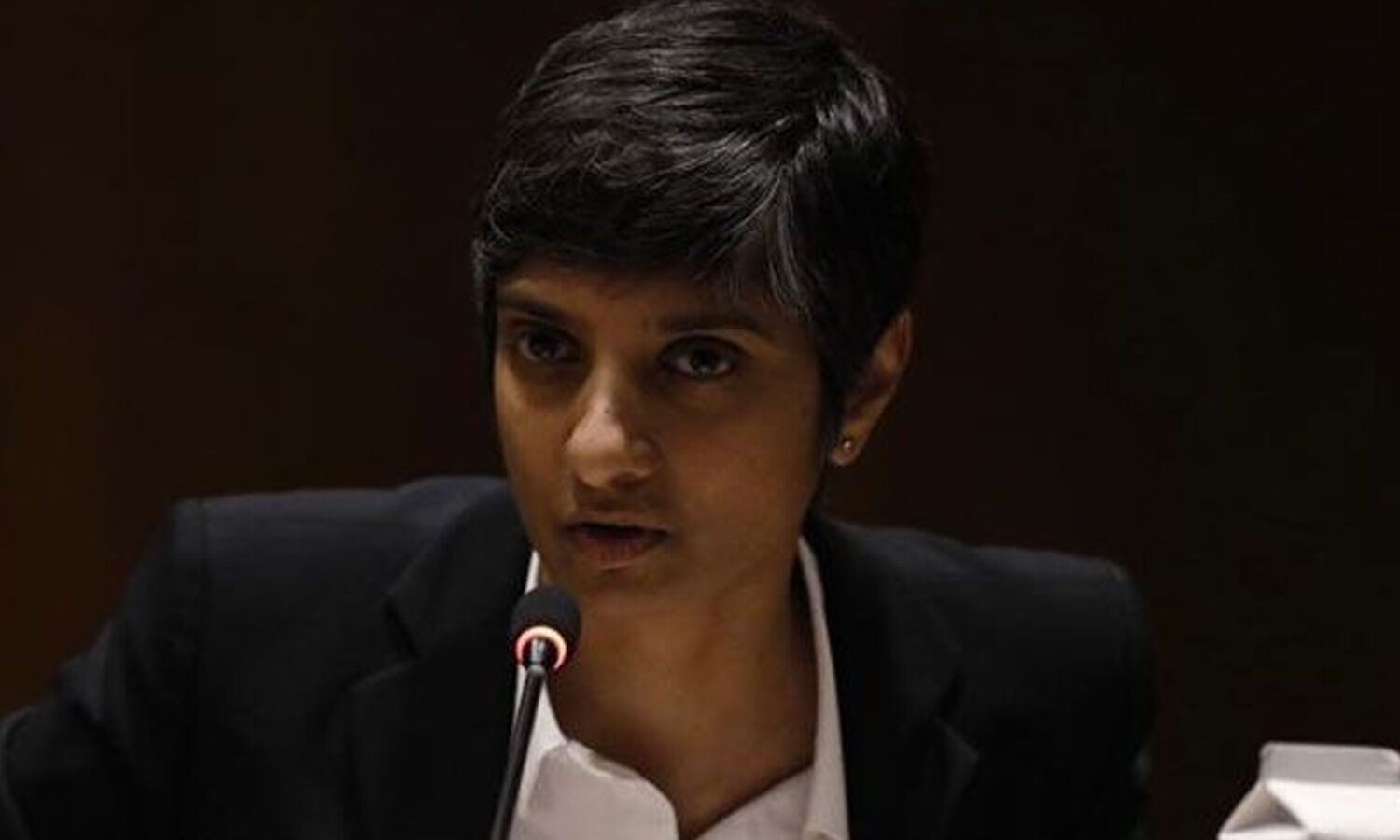
Menaka Guruswamy says democracy needs open discussions in Parliament.
She argues that when lawmakers cannot properly debate, the government is not held accountable.
She also says young people have protested because they want jobs, good education, fair exams and safety.
In her view, a constitution is weakened slowly when important democratic habits disappear.
These habits include listening to opponents, protecting independent institutions and treating people equally.
She believes courts and the legal profession should include people from more backgrounds.
She also says citizens may need to protest when formal institutions do not listen.
The article presents her concerns about India’s democracy and constitutional values.

Menaka Guruswamy argues that shutting Parliament’s doors to debate weakens executive oversight and constitutional democracy.
She says recent youth protests demonstrated democratic consciousness by focusing on jobs, education, examination integrity, safety and livelihoods.
Guruswamy warns that constitutional erosion occurs gradually when deliberation, independent institutions, civic dialogue and fraternity are weakened.
She calls for stronger opposition politics, socio-economic rights, academic freedom and greater diversity in the judiciary and legal profession.
She alleges that committee dissent, factual scrutiny and opposition questions are being suppressed, pushing democratic debate into the streets.
- Who
- Senior advocate and Rajya Sabha member Menaka Guruswamy, discussing India’s democratic institutions and youth protesters.
- What
- Guruswamy argues that reduced parliamentary debate, weakened oversight and pressure on independent institutions endanger constitutional democracy.
- Where
- India, including Parliament, the courts, universities and public streets.
- When
- The article refers to recent youth protests but gives no specific date for the remarks.
- Why
- She says democratic debate is being restricted and that citizens must defend jobs, education, equality, liberty, dignity and other constitutional values.
Key facts
- Main speaker
- Menaka Guruswamy, a senior advocate and Rajya Sabha member
- Central concern
- The article argues that declining parliamentary deliberation is weakening executive oversight.
- Youth concerns
- Jobs, quality education, examination transparency, safety and dignified livelihoods
- Institutions discussed
- Parliament, courts, parliamentary committees, universities and the judicial system
- Judicial diversity figures cited
- The article says Scheduled Castes comprise roughly 2.3% of appointments, women around 10% and OBCs roughly 10%.
- Constitutional values emphasized
- Equality, dignity, liberty, secularism and fraternity
- Suggested reading
- Jawaharlal Nehru’s book The Discovery of India
Quotes
Menaka Guruswamy
Senior advocate and Rajya Sabha member
“But there is a profound, non-negotiable difference between those who uphold secularism and those who do not; between those who speak for a single community alone and those who speak for all Indians; between political formations that actively stifle an independent press and those that do not.”
 thehansindia.com
“My own transition from corporate practice in the United States to Indian litigation was simple: courtrooms are the most thrilling, vital spaces one can inhabit.”
thehansindia.com
Sources
Related news
Youth Protests Expose India's Institutional Failures, Guruswamy Says
Supreme Court Judge Defends Right to Question in India

BJP Leader Sanjay Tandon Warns Against Parliamentary Disruptions

Washout of monsoon session undermines India's parliamentary democracy

Democracy's Soul Depends on Institutions, Not Ballots Alone, Essay Argues
Congress Opposition Under Rahul Gandhi Turns Obstruction, Democracy Pays Price
West Bengal Durga Ad Showing 11 Hands Sparks Political Row
Bengal BJP Chief Rejects Bageshwar Baba’s Meat Appeal
Supreme Court Sends Trinamool Signboard Row Back to Calcutta HC
West Bengal Economy Shows Slow Recovery, Chief Minister Says