1 week ago
Why Lawyers and Judges Still Treat Constitution as Inadequate
Eight men were arrested over alleged theft of donations meant for the Ram Temple.
Lawyers in Faizabad were reported to have decided not to defend them because they felt deeply hurt by the alleged theft.
The bar association later said it had not formally made that decision and that lawyers had acted individually.
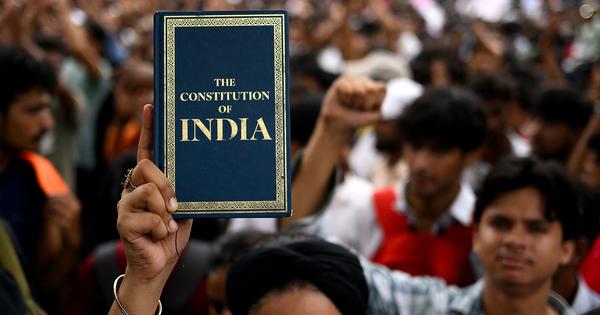
India’s Constitution says arrested people have a fundamental right to choose a lawyer.
A Supreme Court judgment also said lawyers cannot refuse cases together just because they dislike the accusations.
The article says refusing representation can make people seem guilty before a trial begins.
It also discusses judges who use sources such as the Bhagavad Gita and legal history when explaining constitutional values.
The author argues that this shows the Constitution has not yet become the unquestioned highest standard for lawyers and judges.

The Faizabad Bar Association was initially reported to have barred members from representing eight men accused of embezzling Ram Temple donations.
The reported resolution allegedly required any lawyer who represented an accused to deposit a Rs 5 lakh fine per accused.
The association later denied passing a formal resolution, saying lawyers individually declined representation because their religious sentiments were hurt.
The Supreme Court’s 2010 AS Mohammed Rafi judgment held that lawyers cannot collectively withdraw from representing accused people and cited Article 22(1)’s right to counsel.
The article argues that both the bar and the judiciary sometimes rely on religious, historical or moral authorities beyond the Constitution to justify legal obligations.
- Who
- The eight accused men, Faizabad lawyers, the Faizabad Bar Association, the Supreme Court, and Chief Justice of India Surya Kant.
- What
- A reported refusal by lawyers to represent the accused in the Ram Temple donations embezzlement case, and a broader debate over the Constitution’s authority.
- Where
- Faizabad, in the Ram Temple donations case; Surya Kant’s remarks were made at a conference in Stockholm.
- When
- The reported bar decision and Chief Justice Surya Kant’s conference remarks were dated June 29; the relevant Supreme Court judgment was delivered in 2010.
- Why
- Lawyers cited hurt religious sentiments over the alleged theft, while the article examines why legal institutions invoke religious and historical authorities alongside constitutional principles.
Constitutional Primacy
Religious and Historical Justifications
Representing accused people
Constitutional Primacy
The Constitution and the Supreme Court’s AS Mohammed Rafi judgment require access to counsel and reject coordinated refusals to represent accused people.
Religious and Historical Justifications
The Faizabad lawyers were reported to have declined representation because the alleged theft hurt their religious sentiments; the association later described the refusals as individual choices.
Basis for legal obligations
Constitutional Primacy
Article 22(1) and constitutional principles should independently protect the right to counsel and the presumption of innocence.
Religious and Historical Justifications
The article notes that the Supreme Court judgment also invoked Thomas Erskine, American constitutional law, Indian nationalist legal traditions and the Bhagavad Gita to explain lawyers’ duties.
Meaning of dharma
Constitutional Primacy
Religious sentiment cannot override fundamental rights or place accused people outside constitutional protection.
Religious and Historical Justifications
Chief Justice Surya Kant argued that rule-of-law and judicial-independence principles have an Indian basis in the supremacy of dharma over personal or dynastic power, rather than being purely Western imports.
Key facts
- Accused
- Eight men were arrested in the alleged embezzlement of Ram Temple donations.
- Reported bar decision
- The Faizabad Bar Association was reported to have resolved that members would not represent the accused.
- Alleged penalty
- A lawyer who represented an accused was reportedly required to deposit Rs 5 lakh per accused.
- Association’s later position
- The association denied that a formal resolution had been passed and said lawyers acted individually.
- Constitutional provision
- Article 22(1) guarantees arrested people a fundamental right to counsel of their choice.
- Supreme Court precedent
- The 2010 AS Mohammed Rafi v State of Tamil Nadu judgment called collective withdrawals by lawyers illegal and contrary to professional ethics.
- Article’s thesis
- The author argues that lawyers and judges still rely on authorities beyond the Constitution when explaining legal duties.
Quotes
Chief Justice Surya Kant
Chief Justice of India
“In the Indian consciousness, the supremacy of Dharma over personal or dynastic power has been an enduring principle for thousands of years, predating the common law tradition.”
 scroll.in
Sources
Related news

Intellectuals Urge CJI to Uphold Liberty in Umar Khalid Case

Former Judge Defends Dissent, Choice and Linguistic Pluralism

CJI Surya Kant says lawyers must keep constitutional promise alive

MPCC Chief Vows to Protect Constitutional Rights of Minorities

Centre Says No Legal Bar to Rajiv Gandhi Convict’s Enrolment
Allahabad HC orders release, compensation for sisters confined over conversion

Supreme Court Questions IPS Deputation for CAPF Leadership Positions

Supreme Court Quashes 20-Year Conviction, Reaffirms Juvenile Legal Protections

Two Years After RG Kar Doctor's Rape-Murder, Case Remains Unresolved

ED widens Chhattisgarh probes with two arrests and searches

Delhi High Court Orders Madhya Pradesh to Pay Advocate Dues