1 hr ago
Oil Exports Through Hormuz Rise Despite Middle East Turmoil
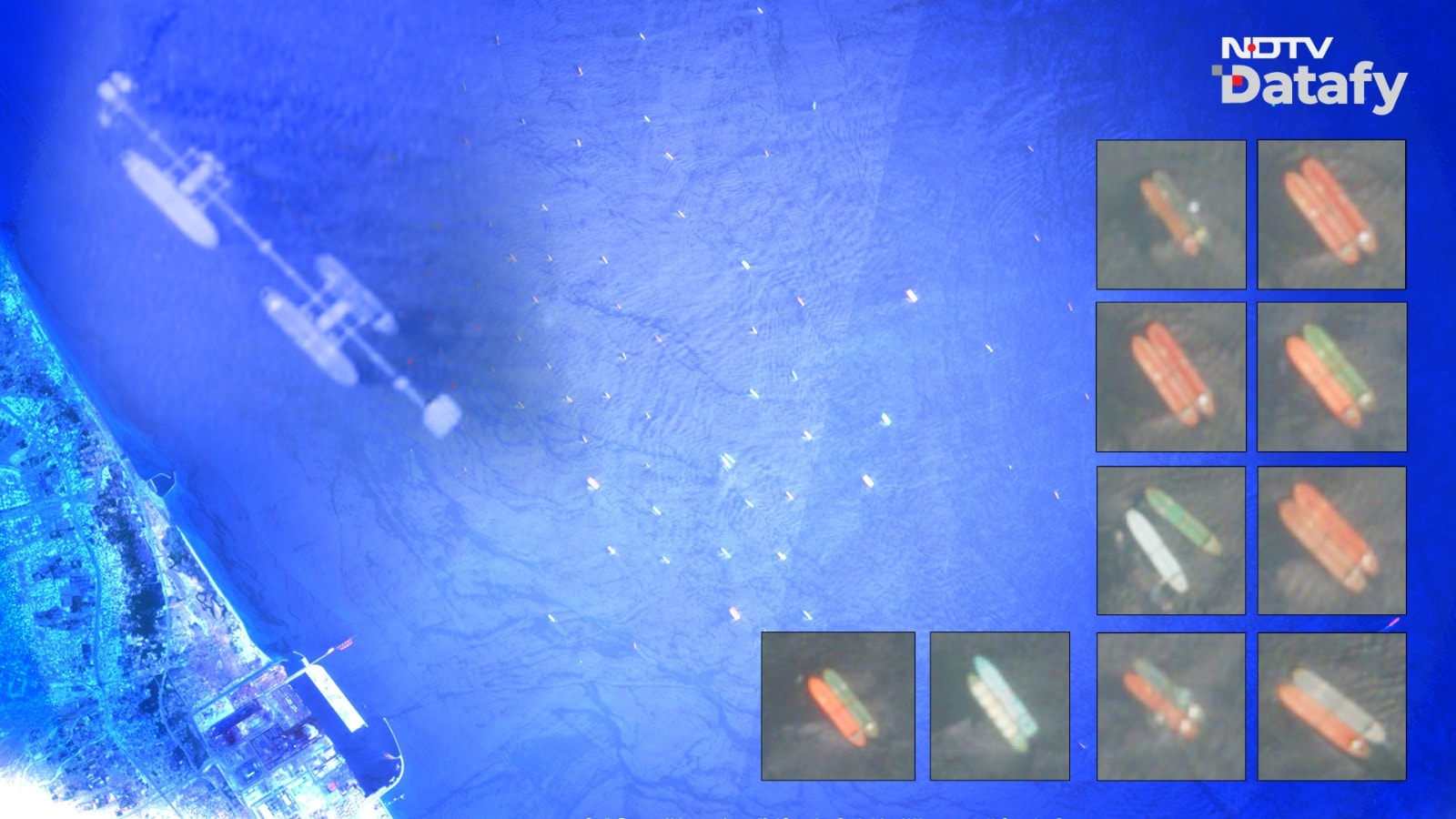
More oil tankers appear to be traveling through the Strait of Hormuz despite fighting in the Middle East.
Satellite pictures showed more ships being loaded at oil terminals in August.
The monitored terminals are in Saudi Arabia, Kuwait, Iraq and the United Arab Emirates.
The analysis estimated that almost 9 million barrels of oil were loaded each day at those locations.
Some ships hide their tracking signals, so public shipping data may miss them.
Iran has attacked some ships, but damage to its coastal facilities may have reduced its ability to stop tanker traffic.
The United States is also patrolling and escorting ships in the area.
Other oil routes have become less reliable, making Hormuz especially important for global oil supplies.

Satellite imagery indicates tanker loading at major Persian Gulf terminals increased from July through August.
Nearly 9 million barrels of crude may have been loaded daily at seven monitored terminals in August, assuming full tanker capacity.
At least 40 tankers were loaded during the week ending August 27, the highest weekly total in the analysis.
U.S. Energy Secretary Chris Wright said about 10 million barrels per day crossed Hormuz during the previous week, roughly two-thirds of pre-war flows.
Attacks on Saudi Arabia’s East-West Oil Pipeline and threats near the Red Sea have increased the importance of the Strait of Hormuz.
- Who
- Oil exporters in Saudi Arabia, Kuwait, Iraq and the United Arab Emirates; Iran, the United States and Yemen’s Iran-backed Houthis are also involved in the surrounding conflict.
- What
- Oil tanker traffic through the Strait of Hormuz appears to be recovering despite attacks, blockades and wider regional instability.
- Where
- The Strait of Hormuz and major oil terminals in the Persian Gulf, with related disruptions near Saudi Arabia’s Red Sea route and the Bab el-Mandeb Strait.
- When
- The analysis covers activity from July through August, with additional observations and statements cited from September 14.
- Why
- The Strait has become more important because Saudi Arabia’s alternative pipeline route was attacked, Iranian exports have been constrained, and other regional shipping routes face threats.
Key facts
- Estimated August loading
- Nearly 9 million barrels of crude per day at seven monitored terminals, assuming tankers were fully loaded.
- Highest weekly total
- At least 40 tankers were loaded during the week ending August 27.
- Reported Hormuz flow
- Chris Wright said about 10 million barrels per day crossed the strait during the previous week.
- Pre-war comparison
- The reported flow was at least two-thirds of an earlier level of about 20 million barrels per day.
- Monitored tanker types
- The analysis counted Suezmax tankers and Very Large Crude Carriers.
- Saudi pipeline disruption
- The East-West Oil Pipeline was closed after a Houthi attack and had carried an amount equivalent to about 4% of global oil supplies.
- Regional shutdowns
- The International Energy Agency said more than 10 million barrels per day of Gulf production remained shut during August.
Sources
Related news

US Navy Says Hormuz Oil Flows Recover Amid Security Risks
Shipping Data Challenges US Claims of Control Over Hormuz

Widening US-Iran Conflict Threatens Middle East Oil Shipping Routes

Hormuz Shipping Traffic Falls to Seven Vessels, Data Shows
Iran-Oman Routes Keep Hormuz Closed, Threatening Oil and Trade
Ships Shift to Omani Route as Iran’s Hormuz Grip Slips
War-Driven Chokepoints Keep Oil Prices High, Threatening India
Houthi Advances Leave Saudi Arabia Exposed, Iran Emboldened
Indian Refiners Face Rising Crude Costs Amid Middle East Disruptions
Iran War Costs Drive Inflation, Oil Prices and Mortgage Rates