2 hrs ago
Central Railway Uses Vetiver Grass to Stabilize Monsoon Ghat Slopes
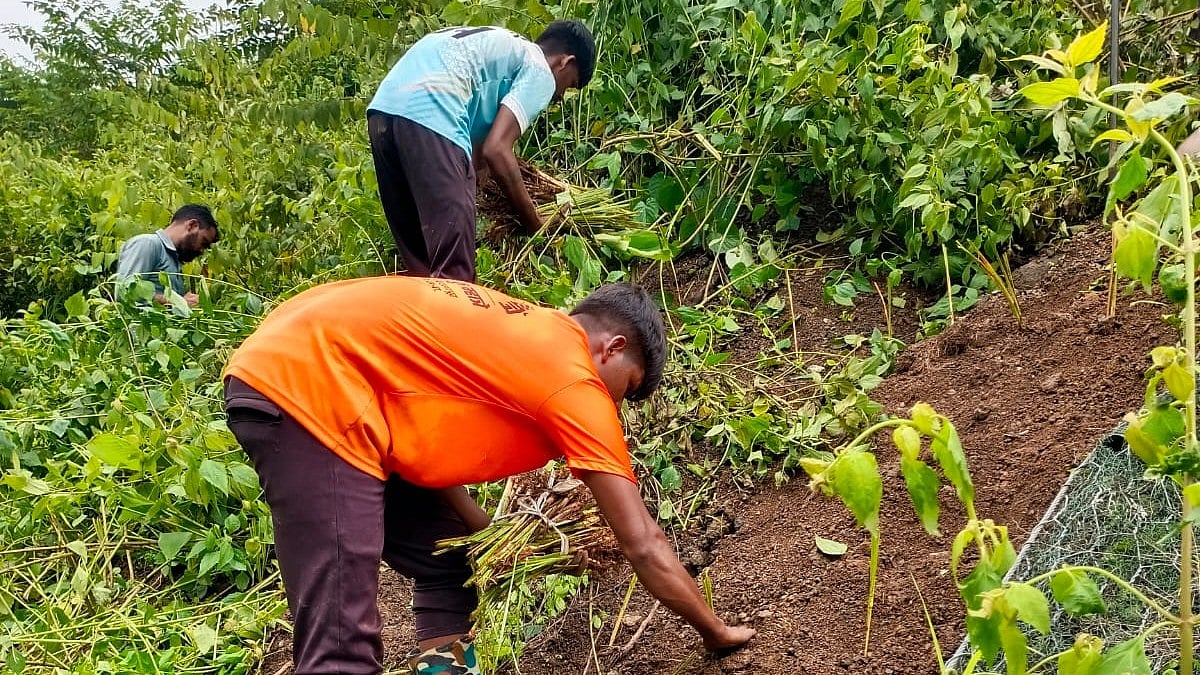
Central Railway is planting a special grass to help keep railway slopes safe.
The grass is called Vetiver Grass.
Its deep roots hold soil together, while its leaves slow down rainwater.
This can reduce erosion, mudslides and loose rocks near train tracks.
The Bhor Ghat and Thal Ghat areas are especially vulnerable during the monsoon.
Railway teams have already planted Vetiver in two pilot areas.
One covers 1,050 square metres and the other covers 4,250 square metres.
The railway hopes this will support safer and more punctual train operations.
It will be used together with regular engineering methods.

Central Railway is adopting Vetiver Grass bioengineering to control erosion in vulnerable Ghat sections.
The Bhor Ghat and Thal Ghat routes face runoff, boulder falls and shallow landslides during monsoon.
Vetiver roots can grow 3–4 metres within 12–24 months and increase soil shear resistance by about 30–40%.
Pilot plantations cover 1,050 square metres near Khandala–Monkey Hill and 4,250 square metres near Thakurwadi Cabin–Palasdhari.
The railway expects the nature-based solution to improve slope stability, reduce debris risks and lower conventional maintenance costs.
- Who
- Central Railway.
- What
- It is adopting Vetiver Grass-based bioengineering to stabilize slopes and embankments.
- Where
- The work targets Ghat sections, including Bhor Ghat between Karjat and Lonavala and Thal Ghat between Kasara and Igatpuri.
- When
- Pilot plantations have already been undertaken; the measure is intended to address monsoon risks.
- Why
- To reduce soil erosion, runoff, boulder and debris falls, and shallow landslides while supporting safe train operations.
Key facts
- Plant used
- Vetiver Grass, scientifically identified as Chrysopogon zizanioides.
- Root growth
- The predominantly vertical roots can grow 3–4 metres within 12–24 months.
- Soil reinforcement
- The root network is stated to increase soil shear resistance by approximately 30–40%.
- First pilot site
- Khandala–Monkey Hill, near the UP line at kilometre 122/0–122/15; plantation area: 1,050 square metres.
- Second pilot site
- Thakurwadi Cabin–Palasdhari, near the MID line between kilometre 106/600–700; plantation area: 4,250 square metres.
- Planting method
- Vetiver hedges are planted along contour lines on cutting slopes and embankments.
- Expected benefits
- Reduced erosion and slope instability, fewer debris risks, safer train operations and lower conventional protection-work maintenance costs.
Sources
Related news
Central Railway Plants Vetiver Grass To Stabilize Kasara–Igatpuri Slopes
Central Railway Tests Vetiver Grass Against Mumbai-Pune Ghat Landslides

CISF Plants Trees to Revive Yamuna Bank in Delhi

MRVC Uses Special Soil Technique to Tackle Virar-Dahanu Quadrupling
Vande Bharat safety trials begin on critical Western Ghats section

Railway, Assam Forest Department Coordinate to Protect Elephants
Dadar Platform 4 To Expand For 15-Coach Fast Locals
New Daily Mumbai–Sawantwadi Train To Start September 3