Politics · Other · 7 hrs ago
Israel to spend over NIS 50 million on emergency desalination membranes
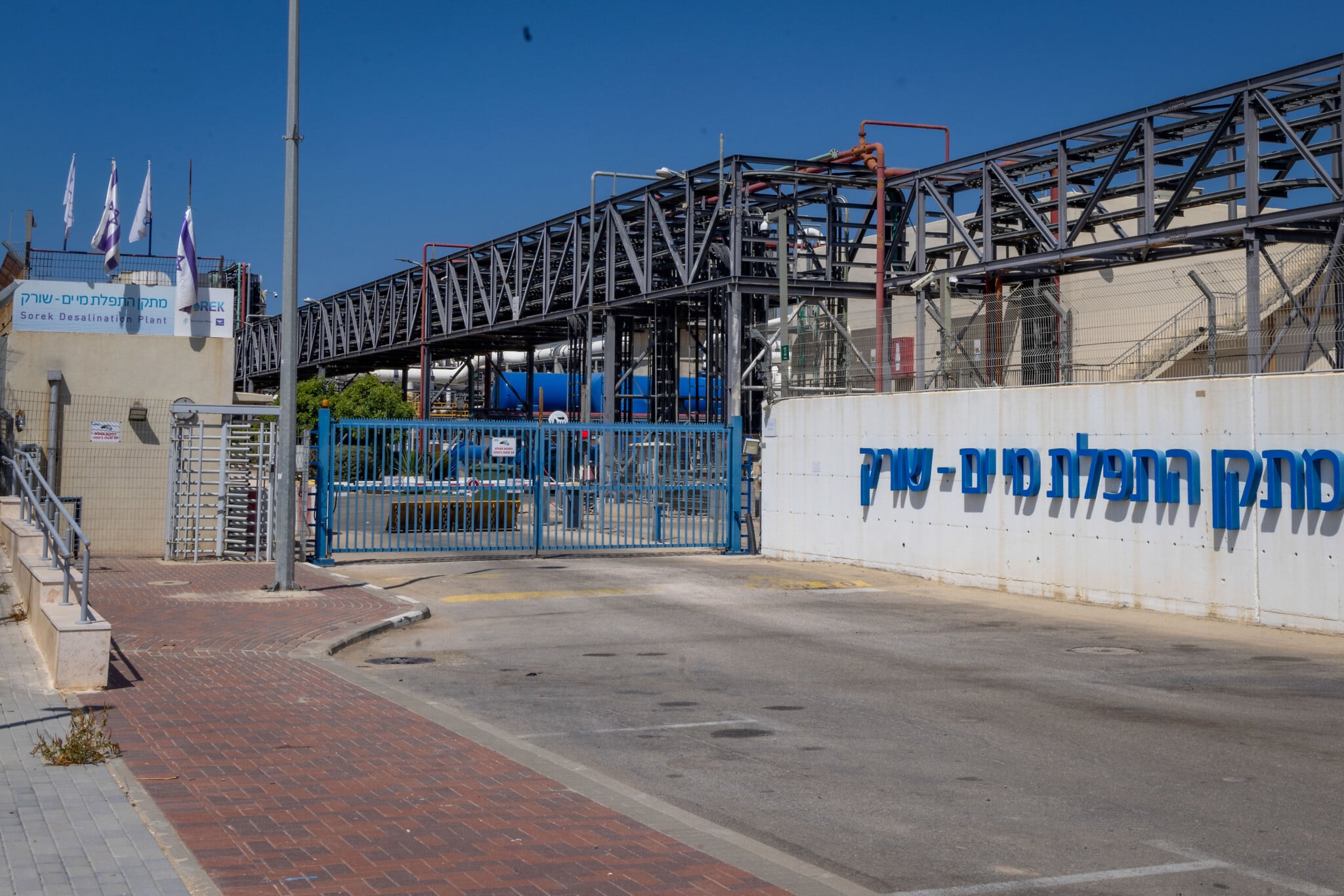
Israel is spending more than NIS 50 million on emergency membranes for its privately operated desalination plants.
The purchase follows the shutdown of five of the six plants last month, after microalgae from the Nile Delta reached Israel’s Mediterranean coast.
The contamination has not fully cleared: two plants were running at about 80% capacity and another at about 50%, while the other three were operating at full capacity.
Homes continued to receive water, but irrigation for crops in the south and parks and gardens nationwide was temporarily suspended.
The plants provide up to 80% of Israel’s drinking water, making them a strategic source of water in a drought-prone region.
The state has already spent about NIS 23.6 million on membranes and plans to spend another NIS 27 million by the end of the year.

Israel is spending more than NIS 50 million on emergency desalination membranes for privately operated plants.
The Water Authority says the membranes are for emergency use and require state authorization before they can be used.
The purchase follows the shutdown of five of Israel’s six desalination plants last month after microalgae contaminated seawater.
The contamination temporarily halted irrigation for crops in the south and for parks and gardens nationwide, but did not affect household water supplies.
Two plants were operating at around 80 percent capacity on Tuesday, while the other plants had varying operating levels.
- Who
- The Israeli state is buying membranes for privately operated desalination plants.
- What
- It is spending more than NIS 50 million on an emergency supply of filtering membranes.
- When
- The purchase follows plant shutdowns last month. The state said it would spend another NIS 27 million by the end of the year.
- Where
- At desalination plants along Israel’s Mediterranean coast.
- Why
- The membranes are intended for emergency use if damage from the contamination accumulates and replacement is needed.
This story does not have two clearly opposing sides.
Microalgae contamination led to the unprecedented shutdown of five of Israel’s six desalination plants.
Ashdod and Palmachim were operating at around 80 percent capacity, while Sorek A and Ashkelon were at full capacity and Sorek B was at around 50 percent.
The state plans to spend another NIS 27 million on new membranes.
- Emergency membranes
- More than NIS 50 million
- State spending so far
- About NIS 23.6 million
- Additional planned spending
- NIS 27 million by the end of the year
- Plants shut down
- Five of Israel’s six desalination plants
- Desalination share
- Plants provide up to 80% of Israel’s drinking water
What people are saying
Should there be a need to use the emergency membranes, state authorization is required.
This involves building an emergency stock in case damage accumulates on the membranes, and they require replacement.
Sources
Related news

Azerbaijan accuses Turkish officials of inflaming tensions over school headscarf ban

Hungary removes anti-LGBTQ provisions from child protection law

Reports of warnings before Oct. 7 put Netanyahu under election pressure

Ukraine’s parliament backs three funding-linked bills, with more votes ahead

Albanian student protest over education and jobs turns violent

Philippine Senate accepts withdrawal of three charges against Sara Duterte

Pakistan declares emergency in province governed by Imran Khan's party

Morocco's PAM agrees coalition deal to form government
Pakistan detains 278 members of Imran Khan’s party under emergency rule

Philani Mavundla returns to contest eThekwini mayoralty

Nigeria’s House seeks independent probe and military aircraft audit after fatal crash