

Science & Tech · Gadgets & EVs · 1 hr ago
Apple routes a flexible graphite pipe through the iPhone Duo hinge to manage heat
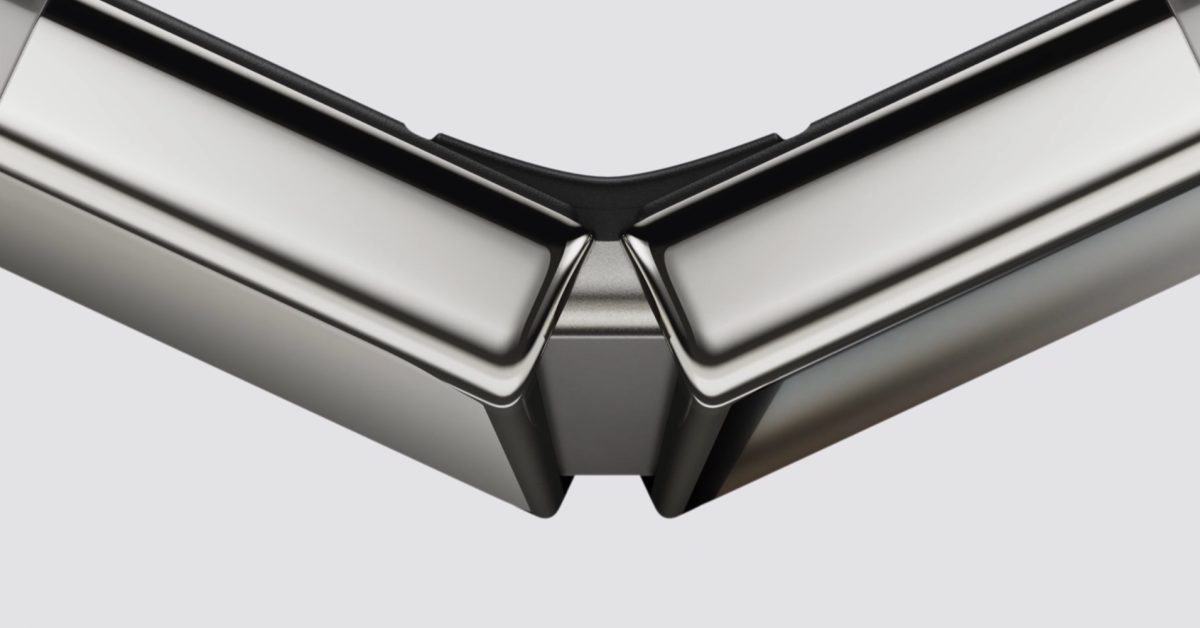
Apple says it built a flexible graphite pipe into the hinge of the iPhone Duo, its folding phone.
The pipe moves heat between the phone’s two halves, giving heat more surface area to escape.
Folding phones pose a cooling challenge because their components are spread across two sections that fold together.
The iPhone Duo uses a version of Apple’s A20 Pro chip, which also powers the iPhone 18 Pro and iPhone 18 Pro Max.
The Duo’s chip has an extra display engine so its inner and outer screens can work at the same time.
Apple also uses a material called “metal over foam” to connect the chip to a vapor chamber that carries heat away.
Apple says the hinge material must keep working through repeated folding while preserving its strength and ability to transfer heat.

Apple routed a flexible graphite pipe through the iPhone Duo’s hinge to move heat between the phone’s two halves.
The design increases the surface area available for heat dissipation.
Apple says the flexible material must withstand many hinge cycles while maintaining thermal connectivity and structural integrity.
The iPhone Duo’s A20 Pro chip also includes a second display engine to run its inner and outer screens simultaneously.
- Who
- Apple’s thermal and mechanical teams developed the design.
- What
- A flexible graphite pipe runs through the iPhone Duo hinge to transfer heat between the phone’s two halves.
- When
- Not stated.
- Where
- Through the hinge of the iPhone Duo.
- Why
- To improve heat dissipation by increasing the surface area available for it.
This story does not have two clearly opposing sides.
This story does not have a timeline yet.
- Heat-transfer component
- Flexible graphite pipe routed through the hinge
- Heat path
- Transfers heat between the iPhone Duo’s two halves
- A20 Pro display support
- A second display engine runs the inner and outer displays simultaneously
- Chip process
- A20 Pro is built on a 2 nm process
What people are saying
This was one of the most technically challenging aspects of our design
It’s a flexible material that needs to survive, as you can imagine, many hinge cycles while maintaining its thermal connectivity, and also its structural integrity throughout the product life cycle.
Sources
Related news
Musk says Tesla robotaxis will be updated to avoid roaming pets
Nothing OS 5.0 with Android 17 starts rolling out to Phone (3)

Apple lets customers prepare iPhone Duo pre-orders ahead of Friday

Google launches Fitbit Edge with GPS, health tracking and replaceable battery

OnePlus launches 10,000 mAh power bank with 67W charging

Skyworth Team Tests Walking Exoskeleton for Older People

Musk says Tesla is improving robotaxi detection of animals

Toshiba launches four compact eFuse chips for low-voltage power lines
Citroën unveils electric 2CV concept, with production planned for 2028
Nokia 3310 mod uses Raspberry Pi Pico to run a game on its original screen

Timex launches $349 Pan Am Waterbury GMT watch in the US
