

Business · Companies · 1 day ago
Walmart’s warehouse robot rollout faces breakdowns and costly changes
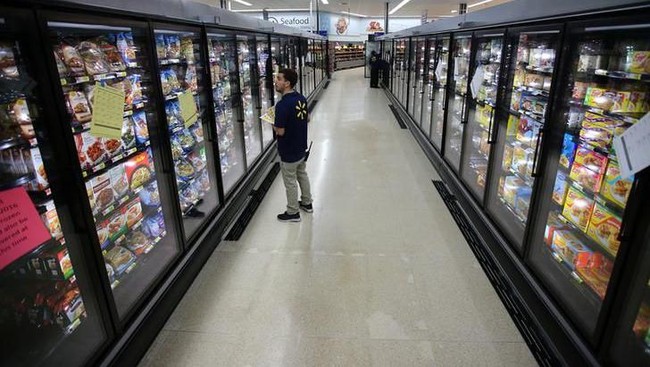
Walmart wants robots to take on some warehouse tasks now done by more than 140,000 workers.
But robots have struggled with everyday problems, such as dust, broken equipment and packages that are too large.
The company is changing its boxes and updating old warehouses while keeping them open.
The effort matters because automation could lower costs, but it is proving difficult and expensive to put in place.

Walmart is investing billions of dollars to automate some warehouse work, a transition that has been underway for about a decade.
The company has relied on more than 140,000 warehouse workers, whose tasks include unloading trucks, moving pallets and sorting goods.
Automation has faced technical and cost problems, including robots that break down, trouble handling large products and packaging that does not fit automated systems.
Walmart is replacing its long-used boxes with ones 1.5 inches shorter, and says the change should speed up stocking stores while adding a taping step.
Symbotic, Walmart’s main robotics partner, has struggled to meet Walmart’s target processing speed, although it said the share of its robots under repair fell to about 5% in recent months.
Walmart executives say automation will eventually reduce the need for warehouse workers, but the company says it does not expect the shift to cause layoffs.
- Who
- Walmart and its robotics partner Symbotic
- What
- Walmart is automating parts of its warehouse operations with robots.
- When
- The effort has been underway for about a decade; the article was published on October 10, 2026.
- Where
- Walmart warehouses and supply-chain facilities in the United States
- Why
- To automate warehouse work and reduce labor costs amid competition from Amazon.
This story does not have two clearly opposing sides.
We are at the peak of complexity.
It takes time, hard work, and a strong partnership built on trust.
In many cases, automation investment is an arms race [between retailers]. And the Amazon effect is the big elephant in the room.
We still need people to unload trailers.
Walmart began pursuing the automation of some warehouse work.
Symbotic announced a deal to install its systems in all 42 of Walmart’s nonperishable-goods distribution centers by 2030.
Kroger recorded a US$2.6 billion charge to close three automated e-commerce fulfillment centers that had not met financial expectations.
CNBC Indonesia published an account of Walmart’s automation challenges and plans.
- Walmart warehouse workforce
- More than 140,000 workers
- Facilities involved in the transition
- About 200 Walmart U.S. supply-chain facilities
- Symbotic installation agreement
- Systems planned for all 42 nonperishable-goods distribution centers by 2030
- Robots under repair
- Symbotic said the share was about 5% in recent months, down from less than 10% last year
- Replacement box size
- 1.5 inches shorter than Walmart’s previous boxes
- Walmart's Symbotic stake
- 12.6%
Sources
Related news

Los Angeles Fine-Dining Restaurants Expand Non-Alcoholic Pairings

Apple reportedly cuts iPhone 18 Pro component orders by up to 20%

Bond Traders Look to Inflation Data and Fed Chair for Rate Signals

SpaceX spectrum deal deepens Starlink’s push into U.S. mobile service

Starbucks has explored a possible takeover of Chipotle

Netflix reportedly plans to cut 5% of its workforce
Meta bans ByteDance ads across its platforms in seven countries

OpenAI revenue revision rattles tech stocks as AI investment continues

Isaias Shuts In More Than Two-Thirds of Gulf Oil Production

NPR plans newsroom reorganization with no job losses, content chief says

Apple reportedly cuts iPhone 18 Pro component orders by up to 20%
