Business · Markets · 1 hr ago
Singapore Exchange urged to do more for small and mid-cap trading
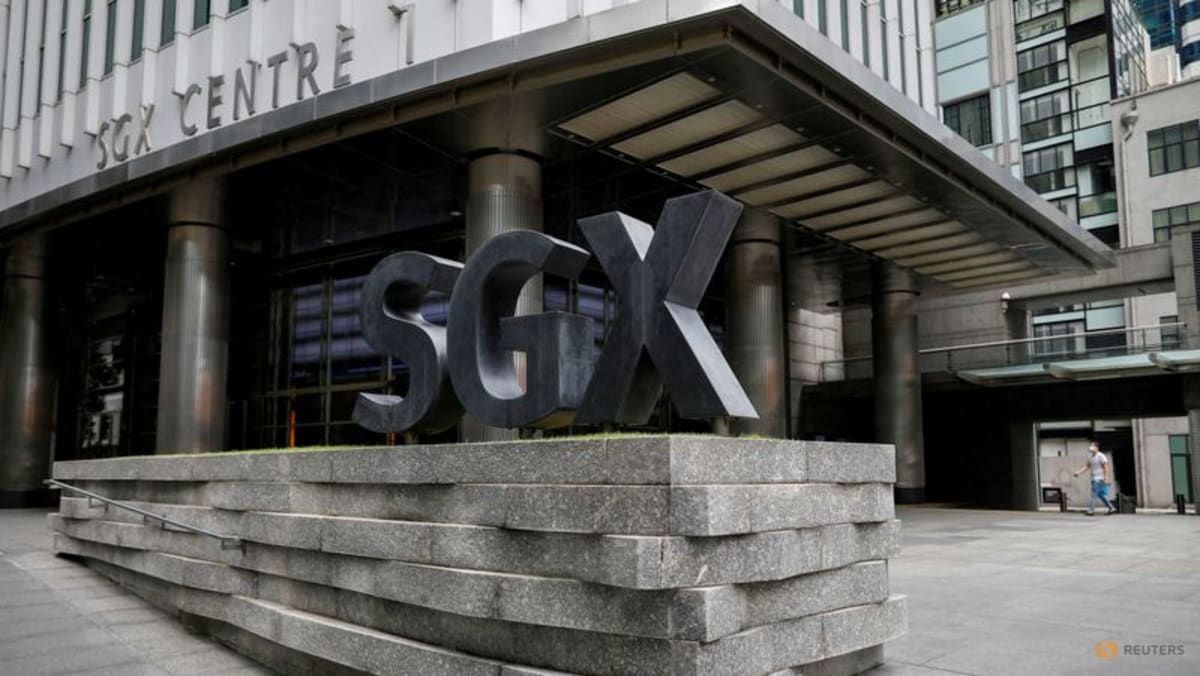
Many small and mid-sized companies listed on the Singapore Exchange continue to have shares that trade infrequently.
SGX chairman Koh Boon Hwee said companies should explain their plans and growth prospects to investors, and that the exchange cannot guarantee active trading.
The Straits Times Index has risen since the start of 2025, but the gains have been driven largely by Singapore’s three major banks.
Shares in many smaller firms have not shared in that rise, making it harder for them to raise money or use shares in business deals.
A S$6.5 billion government-backed programme aims to support Singapore’s equity market, but the commentary says it has not yet significantly improved day-to-day trading in smaller shares.
The commentary argues that SGX can still do more, while also noting that the exchange has run investor education activities.
Koh has said companies with thinly traded shares could consider privatisation, but the commentary says it should not be the default option.

SGX chairman Koh Boon Hwee said small and medium-sized companies should not rely on the exchange to raise their valuations or guarantee liquid trading.
Former editor and financial journalist Ven Sreenivasan argues that SGX can do more to improve trading in small- and mid-cap stocks.
Many Singapore-listed small- and mid-cap shares remain thinly traded despite gains in the broader market, the commentary says.
The S$6.5 billion Equity Market Development Programme has supported demand for share offerings, but the commentary says it has done little for secondary-market liquidity.
- Who
- Singapore Exchange and its chairman, Koh Boon Hwee, are at the centre of the debate. Former editor and financial journalist Ven Sreenivasan argues SGX can do more.
- What
- The commentary examines how to improve liquidity in small- and mid-cap stocks listed on SGX.
- When
- The commentary was published on Oct 11, 2026. Koh spoke at an event on Oct 1.
- Where
- Singapore, in the local stock market and on the Singapore Exchange.
- Why
- Many small- and mid-cap shares remain thinly traded, limiting price discovery and companies’ ability to use shares to raise capital or pursue mergers and acquisitions.
SGX chairman Koh Boon Hwee
Ven Sreenivasan
Responsibility for liquidity
SGX chairman Koh Boon Hwee
Companies should communicate their strategies and growth prospects to investors; SGX cannot create demand or guarantee a liquid counter.
Ven Sreenivasan
Companies need to raise awareness of their value, but SGX can do more because some shares remain thinly traded despite firms’ investor-relations efforts.
Response to thin trading
SGX chairman Koh Boon Hwee
Privatisation could be an option for companies whose shares are thinly traded.
Ven Sreenivasan
Privatisation should not be a default option, according to the commentary’s section heading.
The exchange can’t do that for you, neither can it guarantee that your counter will be liquid
privatisation is not a tragedy
Koh Boon Hwee spoke at an event and said SMEs should not depend on SGX to boost their valuations.
Maybank published a report saying EQDP funds allocated so far had yet to meaningfully appear as institutional buying in the market.
The Monetary Authority of Singapore appointed the third batch of five asset managers under EQDP, placing S$1.45 billion with firms including Amundi and Franklin Templeton.
CNA published Ven Sreenivasan’s commentary on liquidity for small- and mid-cap stocks.
- EQDP size
- S$6.5 billion
- Third EQDP manager batch
- Five asset managers
- Funds placed with third batch
- S$1.45 billion
- Small- and mid-cap threshold cited
- Below S$200 million in market capitalisation
- STI level
- Well over 5,000 points at the time of publication
Sources
Related news

Investment-linked policy sales rise as complaints increase in Singapore

ADX plans Vienna Basin production work and deeper gas testing in Austria

Azzuro Resources discusses Mongolia exploration, with Red Hill in focus
Banque du Caire to offer 30% stake in Egypt IPO
Telefónica and KKR put Chilean fiber company OnNet up for sale
Egypt’s core annual inflation fell to 14.1% in September

Global demand for Philippine ube outpaces growers’ supply

UAE economy grows 0.4% in first half of 2026 as non-oil sectors expand
US bank results and inflation data put markets to the test

PCF Sparkletots to spend S$20 million on staff development over three years

S&P keeps Egypt’s credit rating at B/B with stable outlook