

Business · Trade · 16 hrs ago
Global demand for Philippine ube outpaces growers’ supply
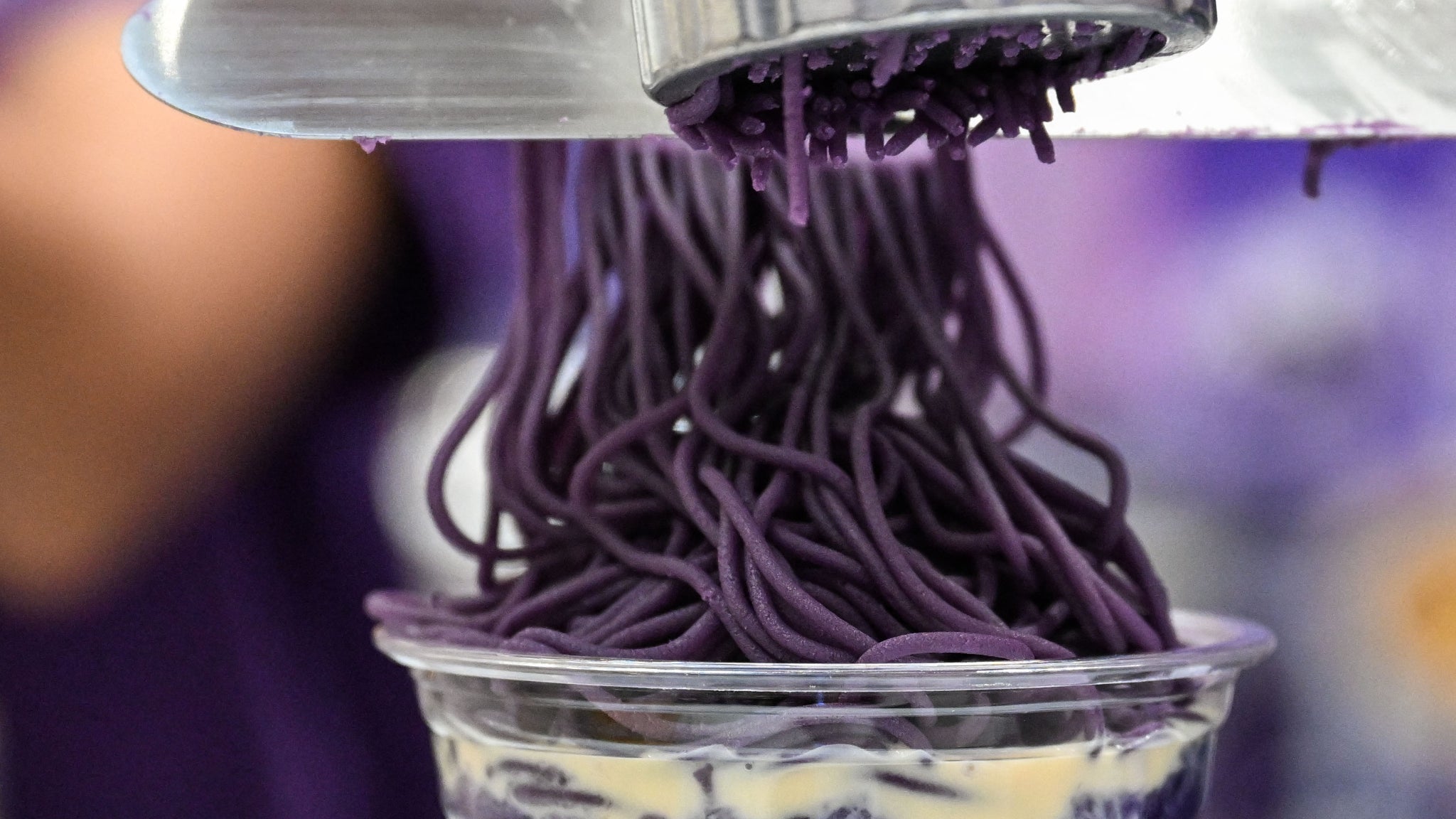
Ube is a purple tuber from the Philippines that is used in drinks, baking, ice cream and other products.
Its sweet taste and striking colour have helped it become popular in cafés around the world, with social media adding to the trend.
Ube has been grown in the Philippines for at least 5,000 years and is also eaten as a local food.
Most growers are small farmers, and some cannot wait the nine months needed for a crop to mature, so they choose faster-growing plants instead.
Farmers also face lower yields and shortages of storage, processing facilities, quality planting material and financing.
Philippine production was 12,483 tonnes last year, its lowest level in five years, with typhoons blamed for damaging growing areas.
The government has banned exports of fresh ube over concerns that foreign businesses could take over the trade, while farmers and producers try to meet demand.

Global demand for Philippine ube is outpacing growers’ ability to supply it.
The purple tuber has become popular in coffee shops and on social media, with products including drinks, baked goods and ice cream.
Philippine growers face falling yields, limited storage and processing infrastructure, and slow access to markets and financing.
Ube takes at least nine months to grow, and some farmers prefer faster-growing crops.
The Philippines has banned exports of fresh ube amid concern that foreign businesses could take over its trade.
- Who
- Philippine ube growers are struggling to meet demand from buyers in the Philippines and abroad.
- What
- Global demand for ube is outpacing supply.
- When
- The article was published on 11 October 2026; it says the trend has grown in recent years.
- Where
- The ube is grown in the Philippines, and demand is reported in markets including Japan.
- Why
- Demand has surged, while growers face falling yields, a nine-month growing period and limited infrastructure and financing.
This story does not have two clearly opposing sides.
Our greatest fear is that if we are not able to supply ube to the world, someone else will take over.
We have the land, but quality planting material is not always available.
Last year's production was only 12,483 tonnes.
It has taken over from matcha. It is really something we Filipinos should be very proud of.
Demand for ube rose locally amid a boom in ube bread.
Ube became a global trend in coffee shops and on social media.
The article reported that Philippine growers were struggling to keep up with demand.
- Crop
- Ube, a purple tuber from the Philippines
- Growing period
- At least nine months
- Production
- 12,483 tonnes in the previous year, according to Jose Zalde Samson
- Production trend
- The previous year's output was a five-year low
- Export policy
- The Philippines has banned exports of fresh ube
Sources
Related news

Ukraine faces $4.86 billion in foreign debt repayments in 2026

CVC planned to keep Israel defence deal quiet to avoid controversy

Pakistan Targets Economic Growth of More Than 4% in 2026

AirAsia founder denies bailout talks after meeting Malaysian officials
Pakistan Seeks Another Credit Rating Upgrade, Finance Minister Says
Genting shares fall most in 28 years after rights issue plan
Genus acquires New Zealand telco in deal worth up to NZ$65m
AirAsia in talks with Malaysian government over possible funding support

TSMC expected to post sixth straight quarter of record profit as AI demand grows
Exports are keeping Argentina's economy afloat as consumption and investment weaken

Colombia discusses possible Mazda assembly plant
