1 day ago
West Bengal Begins Fines for Spitting, Littering and Plastic Violations
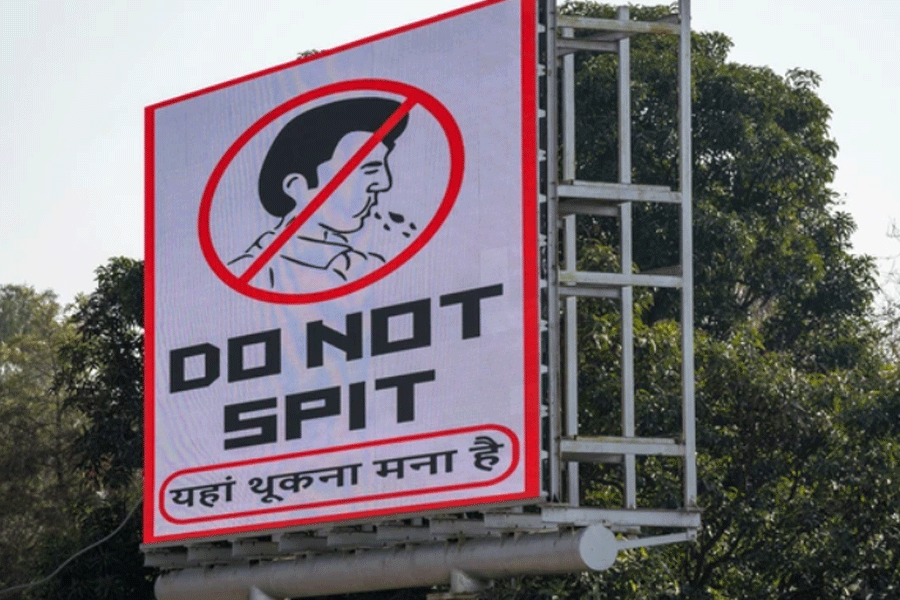
West Bengal has started fining people who make public places dirty.
Spitting in public can cost ₹100.
Throwing garbage, urinating or defecating in public can cost ₹200.
Using very thin single-use plastic bags can also cost ₹200.
Officials will collect the fines using digital payments.
The government says it wants people to learn better habits, not mainly to collect money.
It is also adding dustbins and public toilets, but says this work is not finished yet.
Markets may receive machines selling corn-based and cloth bags.
The government hopes people will feel responsible for keeping their cities clean.

West Bengal began fining public spitting, littering, open urination and defecation from Tuesday.
Spitting carries a ₹100 fine, while littering and certain other violations carry ₹200 penalties.
Single-use plastic carry bags thinner than 125 microns also attract a ₹200 fine.
Authorised civic inspectors will issue fines, with payments collected only through digital modes.
The government says the drive aims to change behaviour, while dustbins, toilets and bag alternatives are still being arranged.
- Who
- The West Bengal government, Urban Development and Municipal Affairs Minister Agnimitra Pal, and authorised civic inspectors are involved.
- What
- A state-wide enforcement drive has introduced fines for spitting, littering, public urination or defecation, and using single-use plastic bags below 125 microns.
- Where
- Across West Bengal’s cities and towns, including public spaces, hospital zones, transport hubs and markets; the trial covered Darjeeling, Kalimpong, Kurseong and Mirik.
- When
- The fines began Tuesday; an earlier trial took place during the summer.
- Why
- The government says the drive is intended to improve cleanliness, public hygiene and civic discipline and encourage behavioural change rather than raise revenue.
Government’s Cleanliness Case
Implementation Concerns
Purpose of the fines
Government’s Cleanliness Case
The government says the nominal penalties are meant to create awareness and change public behaviour, not generate revenue.
Implementation Concerns
Critics may question whether fines will work when effective enforcement has remained difficult despite earlier legal provisions.
Public infrastructure
Government’s Cleanliness Case
The government says it is installing dustbins, increasing public toilet availability and offering alternatives to banned plastic bags.
Implementation Concerns
Minister Agnimitra Pal acknowledged that civic infrastructure is not yet fully prepared for stricter enforcement.
Responsibility for cleaner cities
Government’s Cleanliness Case
Officials say residents must develop a sense of ownership and avoid actions such as throwing packets from vehicles or spitting from buses.
Implementation Concerns
The government also acknowledges that fines alone cannot keep cities clean and that public services and changes in attitude are both needed.
Key facts
- Spitting fine
- ₹100
- Littering fine
- ₹200
- Public urination or defecation fine
- ₹200
- Plastic violation
- ₹200 for single-use plastic carry bags below 125 microns
- Payment method
- Digital payments only
- Enforcement personnel
- Authorised civic inspectors
- Supporting measures
- Dustbins, public toilets and vending machines for corn-based and cloth bags are being arranged
Quotes
Agnimitra Pal
West Bengal Urban Development and Municipal Affairs Minister
“Rather than imposing strictness to collect money through fines, our objective is to make people aware. We do not intend to take money from people by imposing fines.”
 telegraphindia.com
“It is not possible for the government alone to keep a city clean. Unless it comes from people's hearts, this cannot be achieved by a whip, a stick or fines.”
telegraphindia.com
A government official
An unnamed official explaining the purpose and expected benefits of the cleanliness drive
“The move aims to improve urban cleanliness, public hygiene and civic discipline across Bengal’s cities and towns. A major step towards cleaner and healthier public spaces”
 indianexpress.com
Sources
Related news

Bengal Rolls Out QR System To Monitor Waste Segregation
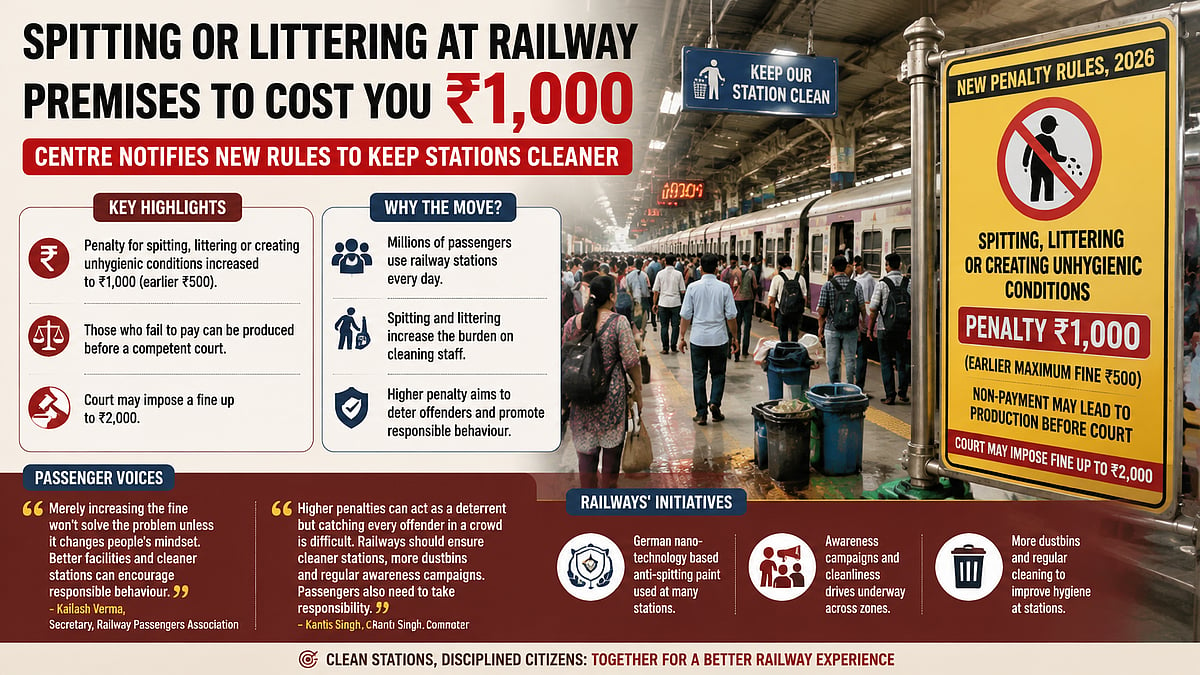
Railway Cleanliness Fine Doubled to ₹1,000 Under 2026 Rules
Indian Railways Doubles Cleanliness Penalty to Rs 1,000

Bhiwandi Civic Body to Fine Residents for Roadside Garbage Dumping

CSMC Fines Businesses ₹1.5 Lakh in Illegal Advertising Drive
Heavy Rain Raises Landslide Danger Across Darjeeling and Kalimpong
West Bengal Begins Land Literacy Camps Amid Tribal Land Complaints

Bengal Orchid Nursery Targets One Million Saplings, Cuts Import Dependence

Heavy Rain Warning Issued Across South Bengal This Weekend