2 days ago
Bengal Orchid Nursery Targets One Million Saplings, Cuts Import Dependence
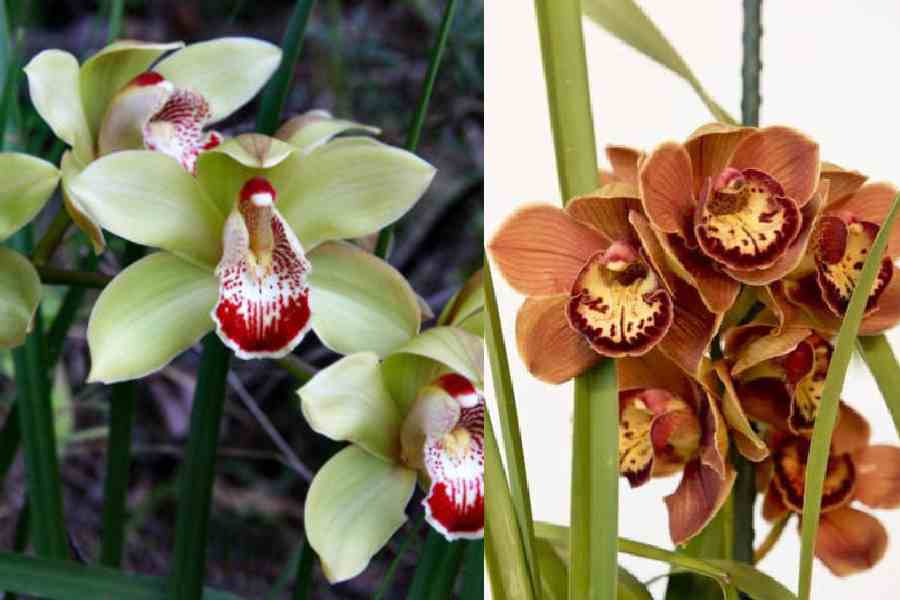
A new nursery in Jalpaiguri is growing orchid plants in a laboratory-like process called tissue culture.
It is the first privately run orchid tissue culture nursery in Bengal to receive government financial support.
The nursery wants to produce one million young orchid plants every year.
It will first grow Cymbidium orchids, which have boat-shaped flower lips.
The plants will be supplied to growers in nearby regions and the Northeast.
Officials hope local production will reduce the need to buy young plants from Thailand.
Imported plants can cost ₹100 to ₹400 each, while these locally produced plants are expected to cost about half as much.
The nursery may later grow Dendrobium and Cattleya orchids too.

Darjeeling Orchid Garden Pvt Ltd has begun operations in Jalpaiguri district as Bengal’s first government-supported commercial orchid tissue culture nursery.
The nursery aims to produce 10 lakh, or one million, orchid saplings annually, beginning with Cymbidium orchids.
The ₹1.4 crore project received ₹40 lakh in government subsidy, despite being privately operated.
Locally produced seedlings are expected to cost about half as much as imported Thai saplings, which cost ₹100–₹400 each.
The nursery plans to expand tissue culture production to Dendrobium and Cattleya orchids after its initial Cymbidium focus.
- Who
- Darjeeling Orchid Garden Pvt Ltd, supported by the Jalpaiguri district horticulture department, is operating the nursery.
- What
- A commercial orchid tissue culture nursery has begun producing Cymbidium saplings, with a target of one million annually.
- Where
- Bholanath Para under Sannyasikata panchayat in Rajganj block, Jalpaiguri district, Bengal.
- When
- Operations have recently commenced; the articles do not provide a specific date.
- Why
- The nursery aims to supply lower-cost saplings, support orchid growers, serve regional markets and reduce dependence on imported plants from Thailand.
Key facts
- Nursery
- Darjeeling Orchid Garden Pvt Ltd
- Location
- Bholanath Para, Rajganj block, Jalpaiguri district
- Annual target
- 10 lakh, or one million, orchid saplings
- Initial variety
- Cymbidium, also called the boat orchid
- Project cost
- ₹1.4 crore
- Government subsidy
- ₹40 lakh
- Imported sapling cost
- ₹100–₹400 per plant from Thailand
- Planned expansion
- Dendrobium and Cattleya varieties
Quotes
Horticulture department official
An official source discussing the nursery’s market and supply objectives.
“However, this time, orchid seedlings will be produced right here in this nursery using tissue culture technology. After being kept in the nursery's hardening chamber for a few days, the seedlings will be ready for immediate distribution and sale. These tissue-cultured orchid seedlings will be sold at around half the usual price.”
 telegraphindia.com
“The unit was set up to tap into the orchid markets of the hilly regions of Darjeeling and Kalimpong, as well as the Northeast. Another objective of the nursery is to supply orchid saplings to enthusiastic growers at a low cost through the horticulture department.”
telegraphindia.com
Sources
Related news

Kadiyam nursery farmers key to region's growth: Minister Durgesh
Odisha entrepreneur builds ₹1 crore flower business after setbacks
Jalpaiguri Handmade Tea Wins Premium Prices, Foreign Interest

Alipurduar MLA Pitches Medicinal Plants in Closed Tea Gardens
Vellore Farmers Get Subsidy Support for Dragon Fruit Cultivation

Kannur Residents Turn Onam Flower Sales Into Transplant Fund

Japan Cricket Boss Defends Asian Games Facilities Against Concerns

Mitsubishi Revives Pajero With 201PS Fifth-Generation SUV

Europe's Bond Selloff Deepens as Middle East Tensions Lift Oil

Uday Kotak Warns Global Bond Markets Face Roller-Coaster Volatility

Global Bond Sell-Off Pushes Japan Yields To 30-Year High