1 hr ago
Gene-edited hypoallergenic dogs revive questions about human cruelty

Long ago, some wolves began visiting human camps to find leftover food.
Over time, humans and these animals helped protect and care for each other.
Those wolves eventually became dogs.
Today, many people love dogs as family members.
However, people have also changed dogs through breeding in ways that can cause health problems.
A company called Kindred Companion Sciences says it used CRISPR to make dogs that cause fewer allergies.
The article says this genetic change could have unexpected effects.
It asks whether making dogs more useful to people can also be harmful to them.

Dogs descended from a subset of grey wolves that approached human camps for scraps more than 30,000 years ago.
The relationship between humans and dogs developed into cooperation, protection, companionship and affection.
Kindred Companion Sciences claims to have created the first hypoallergenic dogs using CRISPR gene editing.
The article warns that genetic changes may have unintended consequences for the dogs.
Many purebred dogs suffer diseases and deformities linked to generations of human-directed breeding.
- Who
- Kindred Companion Sciences, a US-based biotech start-up, and dogs descended from grey wolves.
- What
- The company claims to have created the first hypoallergenic dogs through CRISPR gene editing, prompting concerns about unintended effects and human treatment of dogs.
- Where
- The company's location is identified as the United States; the early wolf-human interactions occurred at Homo sapiens camps.
- When
- The human-dog relationship began more than 30,000 years ago; the article does not specify when the company's claim was made.
- Why
- Kindred Companion Sciences says it edited dogs' genes to make them hypoallergenic.
Biotechnology and Human Choice
Animal Welfare and Health
Hypoallergenic dogs
Biotechnology and Human Choice
Kindred Companion Sciences claims CRISPR can create dogs that are hypoallergenic, potentially addressing problems associated with dog allergies.
Animal Welfare and Health
The article questions whether changing dogs' genes for human preferences could produce unintended consequences.
Human-directed breeding
Biotechnology and Human Choice
Humans have shaped the relationship with dogs through domestication and breeding, producing companionship, cooperation and loyalty.
Animal Welfare and Health
The article argues that human breeding has also caused diseases and deformities in many purebred dogs, raising concerns about cruelty despite human affection for dogs.
Key facts
- Company
- Kindred Companion Sciences
- Company type
- US-based biotech start-up
- Gene-editing method
- CRISPR
- Claimed result
- The first hypoallergenic dogs
- Relationship origin
- A subset of grey wolves began scavenging near human camps more than 30,000 years ago.
- Animal-welfare concern
- Gene editing may have unintended consequences, while many purebred dogs already suffer diseases and deformities.
Sources
Related news

Bryan Johnson Turns His Longevity Experiment Toward Dogs
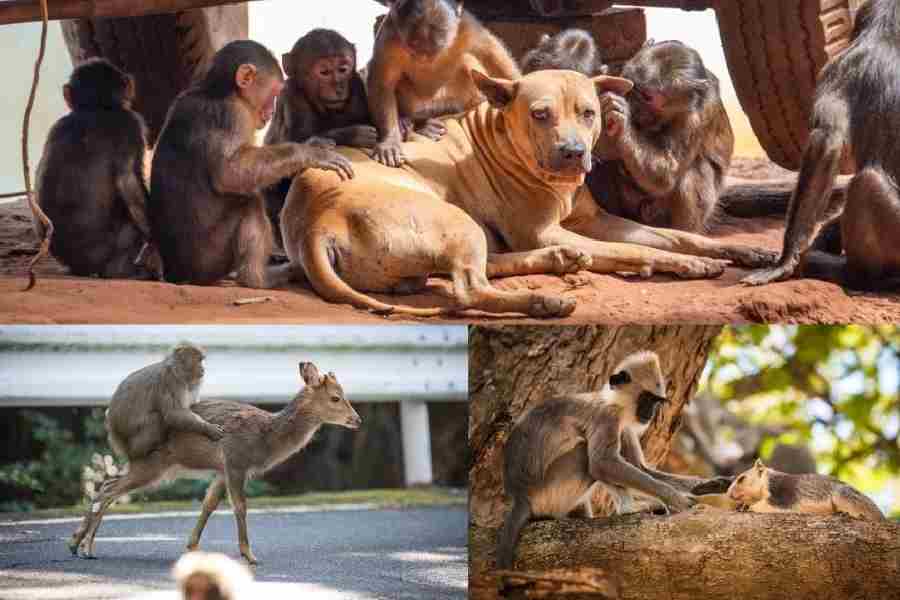
Chimp Interactions Offer Clues to the Origins of Pet-Keeping

Yuval Noah Harari Warns AI May Soon Demand Rights
Dog brains evolved to understand humans, Harvard study finds
Sleeping With Your Dog May Boost Happiness, Raise Hygiene Concerns

Woman Dumps Boyfriend Over AI-Managed Relationship, Sparks Debate

Indian Startup Uses Generative AI to Design Gene Editors
Scientists Develop Self-Fertilizing Crops to Reduce Fertilizer Use
India's First Gene-Edited Sheep Turns One

India's First CRISPR Gene Therapy Launched for Sickle Cell Disease