3 weeks ago
Dog brains evolved to understand humans, Harvard study finds
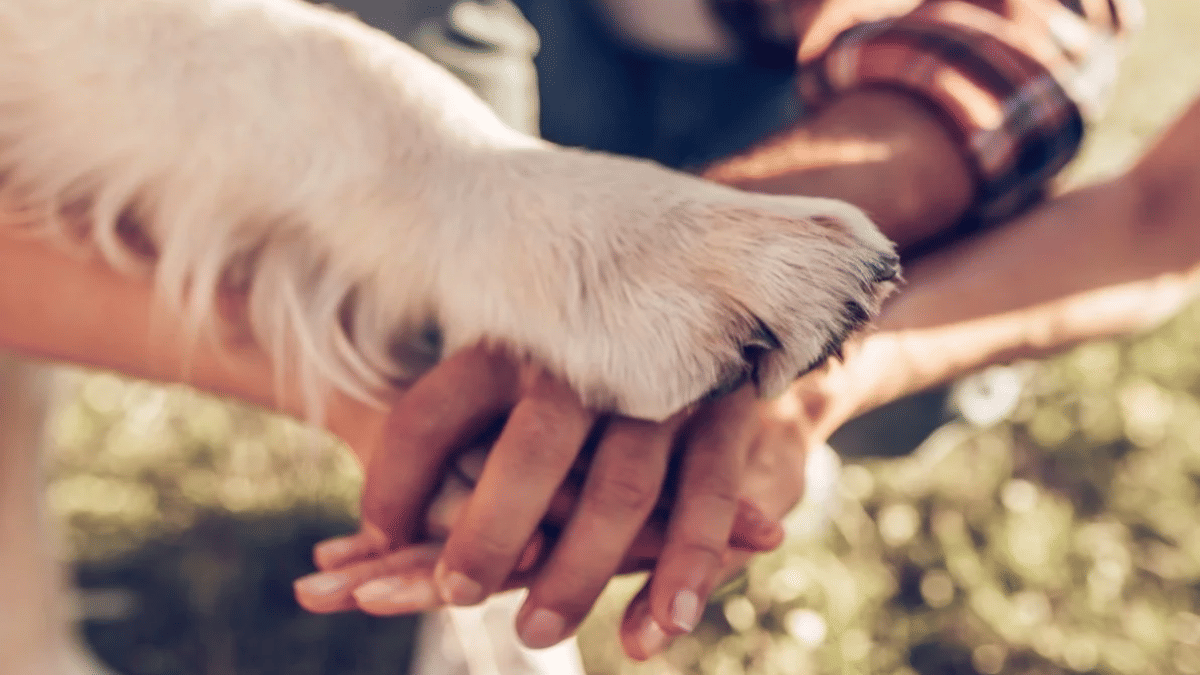
Scientists at Harvard University wanted to know how dogs learn to understand people.
They looked at pictures of the brains of more than 100 dogs.
They found that living with humans for thousands of years changed dogs' brains.
Dogs have special brain areas for hearing sounds and words.
This happened because humans bred dogs to work with them, like herding sheep or being companions.
But dogs still need training to understand what people say.
Specially trained service dogs have even stronger brain connections for this.
Some dogs are easier to train because of how their brains are wired.
This research can help humans understand dogs better and train them more effectively.

Harvard University scientists found that dog brains have evolved to better understand human behavior and communication compared with pre-modern dogs.
Published in JNeurosci on 10 August, the study examined MRIs from more than 100 dogs of different breeds.
Selective breeding for human-oriented roles like herding, hunting, and companionship shaped broad changes in dogs' brain networks.
Dogs' brains show specialization in areas handling hearing and linking sounds and words to meanings, while service dogs showed fine-tuned neural pathways from training.
Lead author Mélina Cordeau says the findings could improve human-dog interaction and make assistance-dog training more effective.
- Who
- Scientists at Harvard University led by Mélina Cordeau, studying more than 100 dogs of different breeds.
- What
- A study finding that dog brains have evolved to better understand human behavior and communication, with training adding finer neural pathways.
- Where
- Research conducted at Harvard University; the article was reported from New Delhi.
- When
- Published in JNeurosci on 10 August.
- Why
- To determine whether dogs' behavior toward humans is shaped more by broader evolutionary changes or by personalized training.
Key facts
- Institution
- Harvard University
- Journal
- JNeurosci
- Publication date
- 10 August
- Sample size
- More than 100 dogs of different breeds
- Method
- MRI tractography (3-D non-invasive brain imaging)
- Lead author
- Mélina Cordeau
- Key finding
- Evolution set up basic communication architecture; training fine-tunes neural pathways
Quotes
Mélina Cordeau
Lead author of the study and neuroscientist at Harvard University
“"I think this type of research can help us better understand not only dogs, but also the human–dog relationship."”
 theprint.in