1 week ago
India’s New Labour Rules Aim to Unlock Manufacturing Growth
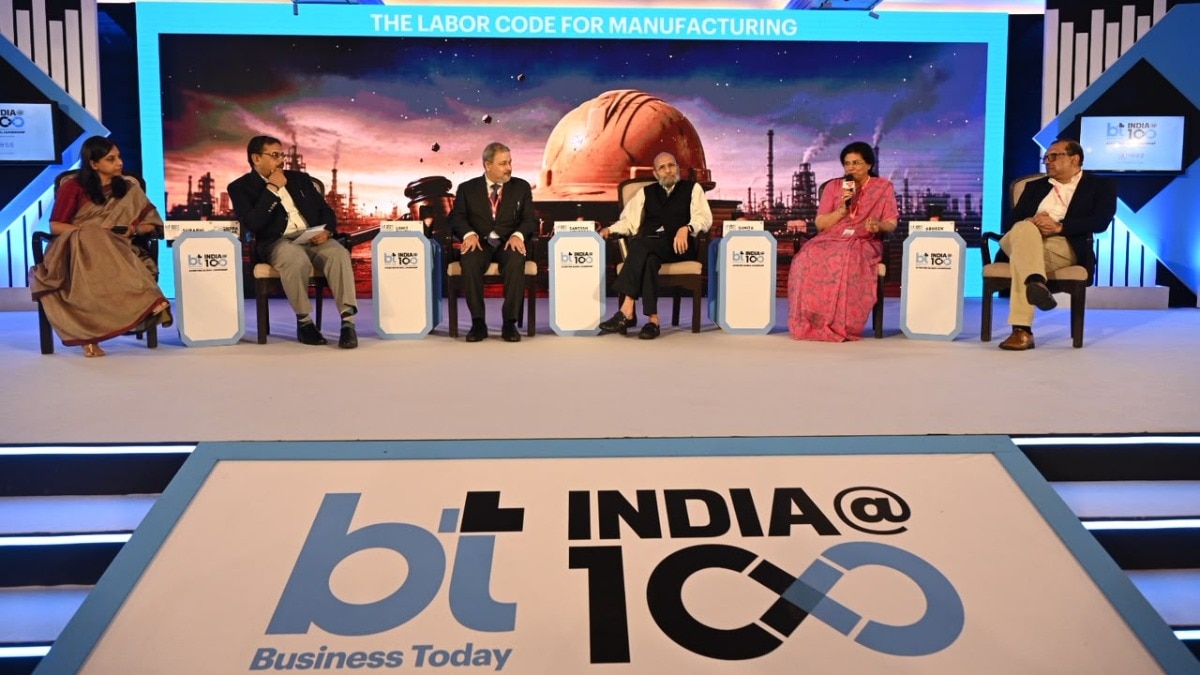
India has introduced labour rules that could change how companies hire workers.
Lohit Bhatia said many manufacturers stayed small because hiring large numbers of people could create legal and regulatory problems.
He said the new system may let companies move workers between locations more easily.
It could also help businesses hire temporary workers during busy seasons.
Sumita Dawra said companies may face fewer registrations, licences and paperwork.
She also said workers should still receive minimum wages, social security and maternity benefits.
Santosh Mehrotra said the rules need stronger protections such as pensions and insurance.
He also questioned who will decide which jobs are core or non-core.
The success of the reforms will depend on how consistently Indian states implement them.

Lohit Bhatia said India’s manufacturers historically stayed small to avoid industrial disputes and regulatory complications.
He said the labour codes could make it easier to deploy workers across locations and during seasonal demand.
The proposed framework may replace multiple registrations and licences with a single registration, pan-India licence and return.
Sumita Dawra said the reforms aim to combine worker welfare with stronger industrial competitiveness and lower compliance costs.
Santosh Mehrotra urged stronger social insurance and clearer rules on disputes, fixed-term work and core activities.
- Who
- Indian manufacturers, workers, labour-policy officials and experts including Lohit Bhatia, Sumita Dawra and Santosh Mehrotra.
- What
- India’s labour codes are intended to simplify compliance, support hiring and preserve worker protections.
- Where
- India, across multiple states and business locations.
- When
- Why
- The reforms seek to reduce regulatory barriers and compliance costs while promoting worker welfare and industrial competitiveness.
Business flexibility and competitiveness
Worker protection and clearer safeguards
Hiring and workforce expansion
Business flexibility and competitiveness
Lohit Bhatia said simpler licensing and national workforce deployment could encourage manufacturers to grow and hire, including for seasonal demand.
Worker protection and clearer safeguards
Santosh Mehrotra warned that reforms must not weaken protections and said fixed-term appointments could be clearer than disputed core-versus-non-core classifications.
Compliance reduction
Business flexibility and competitiveness
Sumita Dawra said single registration, a pan-India licence, a single return and technology-based compliance could lower costs and improve competitiveness.
Worker protection and clearer safeguards
Mehrotra emphasized that social insurance—including pensions, death and disability insurance, and maternity benefits—should be treated as essential protections.
Implementation across India
Business flexibility and competitiveness
Supporters argue that a harmonized framework can create a consistent national experience for businesses.
Worker protection and clearer safeguards
Dawra noted that implementation will be critical because labour is a concurrent subject, requiring states to coordinate their approach.
Key facts
- Business concern
- Manufacturers historically avoided growing their workforces because expansion could increase exposure to industrial disputes and regulatory complications.
- Hiring example
- Bhatia cited an investor seeking 10,000 workers across 100 warehouses during Diwali.
- Licensing change
- The framework was described as allowing a national labour licence valid for five years.
- Proposed simplification
- Reforms would provide single registration, a single pan-India licence and a single return.
- Worker protections
- Businesses would remain accountable for minimum wages, social security, maternity benefits and other protections.
- Implementation issue
- Because labour is a concurrent subject, states would need to harmonize implementation for a consistent national framework.
- Expert concerns
- Santosh Mehrotra called for stronger social insurance and clearer rules on notice periods and core versus non-core work.
Quotes
Santosh Mehrotra
Senior economist
“Everybody thought it’s better to remain small. It’s better to remain insignificant rather than fight the world over, rather to become big, rather to have 5,000, 10,000 or 50,000 workers”
 businesstoday.in
“The labour codes, the rationale, the intention... are very much for labour welfare, for promoting competitiveness of industry”
businesstoday.in
Sources
Related news

India Labour Reforms May Push Small Firms Toward Automation

Labour Codes need a Labour Box to fulfil their promise

Businesses still face thousands of regulations, House Panel told

Supreme Court Narrows 1978 Industry Definition Under New Labour Code
Indian Railways Approves Single All India Container Train Licence

India’s Manufacturing Sector Struggles to Create Enough Jobs
India's government jobs shrink even as millions of youth chase them

Global Diesel Crisis Deepens as India Largely Escapes Supply Crunch

Petrol Prices Steady as Crude Climbs Amid US-Iran Hormuz Deadlock

India's unemployment crisis is structural, not just a skills problem