4 hrs ago
UPSC Ethics Exam Explores Development Versus Conservation Dilemmas
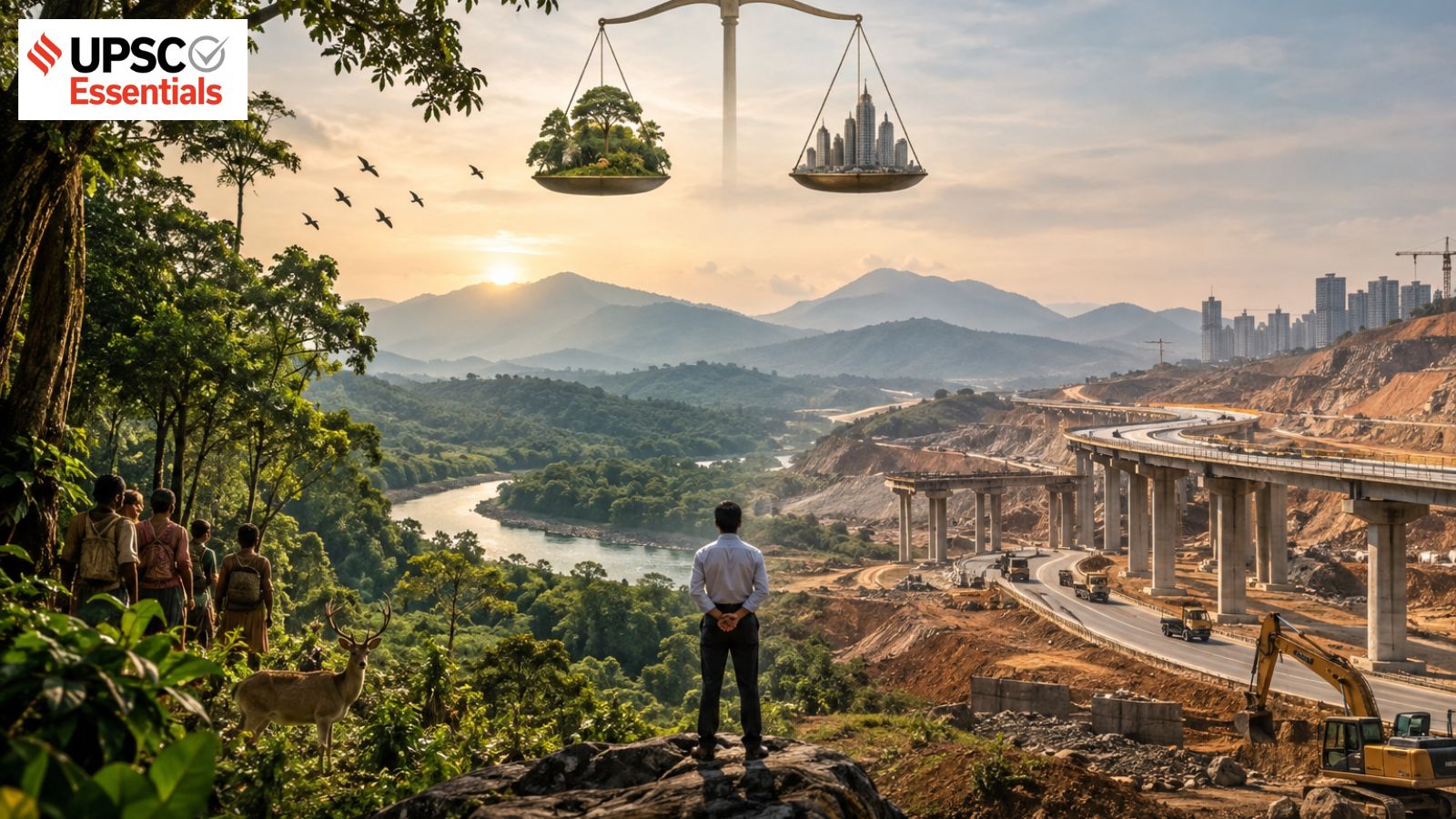
The article teaches students how to make fair decisions when development may harm nature or communities.
A new road, port or other project can create jobs and improve security.
But it may also damage forests and disturb people who depend on them.
The most affected people should have a meaningful chance to express their concerns.
Officials should look for ways to reduce environmental damage.
They should also make sure that the benefits and costs are shared fairly.
Some principles say that pollution should be paid for by those who cause it.
The case study asks a District Magistrate to balance public needs with the rights of indigenous communities.
The best decision should be ethical, practical and mindful of future generations.

The UPSC ethics exercise examines conflicts between development, environmental protection and vulnerable communities’ rights.
It highlights environmental stewardship, sustainable development, public trust, precaution and polluter-pays principles.
The article cites the Tana Bhagat community’s opposition to a Jharkhand highway project over threats to land, forests and livelihoods.
A case study asks a District Magistrate to assess an infrastructure project balancing maritime security, employment and tribal welfare.
The suggested approach prioritises consultation, fair distribution of costs and benefits, reduced environmental harm and long-term sustainability.
- Who
- Public administrators, affected indigenous communities including a particularly vulnerable tribal group, environmental experts and project authorities.
- What
- A UPSC ethics lesson and case study on balancing infrastructure development with environmental conservation and community rights.
- Where
- The theoretical discussion refers to Jharkhand and the Delhi–Dehradun Economic Corridor; the case study is set in an island state.
- When
- The article presents the exercise as part of a weekly UPSC Ethics Answer Practice series; no specific event date is given.
- Why
- To develop ethical reasoning about competing duties involving public welfare, economic growth, maritime security, environmental protection and vulnerable communities.
Development and Strategic Infrastructure
Conservation and Community Protection
Project justification
Development and Strategic Infrastructure
The project is expected to strengthen maritime security and connectivity, create employment and support the region’s economy.
Conservation and Community Protection
Environmental experts and tribal representatives warn that forest diversion may damage eco-sensitive zones, biodiversity, livelihoods and culture.
Regulatory approval versus consultation
Development and Strategic Infrastructure
Project authorities maintain that all required procedures and safeguards have been followed.
Conservation and Community Protection
Some community representatives question whether their concerns were properly considered because they say public consultations were inadequate.
Acceptable environmental trade-offs
Development and Strategic Infrastructure
Some environmental trade-offs may be unavoidable when development is necessary to raise living standards and serve a large population.
Conservation and Community Protection
Damage to forests and traditional ways of life may be difficult to reverse, so administrators should examine less harmful alternatives and apply precaution.
Key facts
- Core dilemma
- Balancing development and public welfare against environmental conservation and the rights of vulnerable communities.
- Key principles
- Environmental stewardship, public trust, sustainable development, precautionary action, polluter pays and environmental justice.
- Constitutional references
- The article discusses Articles 21, 29–30 and 48A in relation to environmental, livelihood and cultural protections.
- Judicial reference
- Vellore Citizens’ Welfare Forum vs Union of India is cited for recognising the precautionary and polluter-pays principles as features of sustainable development.
- Illustrative project
- The Delhi–Dehradun Economic Corridor is presented as using a 12-kilometre elevated wildlife corridor and animal underpasses to reduce ecological harm.
- Case-study setting
- A major infrastructure project in an island state has approvals but requires significant forest-land diversion affecting indigenous communities.
- Administrative responsibility
- The District Magistrate must coordinate implementation while protecting affected communities’ rights and welfare.
Sources
Related news

UPSC Ethics Practice Examines Integrity and Public Welfare

UPSC Ethics Practice Explores Reasoning and Moral Dilemmas
Satya Niketan Building Collapse Raises Questions About Ethical Governance

CJI Urges Courts to Balance Environmental Protection and Development Needs

Tukaram Mundhe’s Example Sparks Debate Over Institutional Ethics

CJI Calls Supreme Court Banyan Tree Of Environmental Justice

Questions Raised After Surendra Koli’s Death in Haridwar

IIT Suicides Highlight Need for Early-Warning Systems Across Campuses

UPI MDR Changes Trigger Merchant Pushback and Stockbroker Concerns