6 days ago
Satya Niketan Building Collapse Raises Questions About Ethical Governance
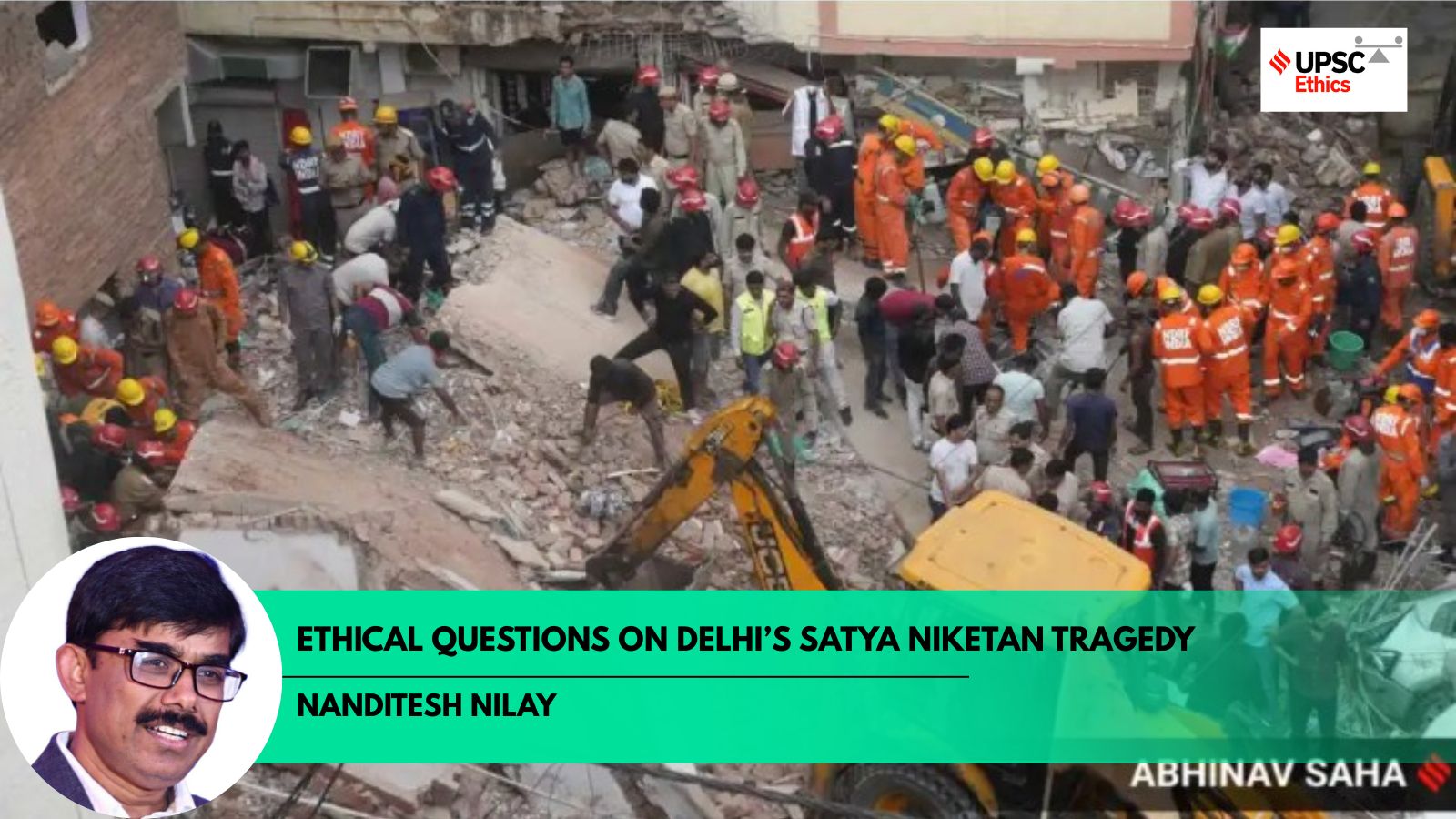
A building used as a student hostel collapsed in Satya Niketan, Delhi.
Seven people died and others were injured.
Many young students live in affordable places because they cannot pay for safer options.
The article says this means their choices may not be truly free choices.
Government officials and institutions have a duty to notice unsafe conditions before people are hurt.
Following the minimum rules is not enough if people remain in danger.
Responsibility should not disappear because many organisations are involved.
Compassion in public service means paying attention to people’s safety before a tragedy happens.
The main lesson is that human life, dignity and safety must come before convenience or efficiency.

A five-storey building converted into a student hostel collapsed in Delhi’s Satya Niketan, killing seven people and injuring others.
The tragedy affected young aspirants who relied on affordable accommodation while preparing for competitive examinations.
The article argues that public responsibility includes ensuring rules protect people, not merely creating or enforcing them mechanically.
It questions accountability across the chain of decisions, oversight, enforcement and administrative inaction.
The incident is presented as a case study in compassion, vulnerability, preventive action and the ethics of public administration.
- Who
- Seven people were killed and others injured; the victims included people connected to a student hostel used by young aspirants.
- What
- A five-storey building converted into a student hostel collapsed, prompting questions about public responsibility and institutional accountability.
- Where
- Satya Niketan, Delhi.
- When
- The article does not specify the date of the Satya Niketan collapse.
- Why
- The article examines how unsafe accommodation, limited choices, regulatory failures and administrative inaction can expose vulnerable citizens to preventable harm.
Minimum Compliance
Preventive Public Duty
Meaning of administrative responsibility
Minimum Compliance
Institutions may focus on making and mechanically enforcing rules, with responsibility tied to specific violations.
Preventive Public Duty
Public responsibility extends beyond formal rules to ensuring that regulations actually protect people from foreseeable harm.
Efficiency versus safety
Minimum Compliance
Efficient delivery of services and institutional functioning can be treated as important public goals.
Preventive Public Duty
Efficiency cannot be considered a genuine public good if people remain unsafe; safety, dignity and well-being must guide decisions.
Shared accountability
Minimum Compliance
When responsibility is divided among many stakeholders, each may regard another person or institution as responsible.
Preventive Public Duty
Ethical governance requires clear ownership, answerability and examination of the entire chain of oversight, enforcement and inaction.
Key facts
- Location
- Satya Niketan, Delhi
- Building
- A five-storey building converted into a student hostel
- Deaths
- Seven people
- Other casualties
- Others were injured
- Affected group
- Young aspirants, including people preparing for competitive examinations
- Core ethical issue
- Whether institutions fulfilled their duty to prevent harm and protect human life
- Key concept
- A Hobson’s choice: an apparent choice with little or no safe alternative
Sources
Related news

UPSC Ethics Practice Examines Integrity and Public Welfare

Satya Niketan Collapse Exposes Delhi’s Student Housing Governance Failure

Manoj Jha Seeks Urgent Action After Satya Niketan Collapse

Tukaram Mundhe’s Example Sparks Debate Over Institutional Ethics
Indian Students Face Deadly Risks in a Broken Education System

Divya Mittal’s Resignation Sparks Questions About Ethical Public Service

Dafoe, Bailey And Dinklage Join Lincoln In The Bardo

Booker Longlist Sparks Debate Over Major Omitted Authors

Obama’s 2026 Summer Reading List Revealed