3 days ago
Iranian President Defends US Peace MoU Amid Uncertain Talks

Iran and the United States signed a plan meant to help end the war.
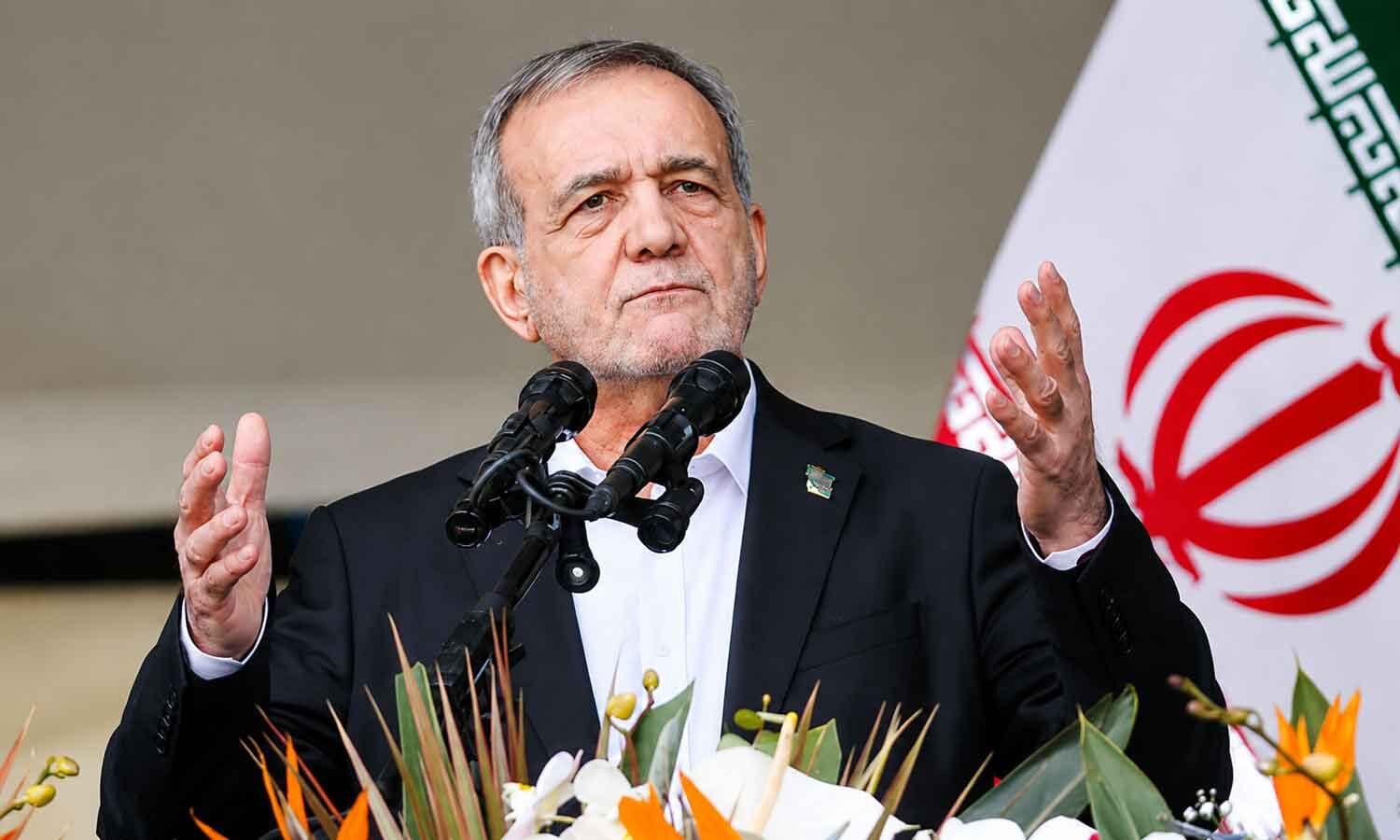
Iranian President Masoud Pezeshkian said the plan would benefit Iran and other countries.
He said it could help stop chaos and make the region more stable.
He also said Iran does not want to start a war.
However, he said Iran would defend itself if attacked.
Iran’s foreign minister accused unnamed groups of manipulating energy markets and extending the conflict.
Iranian security forces also said they attacked a group they described as linked to the United States and Israel.
The plan was signed on June 18.
Talks were expected to finish by August 17, but it is unclear whether they will continue.

Masoud Pezeshkian said the US-Iran peace MoU serves Iran, West Asia and the wider world.
He said implementing the agreement could prevent the United States and Israel from causing regional chaos and insecurity.
Pezeshkian said Iran does not seek war but will resist any aggressor and cannot be forced to surrender.
Foreign Minister Seyed Abbas Araghchi alleged that efforts were underway to manipulate global energy markets and prolong the war.
The MoU was signed June 18, but negotiations scheduled to conclude August 17 remain uncertain after renewed escalation.
- Who
- Iranian President Masoud Pezeshkian, Foreign Minister Seyed Abbas Araghchi, Iran, the United States and Israel.
- What
- Pezeshkian defended a peace memorandum with the United States while Iranian officials reported wartime and security developments.
- Where
- Tehran and southeastern Sistan and Baluchestan Province, amid conflict involving Iran, Israel and the United States.
- When
- The statements were reported on Saturday; the MoU was signed June 18, with planned negotiations ending August 17.
- Why
- Pezeshkian said implementing the MoU could prevent regional chaos and support stability and development.
Iranian Government’s Position
Conflict-Related Uncertainty
Value of the MoU
Iranian Government’s Position
Masoud Pezeshkian said the agreement serves Iran, West Asia and the wider world and could support regional stability and development.
Conflict-Related Uncertainty
The MoU’s effectiveness remains uncertain because the negotiations’ fate is unclear after renewed escalation.
Iran’s approach to war
Iranian Government’s Position
Pezeshkian said Iran does not welcome war and has not started one, but will strongly resist aggression and will not surrender.
Conflict-Related Uncertainty
The article reports continued military conflict, including joint attacks by Israel and the United States and Iranian missile and drone responses.
Energy markets and conflict duration
Iranian Government’s Position
Seyed Abbas Araghchi alleged that major efforts were being made to manipulate global energy markets and prolong the war for personal gain.
Conflict-Related Uncertainty
No response from the United States or Israel to that allegation is provided in the articles.
Key facts
- Agreement
- Iran and the United States signed a memorandum of understanding on ending the regional war on June 18.
- Negotiation period
- The countries were scheduled to negotiate for 60 days, with the stated period ending August 17.
- Talks status
- The future of negotiations remains unclear after escalation between Iran and the United States last month.
- Pezeshkian’s position
- Iran’s president said the MoU serves Iran, West Asia and the wider world.
- Araghchi’s warning
- Iran’s foreign minister alleged that major efforts were underway to manipulate global energy markets and prolong the war.
- Security announcement
- The Islamic Revolution Guard Corps said Iranian forces killed one member and arrested six others from a group it described as affiliated with the United States and Israel.
Quotes

Masoud Pezeshkian
President of Iran
“We do not welcome war, but will stand strongly against any aggressor, and no power can force a nation that is standing with all its might and will into surrender.”
 thehansindia.com
Sources
Related news

Pezeshkian Says Iran Made No MoU Concessions Amid Tensions

Iran pursues peace if US builds trust: Pezeshkian

Pezeshkian Offers Immediate Reciprocity If US Restores June Deal
Iran Seeks US War Exit While Warning Neighbours of Retaliation

Iran Signals Ceasefire Return If US Honors Commitments
Pezeshkian backs US dialogue but warns Iran won't surrender

Chevron Plans $7 Billion Venezuela Expansion Amid U.S. Oil Push

Saudi Arabia Says Iranian Tanker Attack Killed Two Sailors
U.S.-Iran Exchange Escalates Across Middle East, Markets Slide
Trump Aides Seek Quiet Iran War Before Midterm Elections
US Warns Middle East Travelers Amid Escalating Iran-Linked Tensions