

3 weeks ago
Parliamentary panel recommends mandatory kidney tests every six months

Your kidneys are two small organs inside your body that clean your blood like a filter.
Sometimes they get sick slowly, and people do not feel anything until the kidneys are already badly hurt.
A special group of people in the Indian Parliament studies health problems in the country.
They looked at how many adults in India have kidney disease.
They discovered that most people only find out about it when it is very serious.
So they told the government that every person aged 20 years or older should get a kidney check-up twice a year.
Poor people should get this test for free, and other people should pay only a little.
People who are more likely to have kidney problems, like those with diabetes, should be checked once a year.
The group also said labs should automatically show a special number called eGFR that helps doctors find kidney problems early.
This way, doctors can find problems sooner and help people stay healthier for longer.

The Parliamentary Standing Committee on Health and Family Welfare has recommended a mandatory kidney function test (KFT) every six months for all persons aged 20 years and above.
The tests should be free for people below the poverty line and at nominal cost to others under the National Programme for Prevention and Control of Non-Communicable Diseases (NP-NCD).
The panel also recommended annual screening of high-risk individuals, including people with diabetes and hypertension, adults above 60, and people with a family history of kidney disease, obesity or tobacco use.
It urged that every serum creatinine test automatically include an eGFR report, preferably using the CKD-EPI equation, at no additional cost to patients.
It called for a prevention-first approach, noting about 3.4 crore additional dialysis sessions are needed yearly, and recommended extending post-transplant coverage under Ayushman Bharat PM-JAY from 15 days to one year.
- Who
- The Parliamentary Standing Committee on Health and Family Welfare, chaired by Ram Gopal Yadav, a Rajya Sabha member.
- What
- Recommended mandatory biannual kidney function tests for all aged 20 and above, annual screening of high-risk individuals, targeted screening of agricultural populations in regions affected by chronic kidney disease of unknown etiology (e.g., parts of Andhra Pradesh, Odisha and Karnataka), and automatic eGFR reporting.
- Where
- India — the report was submitted to the Indian Parliament.
- When
- The 177th report was presented in Rajya Sabha and laid on the table of Lok Sabha on August 7; the recommendation was reported on August 11.
- Why
- To shift policy from treating advanced kidney failure towards prevention and early detection, given about 13.24 per cent CKD prevalence and a growing demand for dialysis and transplantation.
Key facts
- Report
- 177th report on 'Prevalence of Chronic Kidney Disease in India – Prevention, Diagnosis, Treatment and Management'
- Committee head
- Ram Gopal Yadav, Rajya Sabha member
- Key recommendation
- Biannual kidney function test for all aged 20+; annual screening for high-risk individuals
- CKD prevalence in India
- About 13.24 per cent
- New end-stage kidney disease patients yearly
- About 2.2 lakh
- Additional dialysis demand
- About 3.4 crore sessions annually
- Haemodialysis sessions trend
- Annual sessions under the Pradhan Mantri National Dialysis Programme rose from about 25 lakh to 70 lakh over five years
- Post-transplant coverage
- Recommended extension under Ayushman Bharat PM-JAY from 15 days to one year
Quotes

Parliamentary Standing Committee on Health and Family Welfare
Indian parliamentary committee overseeing health policy
“Serum creatinine alone was inadequate for early detection, as levels can remain within the normal range despite significant loss of kidney function. It has therefore recommended that public and private laboratories automatically calculate eGFR, preferably using the CKD-EPI equation, whenever serum creatinine is tested. Urine albumin assessment should also form part of kidney-function evaluation for high-risk individuals”
 theprint.in
“The committee, therefore, recommends that the ministry institutionalise regular annual CKD screening of all high-risk individuals and mandatory biannual kidney function test (KFT) of all persons aged 20 years and above, free of cost for persons Below Poverty Line (BPL) and on nominal cost for Above Poverty Line (APL) persons under the NP-NCD to enable early diagnosis and delay disease progression”
theprint.in
Sources
Related news

New heart guidelines recommend kidney screening with two simple tests

Kurnool Intensifies Maternal Health, NCD Screening and Immunisation
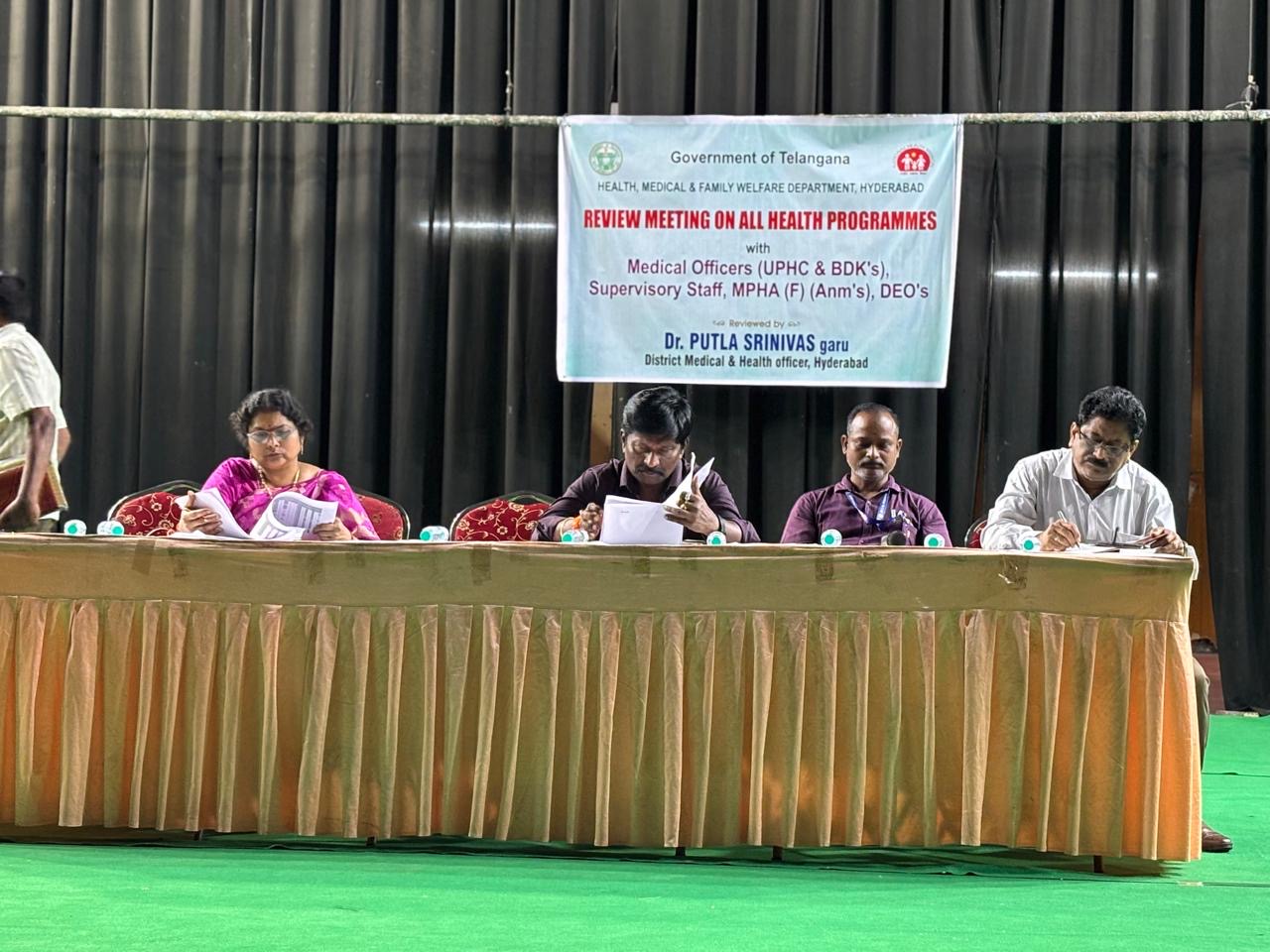
Hyderabad DMHO Directs Regular NCD Surveys, Follow-Up Care

Kidney Disease Can Stay Hidden, But Simple Tests Help

Mumbai Airport Chauffeur Dies by Suicide Amid Kidney Disease

Four Dead, 18 Hospitalised in Gujarat Spurious Liquor Case

Gujarat CM honours three hospitals for national organ donation awards
