1 week ago
Why India-Japan Cooperation Has Not Deepened Strategic Integration
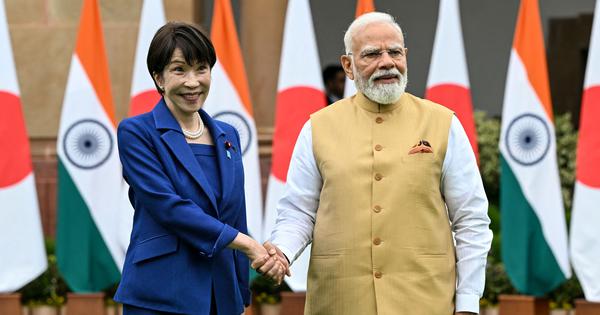
India and Japan increasingly want to work together to keep the Indo-Pacific stable.
They are concerned about China’s growing influence and want safer supply chains and stronger technology partnerships.
They hold defense talks, conduct maritime exercises, and cooperate on important technologies.
However, the two countries are far apart and mainly focus on different nearby regions.
Japan is especially focused on the Western Pacific, while India is focused on its land borders and the Indian Ocean.
Japan usually coordinates security policy with the United States, whereas India prefers to keep more flexibility.
Their plans and statements are often stronger than their ability to act together in a crisis.
The countries could improve cooperation by sharing maritime information, practicing responses to possible crises, and building stronger institutions.

India-Japan ties have expanded into defense, maritime security, critical technologies, and economic security.
Their cooperation is constrained by geography, with India focused on the Indian Ocean and northern land borders and Japan on the Western Pacific.
India favors flexible, issue-based partnerships, while Japan operates primarily through its alliance with the United States.
Dialogue mechanisms and military exercises have grown, but institutional depth and interoperable capabilities remain limited.
The countries aim to manage structural constraints through maritime information-sharing, scenario planning, and deeper economic-security cooperation.
- Who
- India and Japan, with their cooperation also involving the United States and other Indo-Pacific partners.
- What
- The countries are expanding strategic cooperation but have not achieved deeper operational integration.
- Where
- The cooperation spans the Indo-Pacific, especially the Indian Ocean, Western Pacific, East China Sea, and Taiwan Strait.
- When
- The issue was assessed after Japanese Prime Minister Sanae Takaichi’s three-day India visit for the July 2026 India-Japan summit.
- Why
- Both countries seek to preserve a regional balance of power, protect sea lanes, reduce supply-chain vulnerabilities, and respond to China’s growing influence.
Convergence Can Make India and Japan Indo-Pacific Pillars
Structural Constraints Limit Strategic Integration
Strategic potential
Convergence Can Make India and Japan Indo-Pacific Pillars
Shared concerns about China, sea-lane security, supply chains, and trusted technology create a strong basis for deeper cooperation.
Structural Constraints Limit Strategic Integration
Shared interests have produced statements, exercises, and agreements, but not yet a framework capable of sustained collective action.
Role in regional security
Convergence Can Make India and Japan Indo-Pacific Pillars
India and Japan are often viewed as central democratic pillars of the Indo-Pacific, supported by cooperation through the Quad.
Structural Constraints Limit Strategic Integration
Different theaters, risk thresholds, and military capacities make coordinated responses to crises uncertain.
Economic-security cooperation
Convergence Can Make India and Japan Indo-Pacific Pillars
Supply-chain diversification, critical technologies, and critical-mineral cooperation can strengthen resilience against vulnerabilities.
Structural Constraints Limit Strategic Integration
Different levels of economic dependence on China and the risk of commercial retaliation make major coordinated measures difficult.
Key facts
- Strategic focus
- A stable balance of power and stronger resilience in the Indo-Pacific.
- Defense cooperation
- Defense dialogues, maritime exercises, and defense equipment and technology cooperation have expanded.
- Main geographic constraint
- India is primarily focused on its northern borders and the Indian Ocean, while Japan focuses on the Western Pacific.
- Strategic-culture difference
- Japan generally operates through United States alliance coordination; India favors flexible, issue-based partnerships.
- Institutional gap
- The relationship has many dialogues and agreements but less operational coordination and interoperability than Japan-Australia or India-France ties.
- Economic constraint
- Both countries remain economically connected to China, limiting the pace of coordinated economic competition.
- Proposed next steps
- Greater maritime information-sharing, coordinated surveillance, naval familiarity, and scenario-based strategic consultations.
Sources
Related news

Report: India-Japan cooperation de-risks shared economic vulnerabilities
India and Japan Deepen Economic and Security Partnership

India and Japan Deepen Maritime Security and Defence Cooperation
India and Japan Map Expanded Maritime Defence Cooperation
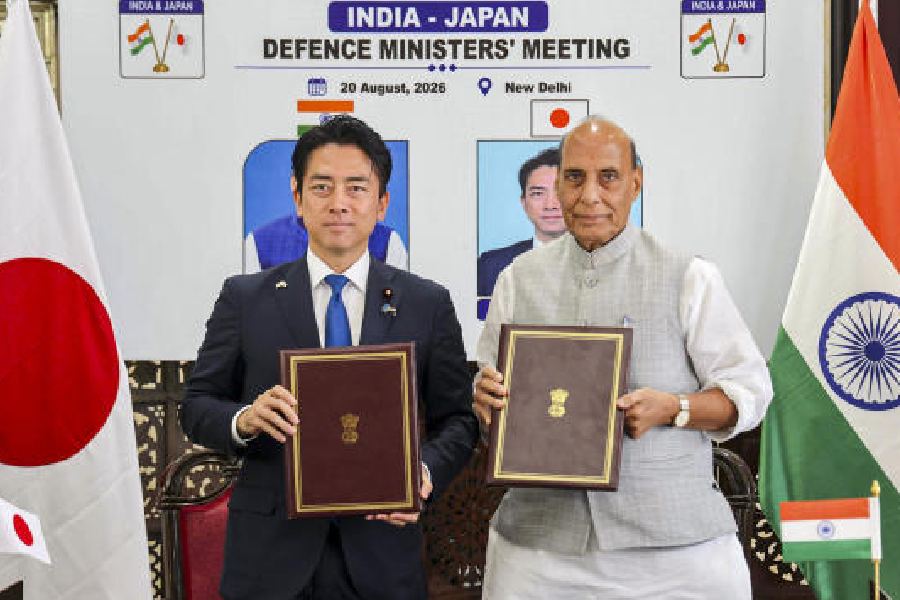
India and Japan Strengthen Maritime Security Cooperation Amid Regional Tensions
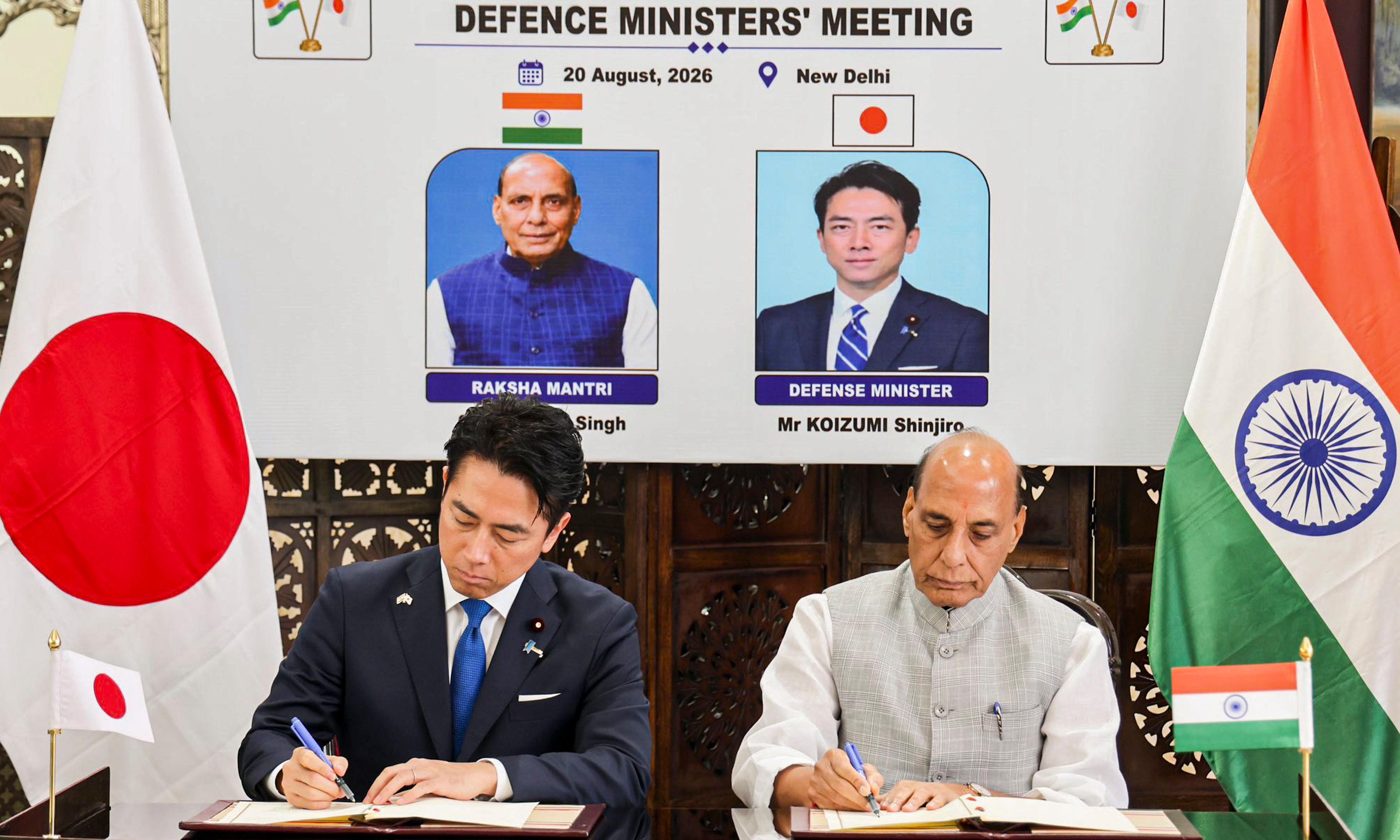
India and Japan Deepen Maritime Security Ties, Signal to Beijing

From Magic Squares to Memorable Ads, Signs and Slogans

Maharashtra, Australia Plan Biomanufacturing Task Force for Joint Growth

India Replaces Sri Lanka as 2027 Women’s Champions Trophy Host

Mitsubishi Revives Pajero With 201PS Fifth-Generation SUV
IIM-Born CEO Says Australia’s Everyday Life Runs on Trust