6 hrs ago
Anthropic Says Claude Helped Discover Novel Enzyme System
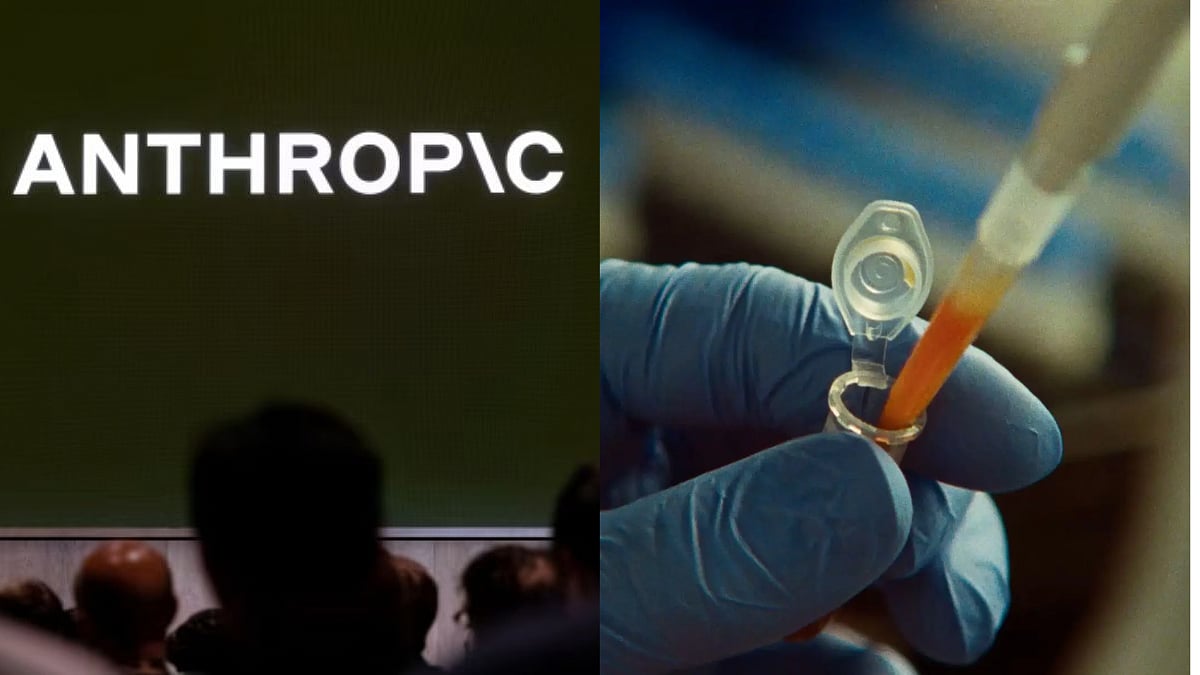
Anthropic says its Claude AI helped scientists find a new biological system called ART.
ART is found in DNA associated with bacteriophages.
It includes an enzyme called reverse transcriptase, which copies information from RNA into DNA.
The system also has repeating DNA patterns that look somewhat like patterns used by CRISPR.
Claude searched very large collections of DNA to find this unusual arrangement.
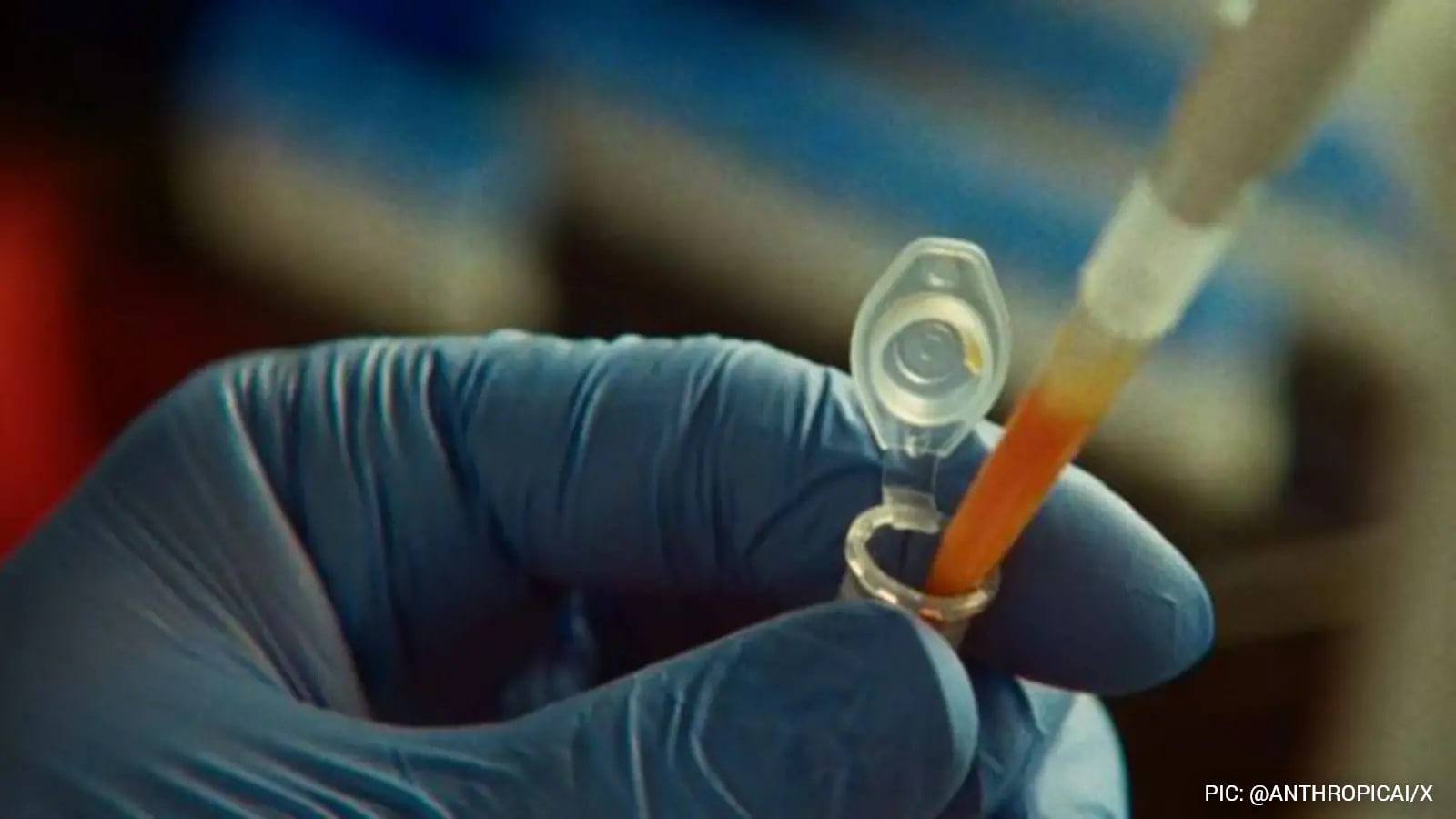
Anthropic said human researchers tested the finding in a laboratory and confirmed that the repeats make short RNA molecules.
Scientists still do not know what ART does in nature.
The discovery is the first reported result from Anthropic’s biology research program.
Any future use in gene editing or medicine is still speculative.

Anthropic said Claude helped identify a biological system called array-associated reverse transcriptases, or ART.
The system is built around a reverse transcriptase that copies RNA into DNA and includes repeating DNA sequences resembling CRISPR patterns.
Anthropic said Claude analyzed more than 200,000 reverse transcriptase sequences using about 210 million tokens.
Researchers said ART includes a neighboring partner gene and evenly spaced DNA repeats that produce short RNA sequences.
Anthropic described the finding as the first result of its biology program, while emphasizing that ART’s function and potential applications remain unclear.
- Who
- Anthropic, its Claude AI model, and Anthropic’s human biology researchers.
- What
- The identification and laboratory investigation of a novel enzyme system called array-associated reverse transcriptases, or ART.
- Where
- Claude searched large DNA databases, including bacteriophage DNA; Anthropic’s wet lab is in the San Francisco Bay Area.
- When
- Anthropic announced the finding on Wednesday.
- Why
- The work is part of Anthropic’s expansion into biology, life sciences, and drug-related research, with possible future applications in gene editing or biomedical discovery.
Potential Scientific Breakthrough
Evidence Still Preliminary
Significance of AI’s role
Potential Scientific Breakthrough
Anthropic says Claude recognized important features of a broader biological system that had not previously been identified together, potentially showing how AI can accelerate genomic research.
Evidence Still Preliminary
The underlying reverse transcriptase had appeared in earlier studies, and the broader significance of ART has not yet been established.
Gene-editing potential
Potential Scientific Breakthrough
The repeating DNA patterns resemble features associated with CRISPR, raising the possibility that ART could eventually inform new gene-editing tools.
Evidence Still Preliminary
Anthropic says any biotechnology or gene-editing application is speculative because ART’s natural function remains unclear.
Validation of the finding
Potential Scientific Breakthrough
Anthropic’s human researchers reportedly confirmed through wet-lab experiments that the repeats produce short RNA sequences.
Evidence Still Preliminary
The experiments do not yet explain what the system does in nature or demonstrate a usable medical or gene-editing technology.
Key facts
- Discovering organization
- Anthropic
- AI model
- Claude
- System name
- Array-associated reverse transcriptases (ART)
- Search scale
- More than 200,000 reverse transcriptase sequences
- Computing used
- About 210 million tokens across roughly 950 Claude agents over 21 hours
- Core enzyme
- Reverse transcriptase, which copies RNA into DNA
- Research status
- ART’s precise biological function and potential applications remain unknown
Sources
Related news

Anthropic Says Claude Found CRISPR-Like System in Bacteriophage DNA

Anthropic Blocks AI Misuse Linked to Potential Bioweapons Research

Anthropic Builds Biology Lab While Expanding AI Drug Ambitions

Anthropic Quietly Opens Biology Lab in AI Drug Discovery Race

Anthropic Says Claude Leads 26% of Next AI Development Work

Anthropic Says Claude Now Leads 26% of R&D Work

Gene-edited hypoallergenic dogs revive questions about human cruelty

Indian Startup Uses Generative AI to Design Gene Editors
Scientists Develop Self-Fertilizing Crops to Reduce Fertilizer Use