

3 weeks ago
Amid Floods and Deficits, India's 'Normal' Monsoon Feels Abnormal
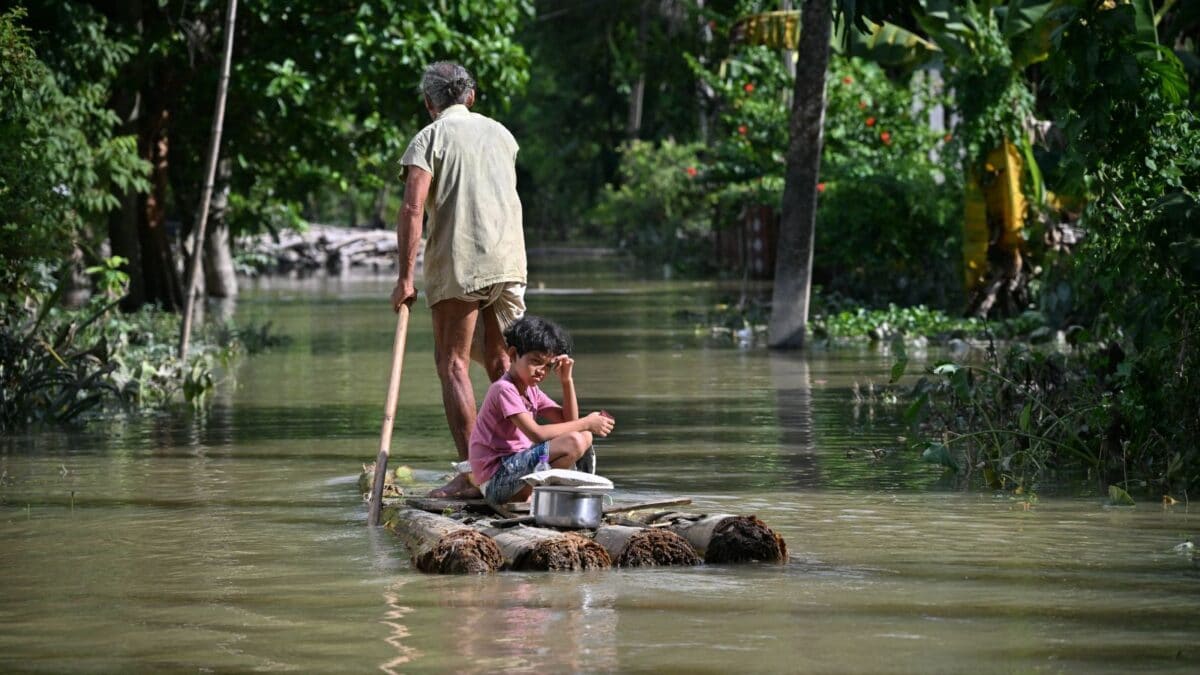
Every year, India gets a big season of rain called the monsoon.
This year, the rain was very uneven across the country.
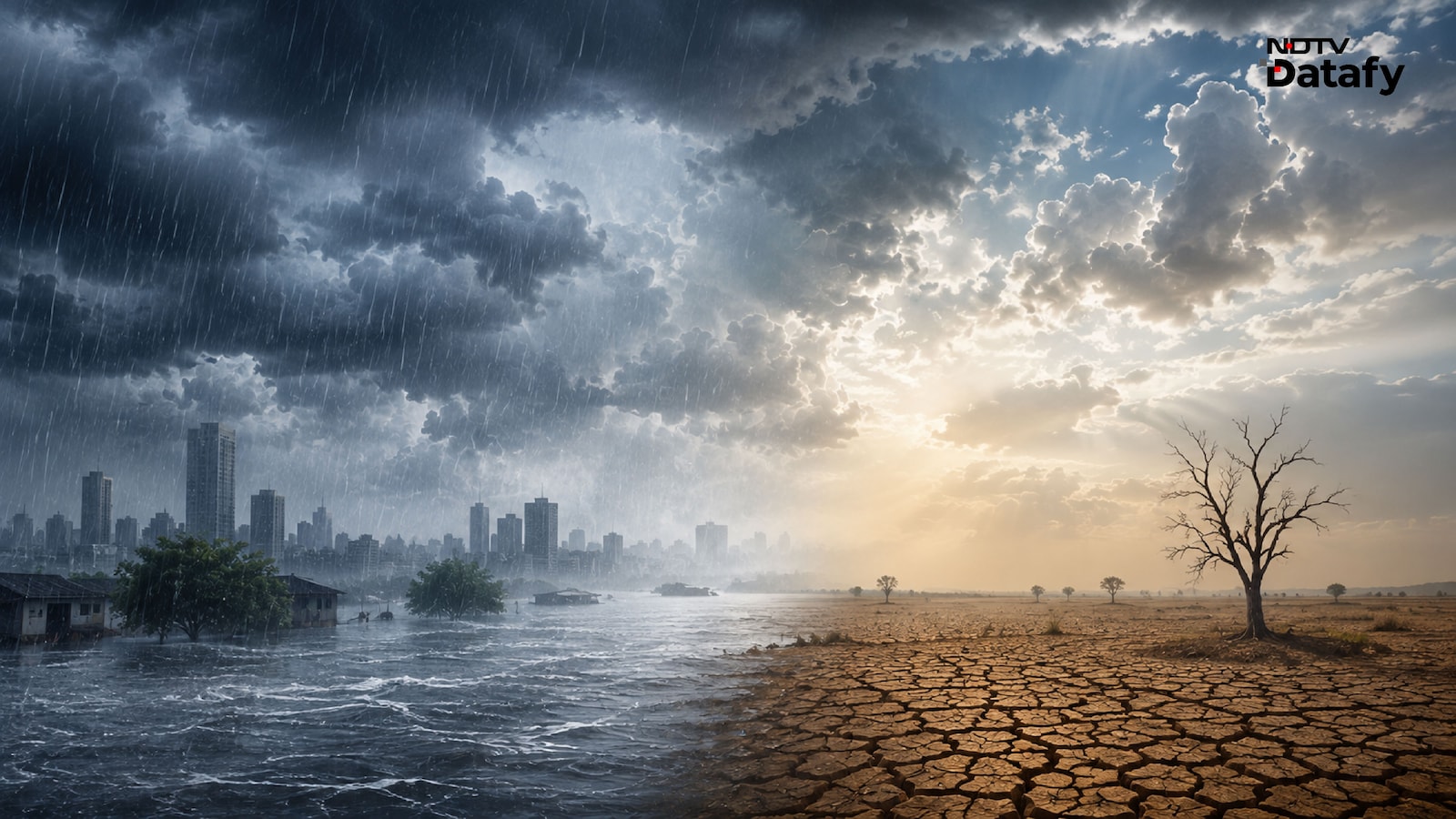
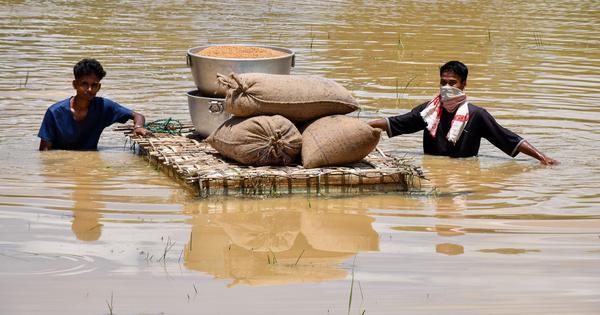
Some places got too much rain, causing floods and landslides, while other places got almost no rain at all.
Even though the total amount of rain seemed normal, some areas had nearly ten times more rain than usual in just one day.
The India Meteorological Department checks if the monsoon is normal by comparing the rain to what has fallen on average over many years.
But that number does not tell us where the rain fell, how hard it fell, or whether it arrived when crops needed it.
Hotter air from climate change can hold more water, so when it rains, it often rains very hard and very fast.
This can make dry places drier and wet places wetter.
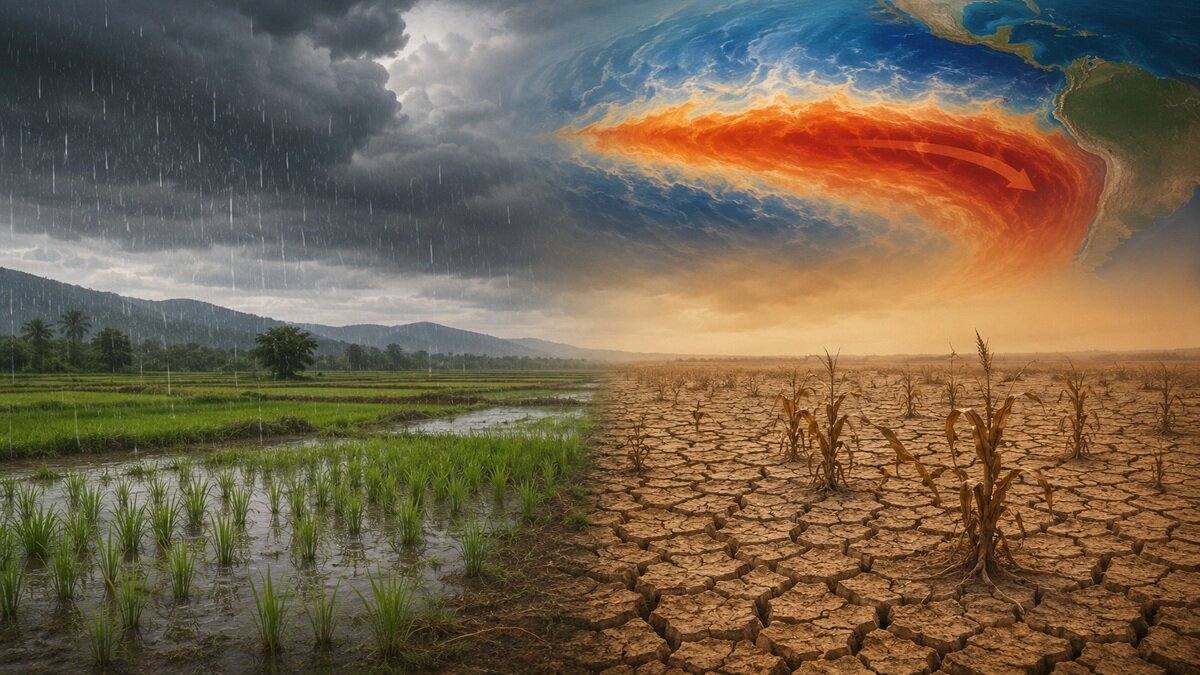
Scientists are finding that weather is becoming harder to predict, even with clues like El Niño.
That is why a 'normal' monsoon does not feel normal anymore.

India recorded a 38% monsoon rainfall deficit in June even as cloudbursts, floods and landslides hit parts of the country.
July delivered near-normal rainfall despite El Niño expectations, but the IMD forecasts below-normal rain (under 94% of the long-period average) for August and September.
The IMD defines a monsoon as 'normal' when rainfall is between 96% and 104% of the Long Period Average, based on 868.6 mm annually for 1971–2020.
Landslides in Kerala's Wayanad and Maharashtra's Ratnagiri killed and injured people; Wayanad's 24-hour rainfall was nearly 10 times its average July daily rain.
Climate scientists say warming is making the monsoon erratic — 'wet gets wetter, dry gets drier' — and El Niño is becoming a less reliable predictor.
- Who
- The India Meteorological Department (IMD), climate scientists, and communities across India, including farmers and residents of Kerala, Maharashtra and Rajasthan.
- What
- India is on track for 'normal' seasonal monsoon rainfall overall while simultaneously experiencing extreme events such as cloudbursts, floods, landslides and prolonged dry spells.
- Where
- Across India, including Kerala's Wayanad, Maharashtra's Ratnagiri, Mumbai and Rajasthan's Bikaner.
- When
- Monsoon season 2026; the report was published on August 6, 2026, after a deficient June and a near-normal July.
- Why
- Climate change interacting with natural cycles like El Niño is making rainfall more erratic and intense, so seasonal averages no longer capture the extremes.
Climate scientists and experts
IMD's traditional forecast system
Is the monsoon still 'normal'?
Climate scientists and experts
Seasonal averages hide growing extremes, and today's 'normal' monsoon actually represents less rainfall than a few years ago; the LPA benchmark says nothing about where, when or how intensely rain falls.
IMD's traditional forecast system
The LPA-based classification (96–104% of the benchmark) provides farmers, policymakers and economists with a stable national benchmark for planning agriculture, water management and food production.
Is El Niño still a reliable predictor?
Climate scientists and experts
Scientists increasingly believe climate change is making El Niño a less reliable indicator, as July's near-normal rainfall challenged long-held forecasting assumptions.
IMD's traditional forecast system
El Niño has traditionally been associated with weaker southwest monsoons and a higher risk of drought in parts of India.
Key facts
- June rainfall deficit
- 38% below normal
- Aug-Sep forecast
- Below 94% of the long-period average
- 'Normal' monsoon range
- 96%–104% of the Long Period Average (LPA)
- LPA baseline
- 868.6 mm per year (1971–2020 reference period, replacing 1951–2000's 880.6 mm)
- Wayanad rainfall
- 24-hour rainfall nearly 10 times the average daily July rainfall
- Ratnagiri landslides
- Nearly 13 deaths over three days; traffic disrupted on the Mumbai-Pune Expressway near Khandala
- Rajasthan dust storm
- May 30; winds of 70–80 km/h hit Bikaner and neighbouring districts
- Warmer air moisture
- About 7% more moisture per 1°C temperature increase
Sources
Related news
India's Uneven Monsoon Leaves Regions Facing Severe Rain Deficits
Super El Niño May Bring India Drier, More Dangerous Monsoons

IMD Warns September Rainfall Will Remain Below Normal
El Nino skews monsoon rains; low-pressure systems narrow deficit

IMD Warns of Dry September as India’s Monsoon Weakens

Cash Seized Under Driver’s Seat In Kerala; Three Arrested

BJP Accuses Congress of Anti-Dalit Politics, Targets Rahul Gandhi

Irulam Creates Giant Onam Pookkalam Honoring Beloved Wild Elephant

PC Musthafa’s Journey From ₹10 a Day to ₹681 Crore

Kerala Monsoon Rainfall 23 Percent Below Normal: IMD
