1 week ago
UP, MP Sign Power MoU, Eye Rs 10,000 Crore Investment

Uttar Pradesh and Madhya Pradesh agreed to work together on electricity.
Their busiest electricity periods happen at different times of the year.
Madhya Pradesh usually needs the most power from October to March.
Uttar Pradesh usually needs the most power from April to September.
This could let the states share electricity more efficiently.
They also plan to buy 2,000 MW of solar power together with batteries.
The batteries could help store power and keep the grid stable.
The plan may lower some power-purchase costs, but it does not promise an immediate reduction in household electricity bills.

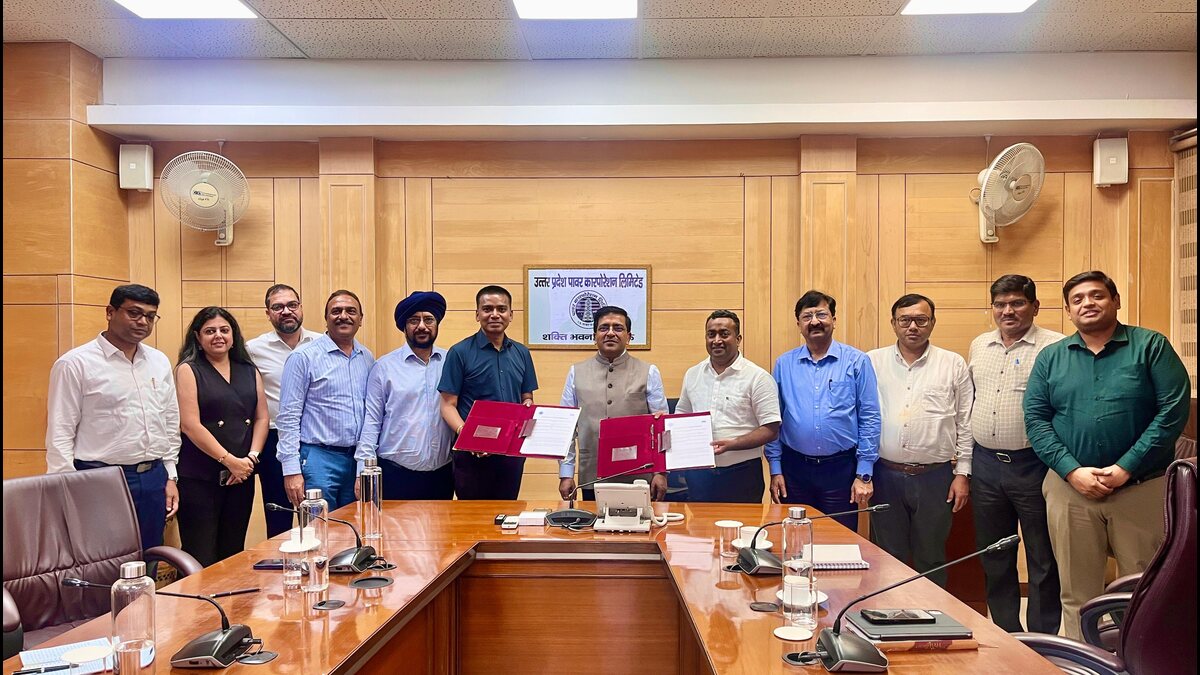
Uttar Pradesh and Madhya Pradesh signed an MoU to procure and share electricity.
Madhya Pradesh’s demand peaks from October to March, while Uttar Pradesh’s peaks from April to September.
The states will explore a medium-term firm power-banking arrangement for surplus electricity.
They plan competitive procurement of 2,000 MW of integrated solar and battery-storage capacity.
The initiative could attract around Rs 10,000 crore, but consumer tariff cuts are not guaranteed immediately.
- Who
- The governments and power authorities of Uttar Pradesh and Madhya Pradesh.
- What
- They signed an MoU covering joint power procurement, generation-capacity sharing, solar projects, battery storage and power banking.
- Where
- Lucknow, Uttar Pradesh; one report was filed from Jabalpur.
- When
- The agreement was signed in August 2026, according to announcements dated August 21 and 22.
- Why
- To use the states’ differing seasonal demand patterns, improve power procurement, support renewable energy and reduce reliance on costly short-term purchases.
Expected benefits
Implementation caveats
Power costs
Expected benefits
Officials and proponents say complementary demand patterns, shared generation capacity and joint procurement could reduce power-procurement costs.
Implementation caveats
Savings are not guaranteed and will depend on bidding prices, project execution, battery costs and actual electricity demand.
Power banking
Expected benefits
Banking surplus power between the states could improve resource use, grid flexibility and energy security while reducing short-term purchases.
Implementation caveats
The states have agreed to explore the arrangement, so its final structure and results have not yet been established.
Investment and employment
Expected benefits
The initiative is expected to attract around Rs 10,000 crore and create opportunities in renewable energy, transmission, construction, engineering and operations.
Implementation caveats
The reported investment and employment benefits are expected outcomes, with their actual scale dependent on implementation.
Key facts
- Expected investment
- Around Rs 10,000 crore
- Joint procurement target
- 2,000 MW of integrated solar and battery energy-storage capacity
- Madhya Pradesh demand peak
- October to March, mainly linked to agricultural consumption during the rabi season
- Uttar Pradesh demand peak
- April to September, during the kharif and summer months
- Proposed banking arrangement
- A medium-term firm power-banking system allowing surplus electricity to be banked and retrieved when needed
- Potential infrastructure
- Solar projects, battery storage and transmission facilities
- Consumer tariffs
- The MoU may reduce procurement costs but does not guarantee an immediate or fixed reduction in electricity tariffs
Quotes
Pankaj Swamy
Senior public relations officer of Madhya Pradesh Power Management Company Limited
“Madhya Pradesh experiences its peak electricity demand during the rabi season from October to March, primarily driven by agricultural consumption. In contrast, Uttar Pradesh’s demand peaks during the kharif and summer months from April to September.”
 financialexpress.com
“This differing demand pattern allows the two states to share generation capacity more efficiently and reduce power procurement costs.”
financialexpress.com
Sources
Related news

Uttarakhand approves 1,320 MW power purchase from Adani Power

Odisha and Madhya Pradesh sign MoU to boost renewable energy

Naidu sets Rs 4 power cost target by 2029
Flood Damage Prompts Nepal to Seek Early Electricity Imports
India’s Power Demand Surges as Data Centres Expand Grid Needs
BJP MLA Anil Sharma Dies After Prolonged Illness, Yogi Mourns
UP Minister Visits Ankit Baliyan Family, Promises Strict Action
UP Launches Outsource Corporation With Expanded Worker Protections
Uttar Pradesh Expands Free E-Tricycle Scheme for Divyang Students
Uttar Pradesh Launches UPCOS for Outsourced Workers’ Security