2 days ago
How India’s Constituent Assembly Settled Its Language Dispute
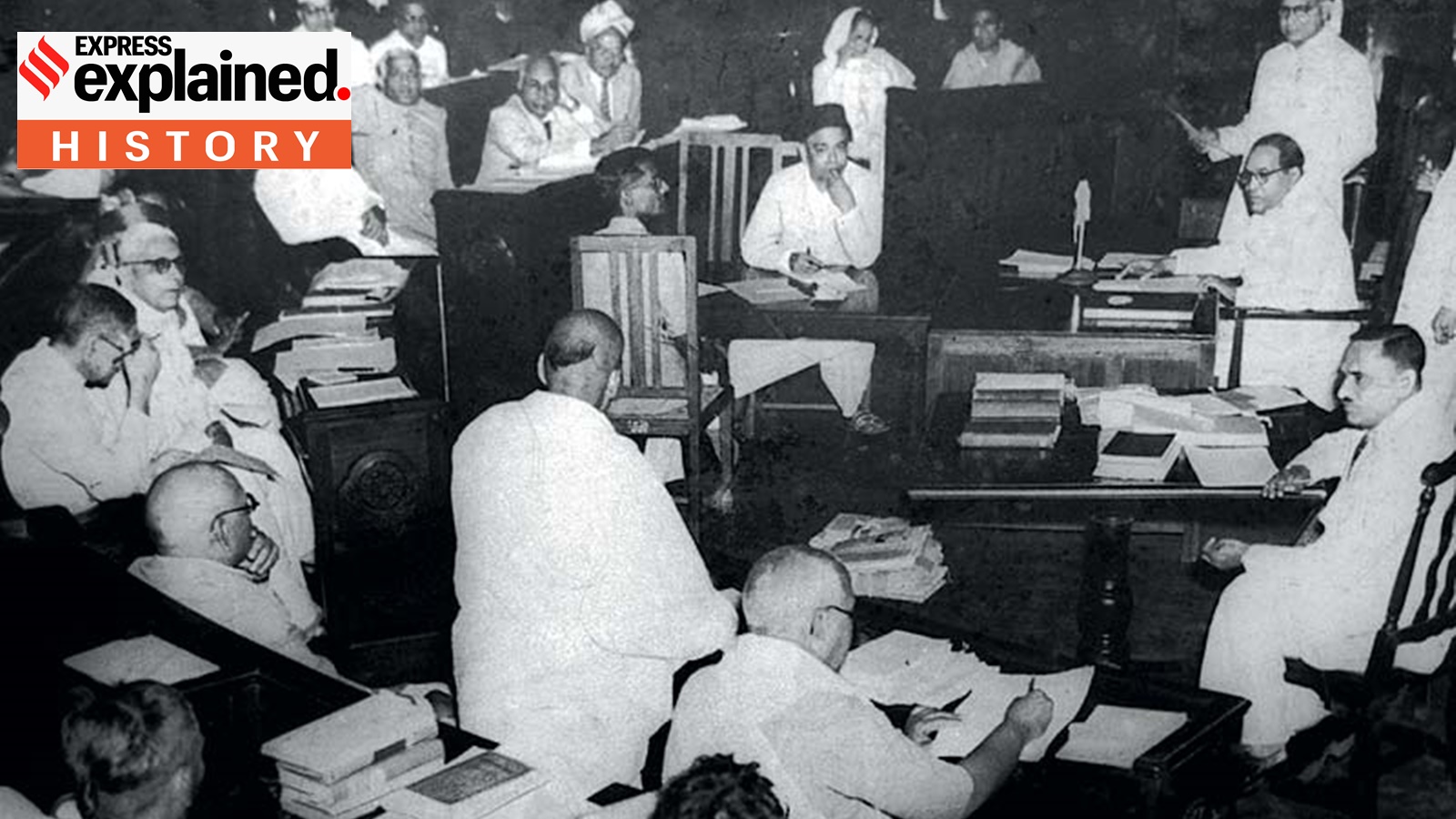
India’s leaders had to decide which languages the new country’s government would use.
Some members wanted Hindi to replace English immediately.
Others worried this would unfairly pressure people who spoke different languages.
English was still useful for laws, administration, and communication between regions.
The Assembly therefore created a compromise in 1949.
Hindi became the official language of the Union, while English was allowed to continue for 15 years.
The Constitution also recognised other languages and allowed states to choose languages for their own work.
When protests occurred after 1965, English continued alongside Hindi.

The Constituent Assembly debated whether Hindi should replace English and whether one language could represent India.
Hindi-speaking members sought immediate recognition of Hindi as the national language, while non-Hindi-speaking representatives opposed linguistic uniformity.
Moderate leaders warned that Hindi lacked sufficient technical vocabulary and argued that English remained necessary for administration and law.
On September 14, 1949, the Assembly adopted the Munshi–Ayyangar compromise, designating Hindi as the Union’s official language while retaining English for 15 years.
The arrangement became part of Articles 343–351, but protests in the 1960s led Parliament to continue English as an official language alongside Hindi.
- Who
- India’s Constituent Assembly, including Hindi-speaking representatives, non-Hindi-speaking representatives, and moderate Congress leaders.
- What
- The Assembly settled the Union language question through the Munshi–Ayyangar formula, making Hindi the official language of the Union and retaining English temporarily.
- Where
- In India’s Constituent Assembly; the dispute particularly involved representatives from Hindi-speaking northern and central regions and non-Hindi-speaking regions, especially the south.
- When
- The compromise was adopted on September 14, 1949; the arrangement was incorporated into the Constitution in 1950, with the planned transition ending in 1965.
- Why
- The Assembly sought to replace colonial-era English over time while preventing the imposition of Hindi on linguistic minorities and preserving effective administration.
Hindi Language Advocates
Linguistic Pluralists and Moderates
National language and unity
Hindi Language Advocates
Hindi-speaking representatives argued that India needed one national language and script to strengthen unity, and that Hindi should replace English immediately.
Linguistic Pluralists and Moderates
Representatives from non-Hindi-speaking regions argued that unity did not require linguistic uniformity and warned against imposing Hindi on linguistic minorities.
Decision-making method
Hindi Language Advocates
Hindi proponents supported deciding the issue by a simple majority, consistent with democratic procedure.
Linguistic Pluralists and Moderates
Opponents, including S.P. Mookerjee and Rajendra Prasad, argued that a language decision needed broad acceptance and should not be imposed through coercive majoritarianism.
Role of English
Hindi Language Advocates
Hindi advocates wanted English, the language of colonial administration, replaced by an indigenous language.
Linguistic Pluralists and Moderates
Moderate leaders, including Jawaharlal Nehru and Maulana Azad, argued that English remained necessary until Hindi could support administration and highly technical subjects across the country.
Key facts
- Compromise
- Munshi–Ayyangar formula
- Adoption date
- September 14, 1949
- Union official language
- Hindi
- Temporary continued language
- English for 15 years after the Constitution commenced
- Constitutional provisions
- Articles 343–351 in Part XVII
- Recognised languages
- Fourteen additional languages were listed in the Eighth Schedule at the time described
- Later development
- The Official Languages Act of 1963 continued English alongside Hindi
Quotes
S P Mookerjee
Representative from Bengal who opposed imposing a language by majority decision
“This change [from English] should be ushered in only when a national language can be read and written in every part of the country and becomes mature enough for the expression of highly technical subjects… Languages are never made; they evolve. They are never given a shape; they shape themselves.”
 indianexpress.com
“If it is claimed by anyone that by passing an article in the Constitution of India one language is going to be accepted by all by a process of coercion, I say, Sir, that that will not be possible to achieve.”
indianexpress.com
Sources
Related news
Hindi Diwas Honors Hindi’s Constitutional Status and Cultural Legacy
UPSC Polity Quiz Covers Language, Tribal Councils and Rights
Amit Shah Calls Hindi Link Language, Denies Regional Imposition
Leaders Highlight Hindi’s Role in Governance on Hindi Diwas
Shinde Says Hindi Complements Regional Languages at Navi Mumbai Event

Kerala Legislators Protest Hindi Use at Women’s Commission Workshop
Minorities Weigh Mohan Bhagwat’s Hindu Rashtra Message
On Vande Mataram, Congress Hasn't Learnt From Its Past
IIT Kharagpur at 75, born in a former colonial prison
'New Kerala' Skips Vande Mataram, Backs Dissent and Dialogue