

3 days ago
Minorities Weigh Mohan Bhagwat’s Hindu Rashtra Message
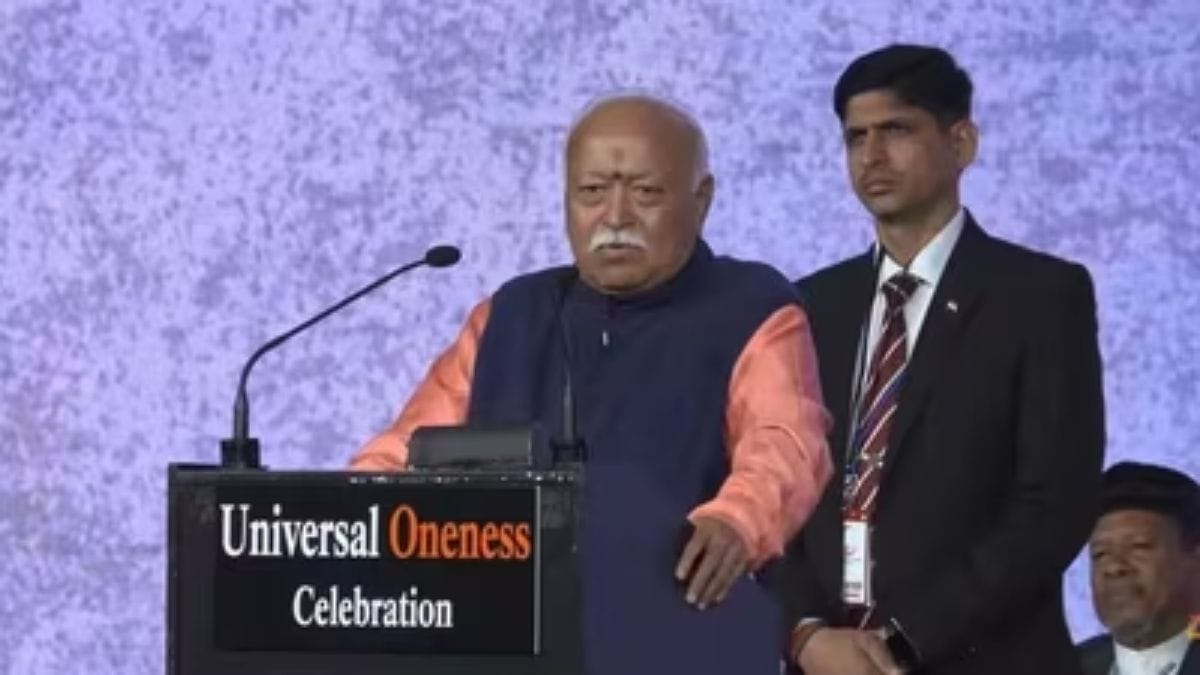
Mohan Bhagwat, the head of the Rashtriya Swayamsevak Sangh, gave a speech in New York about religion and India.
He said Muslims should not be expelled from India.
He also said different religions should be accepted and protected.
Some Muslims said this was helpful but not enough.
They said Muslims are equal owners of India, not guests receiving shelter.
Sikhs were disappointed because he did not mention Sikhism.
They want him to clearly say that Sikhism is a separate religion.
Christians welcomed his friendly words but worried about attacks on Christian activities by some groups.
All three communities wanted equal rights to be recognized directly, rather than being described as needing protection from a majority.

At a 29 August interfaith summit in New York, Mohan Bhagwat said expelling Muslims would not be Hindutva.
Bhagwat said diversity should be accepted, respected and protected, and described protection only for the obedient as demonic.
Muslim readers welcomed the rejection of expulsion but objected to being described as people receiving shelter rather than equal owners of India.
Sikh readers noted that Sikhism was absent from the speech and sought an explicit public acknowledgment that it is a separate religion.
Christian readers welcomed references to friendship and nondiscriminatory service but questioned the gap between the speech and anti-conversion activism.
- Who
- Mohan Bhagwat, Sarsanghchalak of the Rashtriya Swayamsevak Sangh, and Muslim, Sikh and Christian readers.
- What
- Bhagwat addressed religious diversity, Muslims’ place in India and interfaith relations; minorities offered differing interpretations of his remarks.
- Where
- An interfaith summit in New York, with comparisons to events and controversies in India.
- When
- 29 August; the article also cites events from January 2001, August 2005, November 2023, August 2025, October 2025 and February 2026.
- Why
- Bhagwat said diversity should be protected and that expelling Muslims would contradict Hindutva; minority readers assessed whether those assurances establish equal ownership and religious autonomy.
Supporters of Bhagwat’s remarks
Minority and constitutional critics
Rejection of expulsion
Supporters of Bhagwat’s remarks
Bhagwat’s statement that Muslims cannot be expelled from India is viewed as a meaningful rejection of exclusionary rhetoric and as consistent with Hindutva, according to the article’s supportive assessment.
Minority and constitutional critics
Muslim readers said the assurance makes their rights dependent on Hindu self-definition rather than grounding them in equal constitutional citizenship.
Protection versus equality
Supporters of Bhagwat’s remarks
Bhagwat’s call to accept, respect and protect diversity is presented as a significant intervention against people who restrict protection to those who obey them.
Minority and constitutional critics
The article argues that describing minorities as needing protection leaves the majority in the role of protector, rather than recognizing minorities as equal owners with rights independent of majority approval.
Religious identity and pluralism
Supporters of Bhagwat’s remarks
The speech emphasized friendship, dialogue and service without discrimination, while suggesting that different faiths can converge on a universal human dharma.
Minority and constitutional critics
Christians may reject the idea that their beliefs, including incarnation, need to converge with another religious framework; Sikhs seek recognition of Sikhism as distinct from Hinduism.
Key facts
- Speaker
- Mohan Bhagwat, Sarsanghchalak of the Rashtriya Swayamsevak Sangh
- Speech location
- New York
- Speech date
- 29 August
- Message on Muslims
- Bhagwat said a Hindu who wants India without Muslims would not remain a Hindu.
- Message on diversity
- He said diversity must be accepted, respected and protected.
- Muslim concern
- Muslim readers objected to being characterized as people receiving shelter rather than as equal owners of India.
- Sikh concern
- Sikh readers said Sikhism was absent from the New York speech and sought an explicit acknowledgment that it is a separate religion.
- Christian concern
- Christians welcomed the speech’s language of friendship but questioned anti-conversion activism by affiliates.
Sources
Related news
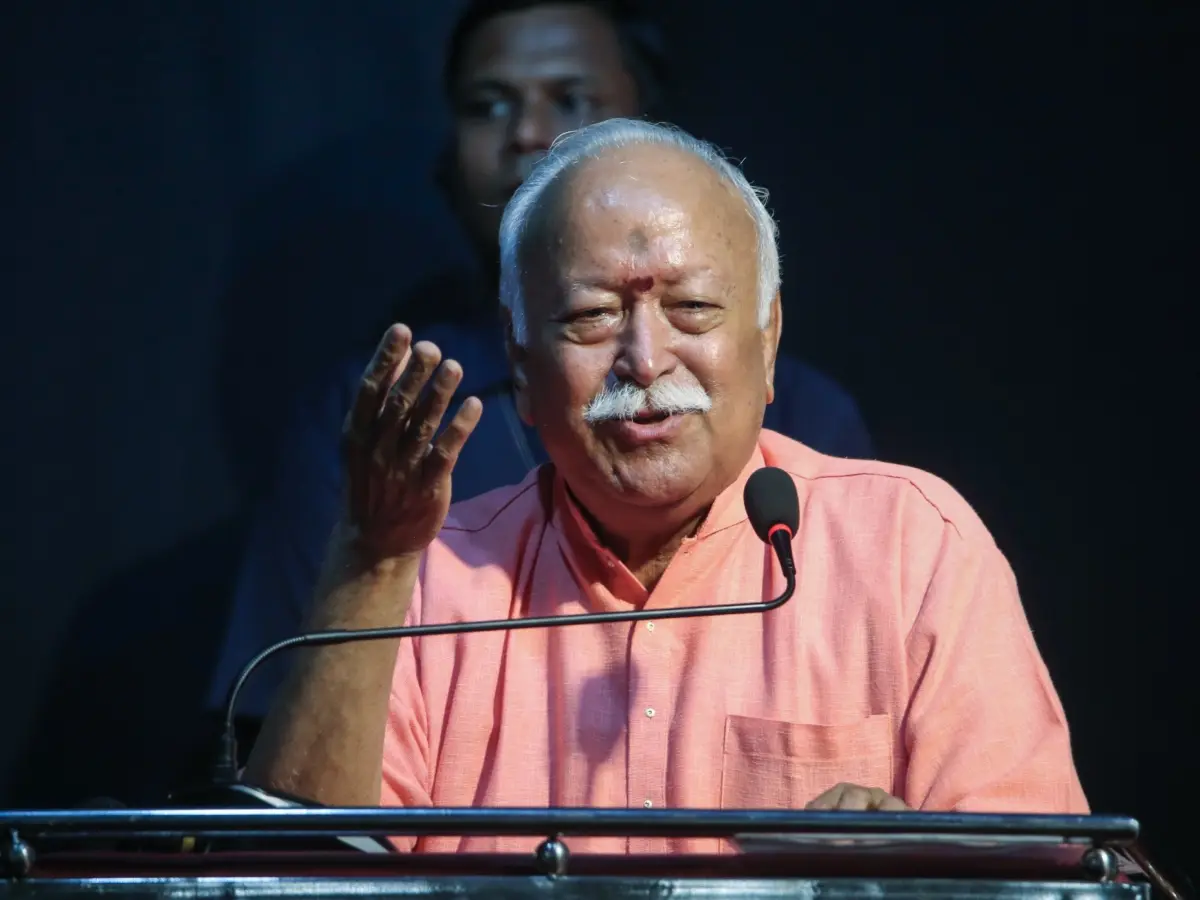
Mohan Bhagwat Says Hinduism Rejects Excluding Muslims From Bharat
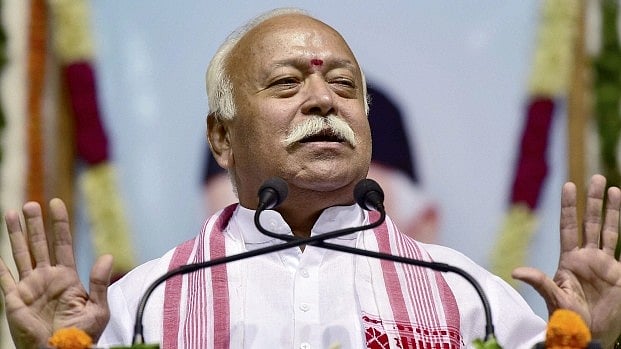
Bhagwat Stresses Hindu Unity and Diversity at New York Event
Mohan Bhagwat Defends Hindu-Muslim Inclusion During New York Dialogue
Bhagwat says RSS is not anti-Muslim in New York speech
Mohan Bhagwat urges Hindu inclusivity, diaspora loyalty and grassroots change
On Vande Mataram, Congress Hasn't Learnt From Its Past
IIT Kharagpur at 75, born in a former colonial prison
'New Kerala' Skips Vande Mataram, Backs Dissent and Dialogue
TPCC chief urges safeguarding Constitution with Quit India spirit
